Overview
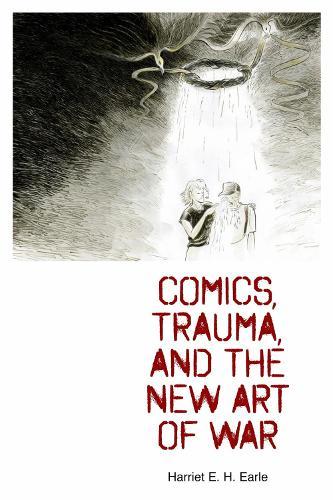
Conflict and trauma remain among the most prevalent themes in film and literature. Comics has never avoided such narratives, and comics artists are writing them in waysthat are both different from and complementary to literature and film. In Comics, Trauma, and the New Art of War, Harriet E. H. Earle brings together two distinct areas of research—trauma studies and comics studies—to provide a new interpretation of a long-standing theme. Focusing on representations of conflict in post–Vietnam War American comics, Earle claims that the comics form is uniquely able to show traumatic experience by representing events as viscerally as possible. Using texts from across the form and placing mainstream superhero comics alongside alternative and art comics, Earle suggests that comics are the ideal artistic representation of trauma.Because comics bridge the gap between the visual and the written, they represent such complicated narratives as loss and trauma in unique ways, particularly through the manipulation of time and experience. Comics can fold time and confront traumatic events, be they personal or shared, through a myriad of both literary andvisual devices. As a result, comics can represent trauma in ways that are unavailable to other narrative and artistic forms. With themes such as dreams and mourning, Earle concentrates on trauma in American comics after the Vietnam War. These works include Alissa Torres’s American Widow, Doug Murray’s The’Nam, and Art Spiegelman’s much lauded Maus. These works pair with ideas from a wide range of thinkers, including Sigmund Freud, Mikhail Bakhtin, and Fredric Jameson, as well as contemporary trauma theory and clinical psychology. Through these examples and others, Comics, Trauma, and the New Art of War proves that comics open up new avenues to explore personal and public trauma in extraordinary, necessary ways.
Full Product Details
Author: Harriet E. H. Earle
Publisher: University Press of Mississippi
Imprint: University Press of Mississippi
Dimensions:
Width: 15.20cm
, Height: 1.60cm
, Length: 22.80cm
Weight: 0.500kg
ISBN: 9781496812469
ISBN 10: 1496812468
Pages: 240
Publication Date: 30 June 2017
Audience:
Professional and scholarly
,
Professional & Vocational
Format: Hardback
Publisher's Status: Active
Availability: In Print

This item will be ordered in for you from one of our suppliers. Upon receipt, we will promptly dispatch it out to you. For in store availability, please contact us.
Reviews
�A refreshing, resourceful investigation of American comics since the Vietnam War, Comics, Trauma, and the New Art of War charts the form�s representational possibilities across a diverse expanse of genres, styles, and issues. Deftly braiding methodologies�classic psychoanalysis, contemporary trauma theory, art history�Earle both broadens and refines our understanding of the comics medium and its innovative practitioners.��Hillary L. Chute, author of Disaster Drawn: Visual Witness, Comics, and Documentary Form A refreshing, resourceful investigation of American comics since the Vietnam War, Comics, Trauma, and the New Art of War charts the form's representational possibilities across a diverse expanse of genres, styles, and issues. Deftly braiding methodologies--classic psychoanalysis, contemporary trauma theory, art history--Earle both broadens and refines our understanding of the comics medium and its innovative practitioners. --Hillary L. Chute, author of Disaster Drawn: Visual Witness, Comics, and Documentary Form
A refreshing, resourceful investigation of American comics since the Vietnam War, Comics, Trauma, and the New Art of War charts the form's representational possibilities across a diverse expanse of genres, styles, and issues. Deftly braiding methodologies--classic psychoanalysis, contemporary trauma theory, art history--Earle both broadens and refines our understanding of the comics medium and its innovative practitioners. --Hillary L. Chute, author of Disaster Drawn: Visual Witness, Comics, and Documentary Form
�A refreshing, resourceful investigation of American comics since the Vietnam War, Comics, Trauma, and the New Art of War charts the form�s representational possibilities across a diverse expanse of genres, styles, and issues. Deftly braiding methodologies�classic psychoanalysis, contemporary trauma theory, art history�Earle both broadens and refines our understanding of the comics medium and its innovative practitioners.� �Hillary L. Chute, author of Disaster Drawn: Visual Witness, Comics, and Documentary Form A refreshing, resourceful investigation of American comics since the Vietnam War, Comics, Trauma, and the New Art of War charts the form's representational possibilities across a diverse expanse of genres, styles, and issues. Deftly braiding methodologies--classic psychoanalysis, contemporary trauma theory, art history--Earle both broadens and refines our understanding of the comics medium and its innovative practitioners. --Hillary L. Chute, author of Disaster Drawn: Visual Witness, Comics, and Documentary Form
Author Information
Harriet E. H. Earle, Grantham, England, is lecturer and researcher in American comics and popular culture. She holds a PhD in American comics from Keele University in the United Kingdom. She has published in such journals as the Journal of Popular Culture, Film International, the Comics Grid, and Journal of Graphic Novels and Comics. Earle is on the editorial board of Comics Forum.