Overview
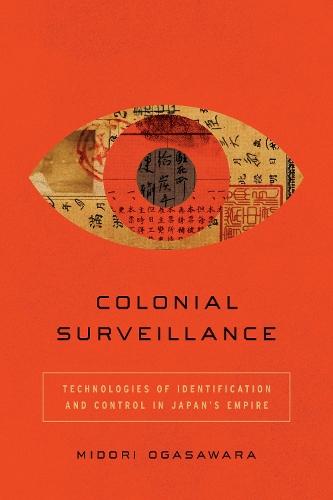
In order to compete with Western powers, Japan began to rapidly modernize its governing institutions, in the process creating a national population registration and identification bureaucracy, the Koseki system, in 1871. A few decades later, when Japan began to extract natural resources from and militarize Northeast China during its colonial expansion, new identification technologies were introduced to control a growing population of colonial subjects. Against the historical backdrop of these pioneering identification systems in Japan, Midori Ogasawara invites readers to delve into the little-known genealogy of modern-day identification systems, and the colonial roots of the surveillance technologies that saturate our digital lives today. Based on archival research in Japan and China, as well as interviews with the families of Chinese survivors of Japanese colonialism, this book explores the emergence of Japanese identification systems and the transformation of identification techniques in its colonies and occupied areas. Taking a historical and sociological perspective informed by surveillance studies, Ogasawara shows how biometric identification became a powerful means of population control and racialization of ethnic others, a process that helped the Japanese government to classify the Chinese as ""desirable"" or ""undesirable"" and to reduce whole persons to mere resources. Tracing it from the Koseki system to colonial surveillance in Northeast China, Ogasawara uncovers the troubling history of identification technology in modern Japan.
Full Product Details
Author: Midori Ogasawara
Publisher: Stanford University Press
Imprint: Stanford University Press
Edition: New edition
ISBN: 9781503644243
ISBN 10: 1503644243
Pages: 288
Publication Date: 06 January 2026
Audience:
Professional and scholarly
,
College/higher education
,
Professional & Vocational
,
Postgraduate, Research & Scholarly
Format: Hardback
Publisher's Status: Forthcoming
Availability: Not yet available

This item is yet to be released. You can pre-order this item and we will dispatch it to you upon its release.
Reviews
""Identification practices were crucial to Japanese imperial domination and persist in varying forms to the present day--Midori Ogasawara's study of Japan's systems of identification and surveillance provides a major contribution to our understanding of this history."" --John Torpey, Graduate Center, City University of New York ""This book does not simply build upon but innovates a way of thinking about identification and surveillance systems demonstrably at the bedrock of modern society. An absolutely original contribution to the study of Japan and its empire."" --Miriam Kingsberg Kadia, University of Colorado Boulder ""A gripping and poignant historical sociology of Japanese surveillance practices, domestically and, particularly, in colonial incursions in Chinese 'Manchukuo.' Midori Ogasawara breaks new ground in combining intriguing ethnographical fieldwork with thoughtful modifications of surveillance theories to grasp both the stark realities of identification and state scrutiny and their differential impact on families and individuals in Japan and China. Readers are drawn right into the exacting research experience, deepened further by the striking photographs."" --David Lyon, author of The Culture of Surveillance: Watching as a Way of Life
""Identification practices were crucial to Japanese imperial domination and persist in varying forms to the present day--Midori Ogasawara's study of Japan's systems of identification and surveillance provides a major contribution to our understanding of this history."" --John Torpey, Graduate Center, City University of New York ""This book does not simply build upon but innovates a way of thinking about identification and surveillance systems demonstrably at the bedrock of modern society. An absolutely original contribution to the study of Japan and its empire."" --Miriam Kingsberg Kadia, University of Colorado Boulder
Author Information
Midori Ogasawara is Assistant Professor of Sociology at the University of Victoria.