Overview
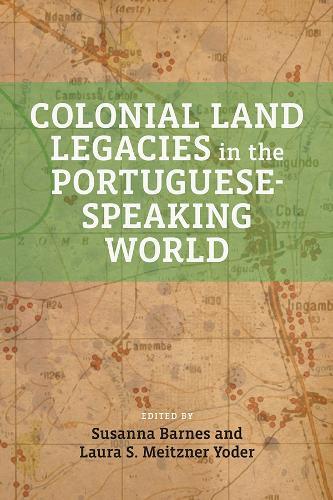
Colonial Land Legacies in the Portuguese-Speaking World presents a comparative exploration of the enduring impacts of Portuguese colonial land governance in Portugal and across five former Portuguese colonies: Brazil, Angola, Mozambique, Flores, and Portuguese Timor. Through ethnographic, historical, and legal analyses, the book investigates how colonial land policies and interventions were not simply implemented and forgotten but have shaped contemporary land access, governance, and socio-economic structures in profound ways. Portuguese colonialism was shaped by shifting political and economic priorities. From trading routes to plantation economies and extractive industries, land became central to Portuguese colonial interests. Colonial Land Legacies in the Portuguese-Speaking World investigates the bureaucratic mechanisms employed by Portuguese authorities to regulate land, highlighting how these systems were frequently manipulated by elites to consolidate power and control over resources. It explores Indigenous-settler entanglements, illustrating how colonial land policies interacted with local governance systems, leading to contested and hybrid forms of land control shaped by both resistance and adaptation. Finally, it focuses on the global capitalist motivations driving land policies, particularly the use of large-scale concessions for plantations, and how these practices continue to shape contemporary land ownership and economic inequalities in post-colonial contexts. Colonial Land Legacies in the Portuguese-Speaking World is a critical and comparative analysis of colonial land governance and its afterlives. It highlights how these legacies continue to shape contemporary struggles over land, making it essential to address them in the pursuit of more equitable land governance. Through its case studies, the book contributes to broader discussions on the relationships between land, power, and colonialism, offering insights into the ongoing challenges of land policy and practice in post-colonial contexts.
Full Product Details
Author: Susana Barnes ,
Laura S. Meitzner Yoder
Publisher: University of Calgary Press
Imprint: University of Calgary Press
ISBN: 9781773856339
ISBN 10: 1773856332
Pages: 382
Publication Date: 31 August 2025
Audience:
College/higher education
,
Postgraduate, Research & Scholarly
Format: Paperback
Publisher's Status: Active
Availability: In Print

This item will be ordered in for you from one of our suppliers. Upon receipt, we will promptly dispatch it out to you. For in store availability, please contact us.
Author Information
Susanna Barnes is a socio-cultural anthropologist at the University of Saskatchewan. Her research focuses on the anthropology of development, with a specific emphasis on the intersections of custom, social change and post-colonial dynamics in Southeast Asia. Laura S. Meitzner Yoder is a political ecologist who serves as John Stott Endowed Chair and Director of the Human Needs and Global Resources Program, and as Professor of Environmental Studies, Wheaton College, Illinois, USA. Her research centers smallholder farmers and forest dwellers as they relate to policymakers regarding land and forests, primarily in rural Southeast Asia and Latin America.