Overview
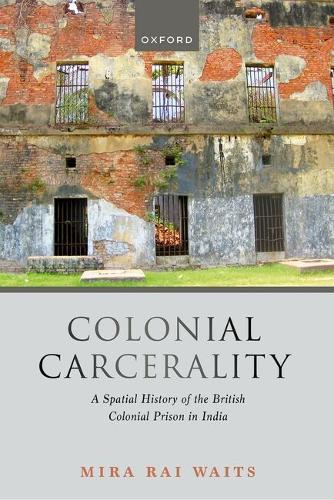
Prison construction was among the most important infrastructural changes brought about by British rule in India. It introduced India to a radically new system of punishment based on the spatial experience of architecture as confinement. Unlike prisons in Europe and the United States, where moral reform was cited as the primary objective of incarceration, prisons in colonial India mobilized confinement as a way of separating and classifying criminal types in order to stabilize colonial categories of difference. Reconciling the ideas of liberalism with those of imperialism, colonial officials outfitted their prisons with infrastructure to support remunerative prison labor as a mechanism of reform. However, prisoners and other social actors found opportunities to resist and critique this new colonial system. In the twentieth century the colonial prison came to symbolize the tyranny of British rule for anti-colonial activists.Colonial Carcerality: A Spatial History of the British Colonial Prison in India examines the vast archive of material related to the space and spatial experience of prisons produced during British colonial rule in India. Bringing official government records of architectural plans, drawings, and photographs of prison buildings, in conversation with popular representations that engage prison space such as paintings, prints, and literature, Waits demonstrates that the colonial Indian prison was not simply a fixed architectural arena where events unfolded; rather, prison space was contingent upon and held together by shifting narratives and a multitude of actors, including the prisoners themselves. The book offers a means to destabilize the colonial prison as a static historical space by acknowledging these actors involved in prison production. In tackling this spatial history, Colonial Carcerality makes a larger case for the crucial role that prisons as spatial forms played in constituting the colonial project, and the necessity of writing histories that recognize historical space as an unfinished cultural object.
Full Product Details
Author: Mira Rai Waits (Associate Professor of Art History, Associate Professor of Art History, Appalachian State University)
Publisher: Oxford University Press
Imprint: Oxford University Press
ISBN: 9780198995692
ISBN 10: 0198995695
Pages: 304
Publication Date: 23 April 2026
Audience:
College/higher education
,
Postgraduate, Research & Scholarly
Format: Hardback
Publisher's Status: Forthcoming
Availability: To order

Author Information
Mira Rai Waits is an Associate Professor of Art History at Appalachian State University. Her scholarship has addressed the development of fingerprinting in colonial India, the architectural history of British colonial prisons, and the visual culture history of colonial policing in British India. Her research has been funded by the Fulbright Scholar Program, the American Council of Learned Societies, and University of California President's Program.