Overview
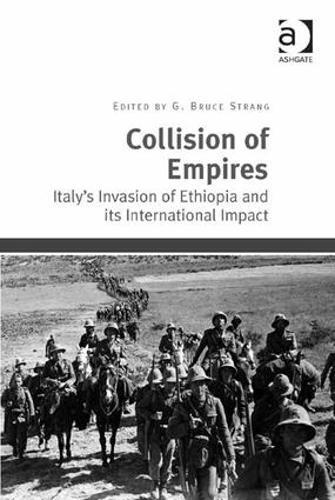
Italy's invasion of Ethiopia in 1935 marked a turning point in interwar Europe. The last great European colonial conquest in Africa, the conflict represented an enormous gamble for the Fascist dictator Benito Mussolini. He faced a challenge not only from a stout Ethiopian defence, but also from difficult logistics made worse by the League of Nations' half-hearted sanctions. Mussolini faced down this opposition, and Italian troops, aided by air superiority and liberal use of yprite gas, conquered Addis Ababa within eight months, a victory that shocked many military observers of the time with its speed and suddenness. The invasion had enormous repercussions on European international relations. In the midst of a national election campaign, the British National Government had felt constrained to support the League, despite fears that sanctions through the League could lead to war with Italy. The concentration of the Royal Navy in the Mediterranean Sea alienated Mussolini and placed the French government on the horns of dilemma; should France support its military partner, Italy, or its more important potential ally, Great Britain? French attempts to mark out a middle ground did little to placate the Duce, and the crisis seemed to develop a deep rift between Fascist Italy and the Anglo-French democracies, while at the same time creating a crisis in Anglo-French relations. Mussolini turned towards Nazi Germany in an attempt to end his diplomatic isolation during the sanctions episode, although Hitler considered the Duce's friendship a mixed blessing. The question of American adherence to sanctions increased ill will between British politicians and the Roosevelt administration in Washington, as each tended to blame the other for the failure of oil sanctions and the collapse of collective security. The international crisis posed similarly thorny problems for the smaller powers of Europe, and for Japan and the Soviet Union. The crisis impeded common defence against Fascist expansionism while giving impetus to claims of the revisionist powers. Despite the tremendous importance of the international crisis, however, little new work on the subject has appeared in recent decades. In this volume, an international cast of contributors take a fresh look at the crisis through the lens of new evidence and new approaches to international relations history to provide the most comprehensive coverage of the crisis currently possible, and their work provides new frames of reference for exploring imperialism, collective security and genocide.
Full Product Details
Author: G. Bruce Strang
Publisher: Taylor & Francis Ltd
Imprint: Routledge
Edition: New edition
Dimensions:
Width: 15.60cm
, Height: 2.20cm
, Length: 23.40cm
Weight: 0.861kg
ISBN: 9781409430094
ISBN 10: 140943009
Pages: 398
Publication Date: 24 October 2013
Audience:
College/higher education
,
General/trade
,
Tertiary & Higher Education
,
General
Format: Hardback
Publisher's Status: Active
Availability: In Print

This item will be ordered in for you from one of our suppliers. Upon receipt, we will promptly dispatch it out to you. For in store availability, please contact us.
Reviews
'This collection certainly broadens the existing literature on the crisis. It brings a wide range of international perspectives to bear and helps to explain how the invasion and annexation were able to occur in the face of the international community. Perhaps the most useful aspect of it is the sheer array of new source material it presents to the reader. Archives of 11 different countries ... have been consulted, alongside all the published primary and secondary materials. It is a vital addition for anyone interested in the crisis or in the turbulent international relations of the 1930s in general.' Second World War Military Operation Research Group
'This collection certainly broadens the existing literature on the crisis. It brings a wide range of international perspectives to bear and helps to explain how the invasion and annexation were able to occur in the face of the international community. Perhaps the most useful aspect of it is the sheer array of new source material it presents to the reader. Archives of 11 different countries ... have been consulted, alongside all the published primary and secondary materials. It is a vital addition for anyone interested in the crisis or in the turbulent international relations of the 1930s in general.' Second World War Military Operation Research Group 'The volume makes a significant contribution, representing by far the most updated and valuable publication currently available on the diplomatic dimensions of the Italo-Ethiopian crisis of 1935-36.' H-Soz-u-Kult
Author Information
G. Bruce Strang is Professor of History and the Dean of the Faculty of Arts at Brandon University, Canada. He lives in Brandon, Manitoba, with his wife Nancy Hennen, and sons Sean and Marc. He is currently writing a monograph assessing Italian foreign policy and reconstruction in the early Cold War Era. G. Bruce Strang; Ian S. Spears; Gaynor Johnson; Steven Morewood; Martin Thomas; Francine McKenzie; W. Neville Sloane; Geoffrey T. Waddington; J. Calvitt Clarke III; Nicolas G. Virtue; Remco van Diepen.