Overview
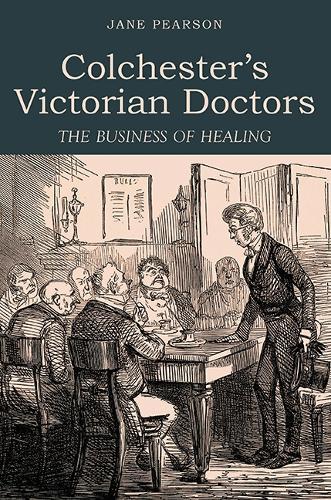
Important medical discoveries were made during Queen Victoria’s reign but in this study Jane Pearson is not so much concerned with medical progress as with the question of how the profession of medicine developed. The book shows how doctors working in Colchester during the Victorian period developed professionally and also investigates the extent to which they effected medical and social change in the town. Prior to the Medical Act of 1858 most doctors worked as individual businessmen, building up a manageable practice in competition with other medics in their locality. Deriving their income directly from their patients, doctors were inclined to refrain from discussing their medical work in public, preferring to maintain patient confidentiality and to appear conservative. It was difficult to make a reputation in these circumstances and, as a result, some medics looked to local politics to increase their local standing. After the Act, which set up the register of qualified doctors and instituted a professional code, the results of medical research began to be shared more widely. Doctors had to learn to cooperate, to call upon colleagues for assistance when necessary and to communicate techniques that worked for their patients. The education and training of doctors developed to feed and support this change. Dr Pearson examines how this was achieved over one or two generations and also considers the degree of agency that was exercised by the town’s doctors, particularly within the entrenched power structures in the town’s hospitals, and in relation to campaigns for healthier living conditions. The author looks at how the Poor Law welfare system became a point of contention for the profession, as its relatively poor remuneration for medical officers risked reducing doctors’ professional status in general. In Colchester, most of the doctors who served the pauperised section of the community did so for a good number of years and most showed a tolerance and understanding of the difficulties involved in impoverished lives. Drawing on a wealth of detailed research, Dr Pearson’s fascinating account of how these significant changes were achieved in one small Essex town sheds light on a little-known area of medical history.
Full Product Details
Author: Jane Pearson
Publisher: University of Hertfordshire Press
Imprint: Essex Publications (Imprint of University of Hertfordshire Press)
Dimensions:
Width: 15.60cm
, Height: 1.20cm
, Length: 23.40cm
ISBN: 9781912260799
ISBN 10: 1912260794
Publication Date: 01 June 2026
Audience:
College/higher education
,
General/trade
,
Postgraduate, Research & Scholarly
,
General
Format: Paperback
Publisher's Status: Forthcoming
Availability: Not yet available

This item is yet to be released. You can pre-order this item and we will dispatch it to you upon its release.
Author Information
Jane Pearson taught local and social history at the University of Essex. She has published Prostitution in Victorian Colchester (UH Press, 2018) as well as papers on Essex local history.