Overview
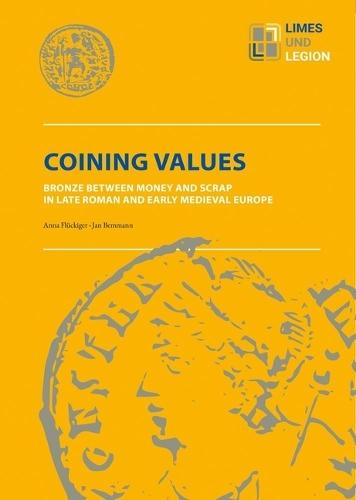
Base metal fragments from archaeological sites in the Roman Northwest and adjacent Barbaricum are largely classed as recycling material up until Late Antiquity. At that time, however, coinage experiences a massive change. Bronze coins become increasingly devalued before entirely disappearing from the monetary system during the first half of the 5th century AD. The archaeological record reflects this transformation in a complex, enigmatic manner. Viewed together, the practices surrounding coins and scrap reveal a myriad of questions concerning possible meanings of value and their transformations. In some instances, people tried to melt down bronze coins, in order to recycle them: was this devaluation or valorization? On one hand, some excavations yield carpet-like layers of scattered coins. Were they lostor discarded? On the other, the Theodosian bronze coin hoards must also be taken into account: stashes of value or waste metal rendered useless? On the same note, the question arises whether artefacts were fragmented into weighted unitsas is the case for the well-known (Hack-)silver. If so, for what purpose, and on which chronological, regional and quantitative scale? Did Hackbronze, occasionally or even regularly, hold para-monetary functions equal to small ingots? The volume contains the papers presented at an international conference held in Bonn on October 2628, 2023. The conference provided an opportunity to examine how to reconstruct transformations in practice such as the above toward coins and base metal artefacts, thus assessing the significance of bronze within material culture. It was possible to approach not only the extent of monetization, but also rarely-identified materialand immaterial values and meanings which in turn can be linked to the material practice as well as the created artefacts. The conference offered space for an international forum at the intersection of both Roman (Provincial) and early Historic archaeology, and Numismatics. The issues raised concerned the base metal coins in the archaeological record, their circulation and manners of reuse, phenomena around counterfeits and local imitations, as well as practices regarding copper alloy artefacts: origin and production, transport and trade. Special attention was paid to fragmentation, reuse, deposition and loss. Supraregional trends were observed as well as small-scale occurrences.
Full Product Details
Author: Jan Bemmann ,
Anna Fluckiger
Publisher: Dr Ludwig Reichert Verlag
Imprint: Dr Ludwig Reichert Verlag
Weight: 0.236kg
ISBN: 9783752008166
ISBN 10: 3752008164
Pages: 224
Publication Date: 28 January 2025
Audience:
General/trade
,
General
Format: Hardback
Publisher's Status: Active
Availability: In Print

This item will be ordered in for you from one of our suppliers. Upon receipt, we will promptly dispatch it out to you. For in store availability, please contact us.
Author Information
Anna Fluckiger, born in 1987, studied in Munich and Bonn and is currently a postdoctoral assistant in prehistory and early historic archaeology at the University of Basel. Her main interests are the archaeology of Late Antiquity and the Early Middle Ages. Jan Bemmann has held the professorship in Prehistoric and Early Historic Archaeology at the University of Bonn since 2004. He is the spokesperson for the long-term project ""Limes and Legion"" in the funding program of the Union of Academies. Anna Fluckiger, born in 1987, studied in Munich and Bonn and is currently a postdoctoral assistant in prehistory and early historic archaeology at the University of Basel. Her main interests are the archaeology of Late Antiquity and the Early Middle Ages. Jan Bemmann has held the professorship in Prehistoric and Early Historic Archaeology at the University of Bonn since 2004. He is the spokesperson for the long-term project ""Limes and Legion"" in the funding program of the Union of Academies.