|
|
|||
|
||||
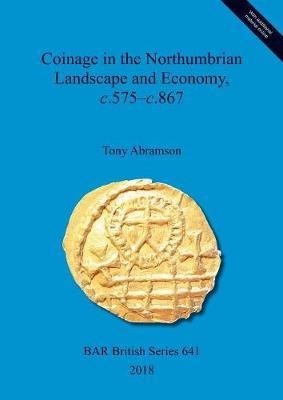
OverviewThis book presents the author's digitization of Pirie's substantial yet flawed corpus of 9th-century Northumbrian 'stycas'. This database, enhanced by data from elsewhere, is compared by location with the artefactual database known as VASLE (created at the University of York, 2008) to demonstrate that the co-occurrence of coins and portable artefacts defines monetary evolution in Northumbria. Additionally, the author presents a new periodization and reveals the previously disparaged gold shillings of York to have been issued by Bishop Paulinus, a disruptive finding chronologically, with wider consequences. Northumbria benefited increasingly, both monetarily and fiscally, as the face value of coins fell. Other conclusions include the idea that Northumbrian coin production was erratic; that the Yorkshire Wolds were more highly monetized than the surrounding lowlands, indicating a more enterprising culture; that styca hoards represent episcopal expropriations; and that there were significant changes in settlement and economy in the central lowlands. This work demonstrates that monetization reflected northern independence, innovation and enterprise. Full Product DetailsAuthor: Tony AbramsonPublisher: BAR Publishing Imprint: BAR Publishing Weight: 0.913kg ISBN: 9781407316536ISBN 10: 1407316532 Pages: 228 Publication Date: 31 July 2018 Audience: Professional and scholarly , Professional & Vocational Format: Mixed media product Publisher's Status: Active Availability: Available To Order We have confirmation that this item is in stock with the supplier. It will be ordered in for you and dispatched immediately. Table of ContentsList of Figures List of Graphs List of Plates List of Tables Preface List of Abbreviations Abstract PART ONE: AIMS AND BACKGROUND 1 Introduction 2 Perspectives on Monetization 2.1 Anthropology 2.1.1 The Historical Perspective 2.2 Archaeology 2.3 Land Ownership 2.4 Economics 2.5 Monetary History 2.6 Numismatics 2.7 Land Use 2.8 Law 2.9 Southumbria 2.10 Scandinavia 2.11 Synthesis 2.12 Illustrations-Chapters 1 and 2 3 Hypothesis 3.1 Definition of Terms 3.2 The Early Medieval Economy 3.3 Hypothesis of Monetization 3.3.1 Elite Use of Gold 3.3.2 Mercantile Use of Silver 3.3.3 Domestic Use of Base Metal: Copper Alloy 4 Historical Framework for Northumbrian Monetization 4.1 Periodization 4.2 Gold: Periods 1-3 4.2.1 The Migration Period 4.2.2 The Conversion Period 4.2.3 Kings 4.2.4 The Episcopacy 4.2.5 Coin Production 4.2.5.1 Period 1. The Coinage of Sub-Roman Britain, c. 410-c. 470 4.2.5.2 Period 2. Imported Pseudo-Imperial Victory Tremisses c. 470-c. 587 4.2.5.3 Period 3a. Imported Merovingian Gold Coinage, c. 587-c. 670 4.2.5.4 Period 3b. Early Anglo-Saxon gold coinage, c. 620s-c. 660s 4.2.5.5 Period 3c. Southumbrian Pale Gold Shilling, c. 660s 4.2.6 Illustrations-Gold Periods 1-3 4.3 Silver: Periods 4-8 4.3.1 Historical Background: Northumbria after the Battle of Nechtansmere, 685 4.3.1.1 Kings 4.3.1.2 The Episcopacy 4.3.2 Coin Production: Brief Introduction to Sceattas 4.3.2.1 Northern Coinages in the Eighth Century 4.3.2.2 Period 4. Primary Sceattas 4.3.2.3 Period 5. Secondary Sceattas 4.3.3 Conclusion 4.3.4 Illustrations-Silver Periods 4-8 4.4 Copper Alloy: Periods N9-10: Ninth-century Northumbria 4.4.1 Historical Background 4.4.1.1 Kings 4.4.1.2 The Episcopacy 4.4.2 Coin Production: Northumbrian Sceattas or Stycas? The Silver-alloy Emissions of Eanred 4.4.3 Hoard Evidence 4.4.4 Single Finds 4.4.5 A Simpler Approach 4.4.6 Sphere of Influence 4.4.7 The Interval before Period N11, the Viking Penny of York 4.4.8 Illustrations-Copper-Alloy Periods N9-10 PART TWO: ANALYSIS AND INTERPRETATION 5 The Quantitative and Qualitative Methodologies 5.1 Evidential Constraints 5.1.1 Access Factors 5.1.2 Search Patterns 5.1.3 Soil Factors 5.1.4 Detecting Factors 5.1.5 Post-extraction Factors 5.1.6 Legal Factors 5.1.7 Discussion 5.2 The Quantitative Methodology: Database 1: Coins 5.2.1 Data-Sets and Summaries 5.2.1.1 Dataset 1: Site Finds by Period 5.2.1.2 Dataset 2: Findspot Index and Numerical Analysis 5.2.1.3 Dataset 3: The Matrices 5.2.1.4 Dataset 4: Hoard Material 5.2.2 Hoards and Single Finds 5.2.3 Conventional Numismatic Production Metrics 5.3 The Qualitative Methodology: Database 2: Artefacts 5.3.1 Dataset 5: Early Medieval Yorkshire Artefacts 6 Data Analysis 6.1 Quantitative Analysis 6.1.1 Analytical Tools 6.1.2 The Normal Distribution of Coins (Dataset 1) 6.1.3 Dataset 7: Roman Finds Distribution 6.2 Qualitative Analysis 6.2.1 Co-occurrence 6.2.2 Additional Analytical Tools 6.3 Application of Analytical Tools 6.3.1 Temporal Analysis 6.3.2 Dataset 8: Geographic Analysis 6.3.3 Dataset 9: Source Analysis 6.4 Numismatic Findings 6.4.1 Production 6.4.1.1 The Normal Distribution, Stycas 6.4.1.2 Dataset 10: Average Weights, Stycas 6.4.1.3 Dataset 11: Metal Analysis: Stycas CKN 6.4.1.4 Dataset 12: Die Links 6.4.1.5 Die Axes 6.4.1.6 Die Longevity 6.4.1.7 Dataset 13: Motifs 6.4.2 Coin Use 6.4.2.1 Gold 6.4.2.2 Silver 6.4.2.3 Copper Alloy 6.4.3 Lesser Numismatic Findings 6.4.3.1 Dataset 14: Archbishop Wulfhere 6.5 Illustration-Chapter 6 7 Case Studies 7.1 York and Its Environs (Dataset 15) 7.1.1 Archaeology: The Anglian Period 7.1.2 Coinage 7.1.3 Comparison with Normal Distribution 7.1.4 Comparison with Roman Finds 7.1.5 Fishergate Comparisons 7.1.6 Inner York 7.1.7 Outer York 7.1.8 Artefact Dataset 7.1.9 Conclusion 7.1.10 Illustrations-York and Its Environs 7.2 The Central Lowlands (Dataset 16) 7.2.1 Site Studies 7.2.2 Comparison to Normal Distribution 7.2.3 Comparison to Roman Finds 7.2.4 The Artefactual Dataset 7.2.5 Conclusion 7.2.6 Illustrations-The Central Lowlands 7.3 The Yorkshire Wolds (Dataset 17) 7.3.1 Wolds West 7.3.1.1 Wolds West 7.3.1.2 Numismatic Summary-Wolds West 7.3.1.3 The Artefactual Dataset-Wolds West 7.3.1.4 Illustrations-The Yorkshire Wolds West 7.3.2 Wolds Central 7.3.2.1 Wolds Central 7.3.2.2 Numismatic Summary-Wolds Central 7.3.2.3 The Artefactual Dataset-Wolds Central 7.3.2.4 Illustrations-The Yorkshire Wolds Central 7.3.3 Wolds East 7.3.3.1 Wolds East 7.3.3.2 Grave Goods and Small hoards-Wolds East 7.3.3.3 Numismatic Summary-Wolds East 7.3.3.4 The Artefactual Dataset-Wolds East 7.3.4 Comparison to Normal Distribution-Wolds 7.3.5 Comparison to Roman Finds - Wolds 7.3.6 The Artefactual Dataset-Wolds 7.3.7 Conclusion 7.3.8 Illustrations-The Yorkshire Wolds East 7.4 Beverley (Dataset 18) 7.5 Holderness-East Yorkshire Coastal Plateau (Dataset 18) 7.5.1 Comparisons to Norm and Roman Finds 7.5.2 The Artefactual Dataset 7.5.3 Conclusion 7.5.4 Illustrations-Beverley and Holderness 7.6 The Vale of Pickering (Dataset 19) 7.6.1 Site Studies 7.6.1.1 Southern Routeway (now A64) 7.6.1.2 Southern Routeway-Conclusion 7.6.2 Northern Routeway (the Modern A170) 7.6.3 Comparison to Normal Distribution 7.6.4 Comparison to Roman Finds 7.6.5 The Artefactual Dataset 7.6.6 Conclusion 7.6.7 Illustrations-the Vale of Pickering 7.7 Bernicia and the North 7.7.1 Vicii Regius-Regal Sites 7.7.2 Ecclesiastical Sites 7.7.3 Comparison to Normal Distribution 7.7.4 Comparison to Roman Finds 7.7.5 The Artefactual Dataset 7.7.6 Conclusion 7.7.7 Illustrations-Bernicia and the North 8 Conclusions 8.1 Monetization 8.1.1 Evolution 8.1.2 Power 8.1.3 Regional Differences 8.1.4 Expropriation 8.1.5 Settlement Patterns 8.2 Impact 8.3 Future Research Directions Bibliography Maps Index of Site StudiesReviews'Northern England's monetary history was quite distinct from that of the south in the pre-Viking period, and Abramson's ambitious book is one of the few sustained discussions of it.[All] eight chapters.fizz with new information.There are aspects of Abramson's methodology and conclusions that may be found controversial, but this important book should rightly serve to prompt fresh discussion.' Rory Naismith, Current Archaeology, Issue 346, January 2019 'The data is detailed and comprehensive and its interpretation has the benefit of the author's expert knowledge of the crucial numismatic material. . The sheer depth and breadth of the chronological and geographical analysis of relevant Northumbrian finds . provides a unique perspective on the role of money in the community at that time.' Dr Stewart Lyon, Fellow of the Society of Antiquaries of London 'Abramson's project offers a combination of scope and detail that is not easily paralleled in existing literature. . As a significant and thorough analysis of monetary production and circulation in the north of England, [it] represents a significant contribution to knowledge.' Dr Rory Naismith, King's College London 'The data is detailed and comprehensive and its interpretation has the benefit of the author's expert knowledge of the crucial numismatic material. . The sheer depth and breadth of the chronological and geographical analysis of relevant Northumbrian finds . provides a unique perspective on the role of money in the community at that time.' Dr Stewart Lyon, Fellow of the Society of Antiquaries of London 'Abramson's project offers a combination of scope and detail that is not easily paralleled in existing literature. . As a significant and thorough analysis of monetary production and circulation in the north of England, [it] represents a significant contribution to knowledge.' Dr Rory Naismith, King's College London Author InformationTony Abramson has lectured and published widely on early medieval coinage, is president of the Yorkshire Numismatic Society and organises biennial symposia. He was awarded the British Numismatic Society's Jeffrey North medal in 2017. His Sceatta List (second edition) was nominated for the 2018 International Association of Professional Numismatistsbook prize. Tab Content 6Author Website:Countries AvailableAll regions |
||||