Overview
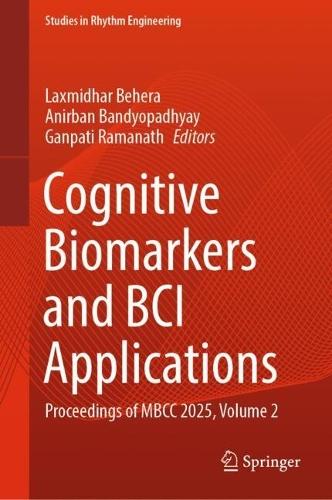
This book presents a cutting-edge collection of research at the intersection of neuroscience, cognitive science, artificial intelligence, and consciousness studies. Covering a wide range of empirical and conceptual contributions, the chapters explore neural mechanisms of attention, emotion, motor control, and perception through advanced techniques such as EEG, MEG, fMRI, and BCI. Topics include brainwave modulation, meditation, seizure detection, machine learning in cognitive diagnostics, and AI-enabled health tools. The book also delves into language models, mind wandering, neuroplasticity, and psychophysiological interventions such as yoga, hypnotherapy, and nostril breathing. Integrating computational paradigms with experimental neurobiology, this collection showcases the growing synergy between traditional contemplative practices and modern brain science. It is an essential resource for scholars and practitioners seeking to understand the neural underpinnings of consciousness, cognition, and mental wellbeing in an age of digital transformation and interdisciplinary inquiry.
Full Product Details
Author: Laxmidhar Behera ,
Anirban Bandyopadhyay ,
Ganpati Ramanath
Publisher: Springer Nature Switzerland AG
Imprint: Springer Nature Switzerland AG
ISBN: 9783032206336
ISBN 10: 3032206332
Pages: 340
Publication Date: 08 June 2026
Audience:
Professional and scholarly
,
College/higher education
,
Professional & Vocational
,
Postgraduate, Research & Scholarly
Format: Hardback
Publisher's Status: Forthcoming
Availability: Not yet available

This item is yet to be released. You can pre-order this item and we will dispatch it to you upon its release.
Author Information
Prof. Laxmidhar Behera is the director of IIT Mandi and a senior professor in the Department of Electrical Engineering at IIT Kanpur. He earned his B.Sc. (Engg) and M.Sc. (Engg) from NIT Rourkela and completed his Ph.D. from IIT Delhi in 1996. With postdoctoral research at the German National Research Centre for Information Technology, he has over 28 years of experience in teaching and research. His expertise spans intelligent systems, control, vision-based robotics, warehouse automation, brain–computer interfaces, drone technology, and consciousness studies. He has led projects worth over ₹25 crores and collaborated with TCS, Renault Nissan, and BEL. Prof. Behera has supervised 31 Ph.D. students, 70+ master's theses, authored three textbooks, and published over 380 papers. His book Intelligent Control of Robotic Systems won the Best Engineering Book Award (2020–21). Anirban Bandyopadhyay is a Principal Research Scientist at the National Institute for Materials Science (NIMS), Tsukuba, Japan. He did Ph.D. in IACS, Kolkata, 2005. 2005-2008 ICYS research fellow at ICYS, NIMS, Japan. In 2008, joined NIMS, built organic jelly based artificial brain, quantum computer, molecular motor based drugs, invented Dodecanogram for deep consciousness measurement, built Polyatomic time crystal based Quantum cryptographic language, written a book “Nanobrain: The making of an artificial brain from a time crystal”, 2020. 2013-2014 visiting professor at the Massachusetts Institute of Technology (MIT), USA. Hitachi Science and Technology award 2010, Inamori Foundation award 2011–2012, Kurata Foundation Award, and Sewa Society International member, Japan. Published 197 papers, 42 patents, 43 products invented, 14 inventions commercialized, edited 27 books. Prof. Ganpati Ramanath is the John Tod Horton professor at Rensselaer Polytechnic Institute. He received his Ph.D. in Materials Science and Engineering from the University of Illinois Urbana in 1997, following degrees from IIT Madras and the University of Cincinnati. His research focuses on structure-processing-property relationships in nanomaterials and interfaces for energy and electronics. He has published over 185 journal articles (h-index 53, ~12,000 citations), holds 9 US patents, and has delivered more than 235 invited talks globally. A co-founder of ThermoAura Inc., he served as the director of the NY State Center for Future Energy Systems and was an editor for IEEE Transactions on Nanotechnology. Honors include Fellowships of MRS, APS, and AVS, the NSF CAREER Award, and the Humboldt Bessel Award. He has held visiting positions at institutions in Germany, Japan, Sweden, Australia, and India, including IISc Bangalore and RWTH Aachen.