Overview
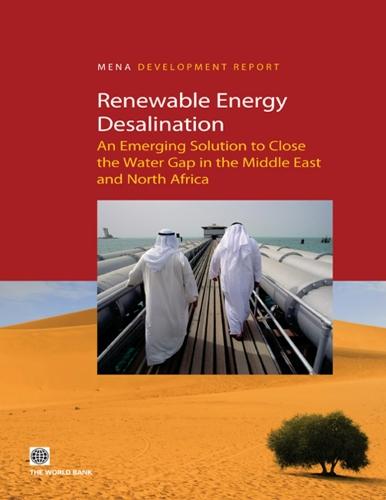
The Middle East and North Africa (MENA) region can be considered as the most water-scarce region of the world. Large-scale water management problems are already apparent in the region. Aquifers are over-pumped, water quality is deteriorating, and water supply and irrigation services are often rationed - wiith consequences for human health, agricultural productivity, and the environment. As the MENA region’s population doubles over the next 40 years, per capita water availability will fall by more than 50 percent by 2050. Moreover, climate change will affect weather and precipitation patterns with the consequence that the MENA region may see more frequent and severe droughts. Nevertheless, this very scarce water is managed poorly. Inefficiencies are common in the agriculture sector: irrigation consumes the lion’s share of water extracted and yet agricultural water use efficiencies in some countries are abnormally low. Municipal and industrial water systems have abnormally high unaccounted-for water, and utilities are financially unsustainable. As a result, most countries overexploit their fossil aquifers to meet the water demand gap. Many countries in the Region are using desalinated water as an alternative mix in their water supply portfolio. However, desalinated water is expensive, and the desalination process is energy intensive. For example, Saudi Arabia is desalinating more than 1 million cubic meters of water every day for its municipal and industrial water supply needs, burning approximately 10 percent of its daily oil production. If the status quo continues, the projection is that, by 2050, Saudi Arabia and many other countries in the Region will consume for desalination most of the oil that they produce. Overexploitation of fossil aquifers is not sustainable, nor is the use of fossil fuel for desalination to meet the water gap. The World Bank has undertaken this initiative to generate an improved understanding of water issues in the region and an overview of available options under different scenarios of water supply and demand management. This study applies state-of-the-art approaches to assess the current and future water demand, supply, and shortage in the 22 MENA countries. The analyses are based on results of nine global climate change models. It explores options, and associated costs, to overcome water shortage. To overcome current and future water shortage countries have a range of options at their disposal to respond and adapt. These options fall in three broad categories: increasing productivity, expanding supply, and reducing demand. For each of these three categories, typical options are explored. The study indicates that a mix of country-specific approaches is required. It presents a methodology to prioritize options to bridge the water gap, using the marginal cost of water approach. A paradigm shift is required to make better use of desert land, desert sun and salty water”all of which are abundant in the Region”to ensure sustainable growth. While aspiring to bring new water and new energy into the water and energy mix for the Region, the paradigm shift also should focus on managing better the water that is already available.
Full Product Details
Author: Bekele Debele Negewo
Publisher: World Bank Publications
Imprint: World Bank Publications
Dimensions:
Width: 17.50cm
, Height: 1.20cm
, Length: 24.80cm
Weight: 0.500kg
ISBN: 9780821388389
ISBN 10: 082138838
Pages: 192
Publication Date: 30 September 2012
Audience:
General/trade
,
General
Format: Paperback
Publisher's Status: Active
Availability: In Print

This item will be ordered in for you from one of our suppliers. Upon receipt, we will promptly dispatch it out to you. For in store availability, please contact us.