|
|
|||
|
||||
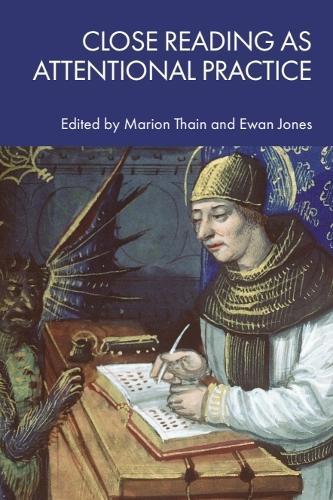
OverviewModernity of the digital age is beset by accusations that we are more distracted than ever, and that attention spans have become problematically compressed. It is an important moment, then, to explore the capacity of the tools of 'close reading' offered by our humanities disciplines to help develop and enable self-reflexivity around our attentional practices. These practices did not begin with the famous proponents of the early twentieth century but have been in formation since at least the Middle Ages. Exploring examples from the twelfth to the twentieth century, this book explores how methods of reading closely have been tools over the centuries for changing or challenging attentional habits and therefore changing the way the world is experienced. Full Product DetailsAuthor: Marion Thain (Professor of Culture and Technology at the University of Edinburgh and Director of the Edinburgh Futures Institute, University of Edinburgh) , Ewan Jones (Associate Professor of English, University of Cambridge)Publisher: Edinburgh University Press Imprint: Edinburgh University Press ISBN: 9781399521116ISBN 10: 139952111 Pages: 264 Publication Date: 30 November 2025 Audience: College/higher education , Postgraduate, Research & Scholarly Format: Hardback Publisher's Status: Active Availability: Not yet available This item is yet to be released. You can pre-order this item and we will dispatch it to you upon its release. Language: English Table of ContentsList of Figures Notes on Contributors Introduction: Close Reading and Attention Marion Thain and Ewan Jones 1. Literary Attention, Animation and Imagined Communities in Bernard of Clairvaux’s Sermons on the Song of Songs Julie Orlemanski 2. Reading as a Mode of Attention: Medieval Prayer Practice and the Reader’s Speculation Racha Kirakosian 3. Genesis of Attention to Secular Verse: Sir Philip Sidney’s Defence of Poesy and Elizabethan Poetic Theory Nigel Smith 4. ‘A Stranger Upon Earth’: Thomas Traherne, Meditation and the Form of Poetic Attention Jane Partner 5. Divided: Distraction as a Vibrant Style of Mind in Jane Austen Natalie M. Phillips and Sydney Logsdon 6. Aesthetic Technologies of Attention: Aestheticism, Impressionism, Criticism and Oscar Wilde Marion Thain 7. On Interest and Being Interested: Attention and Reading in Proust Patrick ffrench 8. Reading in a Darkened Room: I. A. Richards and the Uses of Distraction Ewan Jones 9. Close Reading and the Hermeneutic Circle of Attention Atti Viragh 10. Lydia Davis and the Power of Sentences Eileen John IndexReviewsWhen attention is under siege, reading remains our best defence – not as shelter, but as training. Across centuries, from Bernard of Clairvaux to Austen and Proust and beyond, reading teaches us to notice how we notice. The essays in this volume do the same: by attending to each other, they invite us to join the conversation. -- David Marno, University of California, Berkeley Author InformationMarion Thain is Professor of Culture and Technology at the University of Edinburgh and Director of Edinburgh Futures Institute. She publishes primarily on the relationship between culture and technology (understood in the broadest terms) and her current projects sit within the interdisciplinary field of attention studies. See marionthain.org for more details. Ewan Jones is Associate Professor of English at the University of Cambridge. He is the author of Coleridge and the Philosophy of Poetic Form (2014) and The Turn of Rhythm: How Victorian Poetry Shaped a Concept (2023), along with numerous articles on prosody, poetics, digital humanities and pedagogy, for journals that include Critical Inquiry, Representations and ELH. Tab Content 6Author Website:Countries AvailableAll regions |
||||