Overview
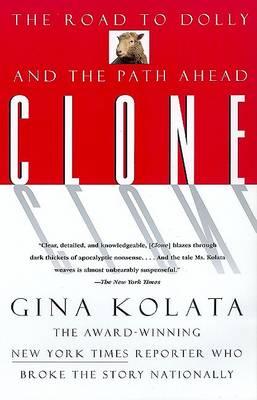
The birth of Dolly -- the world's first clone -- placed in our hands the secret of creation. Few discoveries have so altered our notion of what it means to be human, or presented such a Gordian knot of ethical, spiritual, and scientific questions. Noted science journalist Gina Kolata broke the news nationally in The New York Times and was the first reporter to speak with Dr. Ian Wilmut, the embryologist who cloned Dolly. Now Kolata reveals the story behind Dolly, interweaving the social and cultural tales of our fear and fascination with cloning, reaching back nearly a century, with the riveting scientific accountof how a clone came to be and the mind-boggling questions Dolly presents for our future.Clone is a compelling blend of scientific suspense, dreams dashed, and frauds exposed, with provocative philosophical questions and an astute assessment of why Dolly's birth was only possible now. Like The Making of the Atomic Bomb, Lucy, and Chaos, this book gives us a window on history in the making, and an understanding of its profound effect on our lives.
Full Product Details
Author: Gina Kolata
Publisher: PerfectBound
Imprint: PerfectBound
Dimensions:
Width: 15.00cm
, Height: 1.80cm
, Length: 23.30cm
Weight: 0.431kg
ISBN: 9780688166342
ISBN 10: 0688166342
Pages: 292
Publication Date: 06 January 1999
Audience:
General/trade
,
General
Format: Paperback
Publisher's Status: Active
Availability: Awaiting stock

The supplier is currently out of stock of this item. It will be ordered for you and placed on backorder. Once it does come back in stock, we will ship it out for you.
Reviews
"""Kolata brings keen insight to her analysis of the implications of cloning and makes the complex details of genetics and cellbiology interesting and accessible. And she tells a great story, noting the curious twists and turns on the road to Dolly andhow humble animal scientists carried out the plodding work of making cloning a reality. What lies ahead? Cloning can makeit possible to grow organs for transplant, to produce inexpensive pharmaceuticals and help infertile couples have children.Will it also degrade individuality and increase human arrogance? Theologians, ethicists and scientists differ on thesequestions. But the impact of this new technology, made clear through Kolata's expert coverage, cannot be overstated.""-- ""Publishers Weekly"""
Kolata brings keen insight to her analysis of the implications of cloning and makes the complex details of genetics and cellbiology interesting and accessible. And she tells a great story, noting the curious twists and turns on the road to Dolly andhow humble animal scientists carried out the plodding work of making cloning a reality. What lies ahead? Cloning can makeit possible to grow organs for transplant, to produce inexpensive pharmaceuticals and help infertile couples have children.Will it also degrade individuality and increase human arrogance? Theologians, ethicists and scientists differ on thesequestions. But the impact of this new technology, made clear through Kolata's expert coverage, cannot be overstated. -- Publishers Weekly