Overview
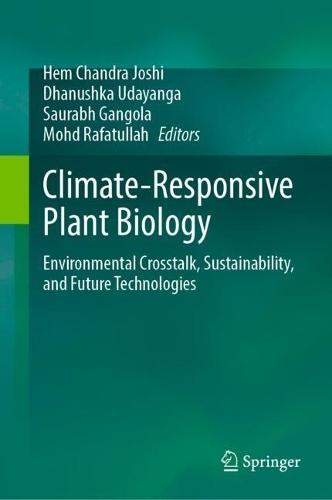
This book explores how plants interact with their environment, especially in the face of climate change. It explains how changing weather patterns and environmental conditions impact plant growth, health, and survival. The book also highlights how plants adapt to stress and the role of science and technology in helping plants cope with these changes. The chapters cover a wide range of topics such as the effects of climate change on plant physiology and growth, adaptation strategies, distribution patterns, and conservation. It also discusses sustainable agriculture, advanced research tools like phenomics and green nanotechnology, and even the role of microbes, epigenetics, and socio-economic factors in plant-environment interactions. This book is a valuable resource for students, researchers, educators, and professionals in plant sciences, agriculture, environmental studies, and climate science. It offers updated knowledge and innovative solutions for managing plant systems sustainably in a changing world.
Full Product Details
Author: Hem Chandra Joshi ,
Dhanushka Udayanga ,
Saurabh Gangola ,
Mohd Rafatullah
Publisher: Springer Verlag, Singapore
Imprint: Springer Verlag, Singapore
ISBN: 9789819573530
ISBN 10: 981957353
Pages: 305
Publication Date: 04 April 2026
Audience:
College/higher education
,
Professional and scholarly
,
Tertiary & Higher Education
,
Professional & Vocational
Format: Hardback
Publisher's Status: Forthcoming
Availability: Not yet available

This item is yet to be released. You can pre-order this item and we will dispatch it to you upon its release.
Author Information
Dr. Hem Chandra Joshi, Assistant Professor of Botany at D.S.B. Campus, Kumaun University, Nainital, specializes in plant physiology and nutrient-environment interactions. He earned his Ph.D. in Plant Physiology from G.B. Pant University of Agriculture and Technology, Pantnagar, and completed his M.Sc. in Botany as a University Gold Medallist. With more than nine years of research and teaching experience, his work integrates mineral nutrition, environmental biotechnology, bio-nanotechnology, and biosensor applications to support sustainable agriculture and precise plant health monitoring. Dr. Joshi has published over 35 peer-reviewed research papers, presented at national and international scientific forums, and supervised postgraduate dissertations. He actively engages in academic development through workshops, FDPs, scientific webinars, and membership in professional scientific societies. In recognition of his research contributions, he received the Young Scientist Award from the State Science and Technology Department. He also serves as a reviewer for several reputed international journals, including review contributions for 3 Biotech (4 manuscripts), Agricultural Water Management (2), Environmental Research Communications (15), Materials Research Express (2), Nano Express (1), and Plant Nano Biology (8). His scientific and academic leadership aims to promote interdisciplinary research and technological innovation for environmentally resilient and resource-efficient agricultural systems. Prof. Dhanushka Udayanga is affiliated with the Department of Applied Sciences, Faculty of Humanities and Sciences, Sri Lanka Institute of Information Technology (SLIIT), where he teaches and conducts research in biotechnology and mycology. He has extensive research experience, with a focus on molecular systematics of fungi and their applications in agriculture and environmental sciences. He obtained his Ph.D. from Mae Fah Luang University, Thailand, and has served as a visiting scientist at the United States Department of Agriculture, Agricultural Research Services (USDA-ARS) in Beltsville, Maryland, USA. Prof. Udayanga has authored over 50 research articles in reputed international journals and is actively involved in peer review and editorial duties for several academic journals. Dr. Saurabh Gangola is an Assistant Professor in the Department of Microbiology at Graphic Era University, Dehradun, India. He brings more than six years of teaching and research experience, particularly in environmental microbiology. He holds a doctorate in Microbiology and his core research interests include the biodegradation and bioremediation of xenobiotic compounds such as pesticides, dyes, heavy metals, and polyaromatic hydrocarbons. Dr. Gangola has been recognized with the Governor Research Award in 2019 by the state of Uttarakhand. He has published 60 research and review papers, contributed 37 book chapters, edited 3 academic books, and holds 5 patents in related fields. Dr. Mohd Rafatullah is currently an academic staff member in Environmental Technology at the School of Industrial Technology, Universiti Sains Malaysia (USM), Malaysia. He began his journey at USM as a Postdoctoral Fellow in 2008. He earned his Ph.D. in Environmental Chemistry from Aligarh Muslim University (AMU), India, in 2007. His areas of specialization include environmental pollutants, nanomaterials for environmental applications, water and wastewater treatment, adsorption and ion exchange mechanisms, and instrumental analytical techniques. Dr. Rafatullah has published numerous research and review articles in international journals and has presented his findings at both national and international conferences. He actively participates in professional development through various workshops and seminars worldwide.