Overview
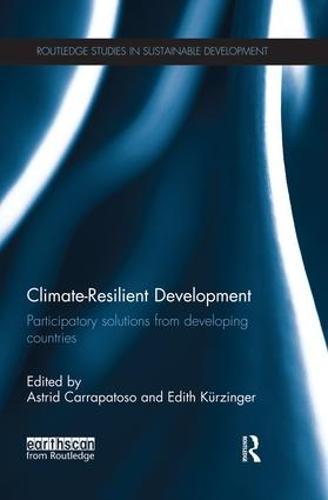
The concept of resilience currently infuses policy debates and public discourse, and is promoted as a normative concept in climate policy making by governments, non-governmental organizations, and think-tanks. This book critically discusses climate-resilient development in the context of current deficiencies of multilateral climate management strategies and processes. It analyses innovative climate policy options at national, (inter-)regional, and local levels from a mainly Southern perspective, thus contributing to the topical debate on alternative climate governance and resilient development models. Case studies from Africa, Asia, and Latin America give a ground-level view of how ideas from resilience could be used to inform and guide more radical development and particularly how these ideas might help to rethink the notion of 'progress' in the light of environmental, social, economic, and cultural changes at multiple scales, from local to global. It integrates theory and practice with the aim of providing practical solutions to improve, complement, or, where necessary, reasonably bypass the UNFCCC process through a bottom-up approach which can effectively tap unused climate-resilient development potentials at the local, national, and regional levels. This innovative book gives students and researchers in environmental and development studies as well as policy makers and practitioners a valuable analysis of climate change mitigation and adaptation options in the absence of effective multilateral provisions.
Full Product Details
Author: Astrid Carrapatoso (Albert-Ludwigs-University, Germany) ,
Edith Kürzinger (Profitable Social and Environmental Management Consultancy, Germany)
Publisher: Taylor & Francis Ltd
Imprint: Routledge
Dimensions:
Width: 15.60cm
, Height: 1.70cm
, Length: 23.40cm
Weight: 0.453kg
ISBN: 9781138928442
ISBN 10: 1138928445
Pages: 320
Publication Date: 09 June 2015
Audience:
College/higher education
,
Tertiary & Higher Education
Format: Paperback
Publisher's Status: Active
Availability: In Print

This item will be ordered in for you from one of our suppliers. Upon receipt, we will promptly dispatch it out to you. For in store availability, please contact us.
Reviews
...the book offers a variety of highly empirical and broad thinking chapters that offer both localized examples and expansive visions of climate-resilient development. It offers valuable information for students and analysts seeking examples of climate-related challenges. --London School of Economics and Political Science
"""...the book offers a variety of highly empirical and broad thinking chapters that offer both localized examples and expansive visions of climate-resilient development. It offers valuable information for students and analysts seeking examples of climate-related challenges. --London School of Economics and Political Science"
...the book offers a variety of highly empirical and broad thinking chapters that offer both localized examples and expansive visions of climate-resilient development. It offers valuable information for students and analysts seeking examples of climate-related challenges. - Tim Forsyth, Progress in Development Studies, London School of Economics and Political Science
Author Information
Astrid Carrapatoso is Assistant Professor at the Department of Political Science at the Albert-Ludwigs-University Freiburg, Germany. Edith Kürzinger is a freelance consultant, coach and trainer on sustainability issues with a background in development research (German Development Institute – DIE), development policy (Federal Ministry for Economic Cooperation and Development – BMZ) and project management (GTZ).