Overview
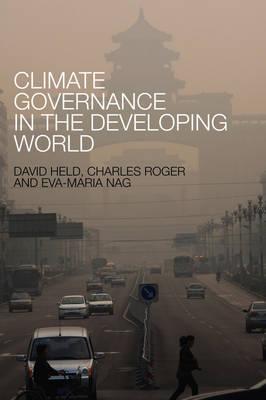
Since 2009, a diverse group of developing states that includes China, Brazil, Ethiopia and Costa Rica has been advancing unprecedented pledges to mitigate greenhouse gas emissions, offering new, unexpected signs of climate leadership. Some scholars have gone so far as to argue that these targets are now even more ambitious than those put forward by their wealthier counterparts. But what really lies behind these new pledges? What actions are being taken to meet them? And what stumbling blocks lie in the way of their realization? In this book, an international group of scholars seeks to address these questions by analyzing the experiences of twelve states from across Asia, the Americas and Africa. The authors map the evolution of climate policies in each country and examine the complex array of actors, interests, institutions and ideas that has shaped their approaches. Offering the most comprehensive analysis thus far of the unique challenges that developing countries face in the domain of climate change, Climate Governance in the Developing World reveals the political, economic and environmental realities that underpin the pledges made by developing states, and which together determine the chances of success and failure.
Full Product Details
Author: David Held (Durham University) ,
Charles Roger (University of British Columbia) ,
Eva-Maria Nag (London School of Economics and Political Science)
Publisher: John Wiley and Sons Ltd
Imprint: Polity Press
Dimensions:
Width: 15.20cm
, Height: 2.50cm
, Length: 23.00cm
Weight: 0.454kg
ISBN: 9780745662770
ISBN 10: 0745662773
Pages: 272
Publication Date: 28 June 2013
Audience:
Professional and scholarly
,
Professional & Vocational
Format: Paperback
Publisher's Status: Active
Availability: Out of stock

The supplier is temporarily out of stock of this item. It will be ordered for you on backorder and shipped when it becomes available.
Reviews
This is a book of considerable value not only to governments and other stakeholders in the developing world, but to others across the globe as well. The principle of common but differentiated responsibility really needs considerable analysis and interpretation for application in different parts of the world. This book very ably reviews global developments and developing country initiatives to highlight the choices, opportunities and challenges facing the developing world in the field of climate governance. Given the very readable material presented in these pages, I would recommend this piece of literature to anyone interested in climate issues across the globe. Rajendra K. Pachauri, Yale University This valuable book once and for all dispels the myth that developing countries are unwilling to take action to confront climate change. By disentangling the complex motivations and incentives facing policy-makers, and the obstacles they face, this is important reading for all who want to understand how all countries can be encouraged to become part of the solution to climate change. Andrew Steer, World Resources Institute The large developing countries are essential to the global effort on climate change. This book by people with deep expertise in each country tells us with authority what they are doing and how. High quality work on an important subject. Ross Garnaut, University of Melbourne
This is a book of considerable value not only to governments and other stakeholders in the developing world, but to others across the globe as well. The principle of common but differentiated responsibility really needs considerable analysis and interpretation for application in different parts of the world. This book very ably reviews global developments and developing country initiatives to highlight the choices, opportunities and challenges facing the developing world in the field of climate governance. Given the very readable material presented in these pages, I would recommend this piece of literature to anyone interested in climate issues across the globe. Rajendra K. Pachauri, Yale University This valuable book once and for all dispels the myth that developing countries are unwilling to take action to confront climate change. By disentangling the complex motivations and incentives facing policy-makers, and the obstacles they face, this is important reading for all who want to understand how all countries can be encouraged to become part of the solution to climate change. Andrew Steer, World resources Institute
Author Information
David Held is Master of University College, and Professor of Politics and International Relations, at Durham University. Eva-Maria Nag is the Executive Editor of Global Policy at the London School of Economics and Political Science. Charles Roger is a PhD student at the University of British Columbia and Liu Scholar at the Liu Institute for Global Issues.