Overview
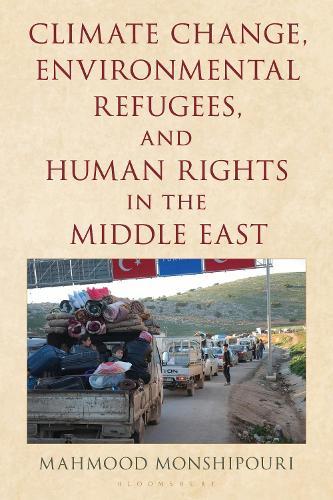
This in-depth and readable text introduces students to the current and historical impacts of climate change on the region. The Middle East and North Africa (MENA) region has experienced more frequent droughts, heat waves, and other extreme weather events than the rest of the world. Flooding has forced human migration and displacement in Egypt, Iran, and Tunisia in 2020, while wildfires have spread in Lebanon, Syria, and Turkey. The author, a specialist in the MENA region, unpacks the implications of several developments that have triggered large-scale migration from rural to urban areas in the Middle East, and North Africa, and threaten to destabilize the region. These include, among other things, widespread famine, population displacement, and the growing decline of agricultural productivity. Digging deep into key terminology and frameworks such as the 1951 Refugee Convention, climate–human rights nexus, climate-related protest, environmental politics, green investment, and climate governance, the author demonstrates how human rights and climate change are inextricably intertwined and provides additional context to support student learning. This book examines the environmental threats and history of individual countries, including a survey of how the issues of climate change, forced migration, and human rights interface with socioeconomic, political, and legal perspectives.
Full Product Details
Author: Mahmood Monshipouri
Publisher: Bloomsbury Publishing Plc
Imprint: Rowman & Littlefield
ISBN: 9781538169124
ISBN 10: 1538169126
Pages: 328
Publication Date: 16 April 2026
Audience:
College/higher education
,
Tertiary & Higher Education
Format: Hardback
Publisher's Status: Forthcoming
Availability: Manufactured on demand

Reviews
""This timely and richly researched book offers a groundbreaking synthesis of climate change, forced migration, and human rights in the Middle East. By integrating political, legal, and socioeconomic frameworks with case studies from across the MENA region, it challenges readers to rethink the emerging category of 'climate refugees' and the global justice obligations they invoke via a human rights frame. A vital read for scholars, policymakers, and advocates seeking to understand how the climate crisis is reshaping human mobility and rights in one of the world's most vulnerable regions."" --Anthony Tirado Chase, professor of Diplomacy & World Affairs, Occidental College, USA
Mahmood Monshipouri weaves theories of forced displacement, climate disasters, and systemic human rights abuse together with careful empirical work to show the complexities of climate-induced displacement. This is a must-read for anyone interested in understanding the experiences of climate refugees and the tools available to mitigate human suffering. Students and instructors alike will find the content accessible, engaging, and thought-provoking. * Courtney Hillebrecht, University of Nebraska-Lincoln * This timely and richly researched book offers a groundbreaking synthesis of climate change, forced migration, and human rights in the Middle East. It challenges readers to rethink the emerging category of ‘climate refugees’ and the global justice obligations they invoke via a human rights frame. A vital read for scholars, policymakers, and advocates seeking to understand how the climate crisis is reshaping human mobility and rights in one of the world’s most vulnerable regions. * Hussein Banai, Indiana University, Bloomington * With clarity and moral force, Monshipouri shows how environmental decline spills into displacement, human rights, and fragile sovereignties, making the ‘climate refugee’ one of the defining figures of our age. This is a work of both witness and warning, reminding us that the struggle for survival in the Middle East is inseparable from the struggle for justice everywhere. * Anthony Tirado Chase, Occidental College *
Author Information
MAHMOOD MONSHIPOURI is Professor of International Relations at San Francisco State University, USA, and Lecturer at the University of California, Berkeley, USA.