Overview
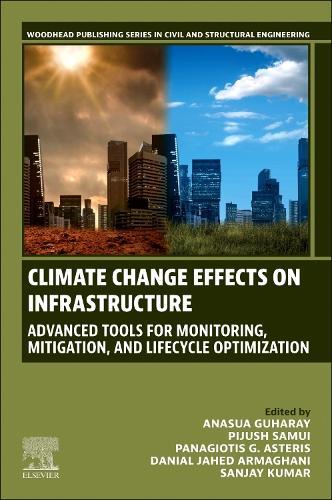
The design of structures and infrastructure facilities has typically assumed a future climate that is much the same as today’s. However, a changing climate and the resulting more extreme weather events mean those climate bands are becoming outdated, leaving infrastructure operating outside or at the limit of its tolerance levels. With its evaluation of a host of assets in the built environment, Climate Change Effects on Infrastructure: Advanced Tools for Monitoring, Mitigation, and Lifecycle Optimization instructs readers how to assess and predict structural vulnerabilities resulting from climate change as well as ensuing hazard patterns using mathematical tools and data-driven models. The carefully compiled contributions also comprehensively survey the latest technological developments and the most useful approaches to counteract and/or prevent damage and connected socio-economic risks. The volume proves to be an even more invaluable resource thanks to its real-world application examples that spotlight the urgency of further investigations into the implementation of cost-effective and sustainable adaptive measures that can enhance or extend the reliable performance, durability, and efficiency of structures and infrastructure systems throughout their entire lifecycle.
Full Product Details
Author: Anasua GuhaRay (Associate Professor, Dept. of Civil Engineering, Birla Institute of Technology and Science Pilani, Hyderabad, Telangana, India) ,
Pijush Samui (Associate Professor, Department of Civil Engineering, National Institute of Technology Patna, Patna, Bihar, India) ,
Panagiotis G. Asteris (Full Professor, Computational Mechanics Laboratory, School of Pedagogical & Technological Education, Athens, Greece) ,
Danial Jahed Armaghani (Postdoctoral Research Fellow, School of Civil and Environmental Engineering, University of Technology Sydney, Sydney, NSW, Australia)
Publisher: Elsevier - Health Sciences Division
Imprint: Woodhead Publishing
ISBN: 9780443336850
ISBN 10: 0443336857
Pages: 650
Publication Date: 01 February 2026
Audience:
Professional and scholarly
,
Professional & Vocational
Format: Paperback
Publisher's Status: Forthcoming
Availability: Not yet available

This item is yet to be released. You can pre-order this item and we will dispatch it to you upon its release.
Author Information
Dr. GuhaRay is an Associate Professor in the Department of Civil Engineering at BITS Pilani, India. She is also cross-appointed faculty at Hiroshima University, Japan. She received her PhD in Geotechnical Engineering from IIT Kharagpur, India, in 2014. Dr. GuhaRay’s main areas of expertise are ground improvement with green materials, reliability applications in geotechnical engineering, and stabilization of expansive soil with activated binders. Dr. GuhaRay has previously co-edited Green Materials in Civil Engineering for Elsevier and contributed to several journal papers, book chapters, and peer-reviewed conference proceedings alongside international teams of experts. Dr. Samui is an Associate Professor in the Department of Civil Engineering at NIT Patna, India. He received his PhD in Geotechnical Engineering from the Indian Institute of Science Bangalore, India, in 2008. His research interests include geohazard, earthquake engineering, concrete technology, pile foundation and slope stability, and application of AI for solving different problems in civil engineering. Dr. Samui is a repeat Elsevier editor but also a prolific contributor to journal papers, book chapters, and peer-reviewed conference proceedings. Professor Asteris received his B.S., M.S., and PhD in Civil Engineering from the National Technical University of Athens, Greece. He is currently a Full Professor and the Head of the Computational Mechanics Laboratory, and the Head of the Civil Engineering Department of the School of Pedagogical and Technological Education, Athens. Prof. Asteris is a trailblazer in the field of computational structural engineering. His research spans diverse areas, including artificial neural networks, soft computing, applied and computational mathematics, and masonry materials and structures. He is also the editor-in-chief of two international scientific journals and a member of the editorial board of more than ten international journals. Dr. Armaghani is currently working as a Postdoctoral Research Fellow at the School of Civil and Environmental Engineering, University of Technology Sydney, Australia. His research focuses on understanding and mitigating geotechnical and geological hazards, as well as a wide range of related topics, including slope stability analysis, rock mechanics, tunnel construction, surface and deep excavations, and applying machine learning models to solve different engineering-specific concerns. His contributions published in well-established ISI and Scopus-indexed journals and presented at national, and international conferences have had significant impact in the academic and scientific community, garnering him a spot among the top 2% of scientists from 2020 to 2023 in the list published by Stanford University. Dr. Sanjay Kumar is an Assistant Professor in the Department of Civil Engineering at NIT Patna, India. He received his PhD in Structural Engineering from the same institute in 2019. Dr. Sanjay has more than seventeen years of teaching experience, eight years of research experience, and a lot of practical knowledge from having worked in industry too. His research focuses on innovations in materials and design for civil engineering structures.