Overview
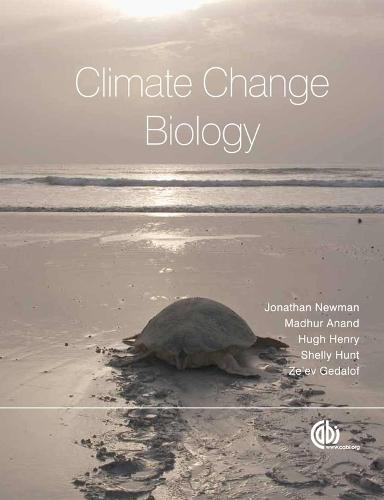
Climate change has moved from being a contested phenomenon to the top of the agenda at global summits. Climate Change Biology is the first major textbook to address the critical issue of how climate change may affect life on the planet, and particularly its impact on human populations. Presented in four parts, the first deals extensively with the physical evidence of climate change and various modelling efforts to predict its future. Biological responses are addressed in the second part, from the individual's physiology to populations and ecosystems, and further to considering adaptation and evolution. The third part examines the specific impact climate change may have on natural resources, agriculture and forestry. The final part considers research on the cutting edge of impact prediction and the practical and philosophical limitations on our abilities to predict these impacts. This text will be a useful asset to the growing number of both undergraduate and graduate courses on impacts of climate change, as well as providing a succinct overview for researchers new to the field.
Full Product Details
Author: Jonathan Newman (University of Guelph, Canada) ,
Madhur Anand (School of Environmental Sciences, University of Guelph, Canada) ,
Hugh Henry (Department of Biology, University of Western Ontario, Canada) ,
Shelley Hunt (Department of Environmental Biology, University of Guelph, Canada)
Publisher: CABI Publishing
Imprint: CABI Publishing
Dimensions:
Width: 18.90cm
, Height: 2.10cm
, Length: 24.60cm
Weight: 0.980kg
ISBN: 9781845937485
ISBN 10: 1845937481
Pages: 304
Publication Date: 01 July 2011
Audience:
Professional and scholarly
,
Professional & Vocational
Format: Hardback
Publisher's Status: Active
Availability: In Print

This item will be ordered in for you from one of our suppliers. Upon receipt, we will promptly dispatch it out to you. For in store availability, please contact us.
Reviews
"""In summary, this book is a real challenge for all those working along the human food chain and it will be very helpful for students in biology who are interested in aspects of climate change. It is also fruitful for teachers in this field and researchers in different fields of the life sciences such as plant breeding, plant cultivation, animal physiology, nutrition and health.""--Gerhard Flachowsky, Institute of Animal Nutrition, Friedrich-Loeffler-Institute (FLI), Germany (1/1/2012 12:00:00 AM)"
In summary, this book is a real challenge for all those working along the human food chain and it will be very helpful for students in biology who are interested in aspects of climate change. It is also fruitful for teachers in this field and researchers in different fields of the life sciences such as plant breeding, plant cultivation, animal physiology, nutrition and health. --Gerhard Flachowsky, Institute of Animal Nutrition, Friedrich-Loeffler-Institute (FLI), Germany (01/01/2012)
In summary, this book is a real challenge for all those working along the human food chain and it will be very helpful for students in biology who are interested in aspects of climate change. It is also fruitful for teachers in this field and researchers in different fields of the life sciences such as plant breeding, plant cultivation, animal physiology, nutrition and health. -- (01/01/2012)
Author Information
Jonathan A. Newman is at the Department of Environmental Biology, University of Guelph, Canada. Ze'ev Gedalof teaches in the Department of Geography, University of Guelph, Canada. Shelley L. Hunt is in the Department of Integrative Biology, University of Guelph, Canada. Madhur Anand teaches in Department of Geography, University of Guelph, Canada. Hugh A. L. Henry teaches in Department of Environmental Biology, University of Western Ontario, Canada.