Overview
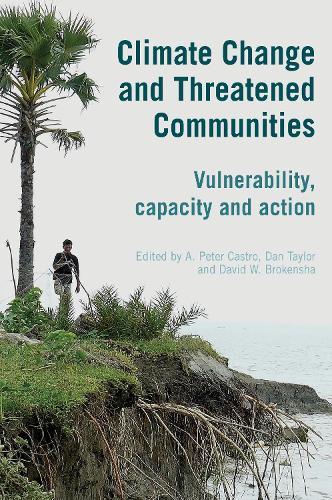
Global climate change disproportionately affects rural people and indigenous groups, but their rights, knowledge, and interests concerning it are generally unacknowledged. Shifts in precipitation, cloud cover, temperature, and other climatic patterns alter their livelihood pursuits and cultural landscapes, accentuating their existing social and economic marginalization. Planners and researchers of climate change mitigation and adaptation must take into account the knowledge and capacity of rural people, and engage them as active participants in the design and governance of interventions.This book documents the capacities and constraints to be encountered among communities facing changing climates. It explores human interactions in environments ranging from subarctic tundra to equatorial rain forest, from oceanic lagoons to inland mountains. It is important reading for policy makers and academics in climate change adaptation, anthropology and development studies.
Full Product Details
Author: Professor A. Peter Castro ,
Dan Taylor ,
Professor David W. Brokensha
Publisher: Practical Action Publishing
Imprint: Practical Action Publishing
Dimensions:
Width: 15.60cm
, Height: 1.50cm
, Length: 23.40cm
Weight: 0.475kg
ISBN: 9781853397257
ISBN 10: 1853397253
Pages: 224
Publication Date: 15 April 2012
Audience:
Professional and scholarly
,
Professional & Vocational
Format: Hardback
Publisher's Status: Active
Availability: In Print

This item will be ordered in for you from one of our suppliers. Upon receipt, we will promptly dispatch it out to you. For in store availability, please contact us.
Reviews
This book demonstrates powerfully the dynamism of indigenous knowledge and of communities' capacities for adaptation. --Robert Chambers These 15 excellent anthropological case studies (plus introduction and conclusion) on climate change and diverse responses from communities in Africa, and the Americas utilize a variety of methodologies, ranging from standard ethnographic approaches and ethno-ecological investigations of localized knowledge, perception, and innovation to an archaeological examination of Mayan farming practices. The researchers emphasize the knowledge, capacities, interests, rights, agency, and adaptability of threatened populations of farmers, hearders, fishers, and foragers under conditions resulting from extreme and unpredictable weather, drought, floods, and population shifts. In addition to documenting environmental changes faced by communities at risk the authors point out that the peopole who are the most vulnerable are generally those lease responsible for their present circumstances. Indeed environmental difficulties are not simply consequences of climate change, but also are exacerbated by policies that have favored market liberalization, technological determinism, and structural inequality, resulting in increased socioeconomic injustice and greater cultural marginalization. A more participatory approach, rather than top-down policies that have typified most efforts to integrate local populations into development efforts, may provide greater opportunities for recognizing local innovativeness and expanding the possibility that others may learn valuable lessons from threatened communities. --B. Tavakolian, Emeritus, Denison Univeristy Choice
Author Information
Professor Castro is Associate Professor of Anthropology in the Maxwell School of Citizenship and Public Affairs at Syracuse University in Syracuse, New York, USA. Dan Taylor is the Director of the British NGO Find Your Feet, and Tutor in International Development at the Open University, UK. David W. Brokensha is Professor Emeritus of Anthropology and Environmental Studies at the University of California, Santa Barbara, USA.