Overview
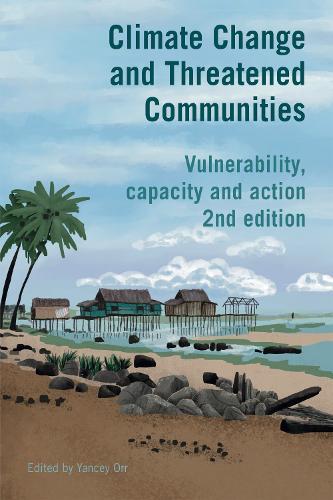
A groundbreaking follow-up to the 2012 Climate Change and Threatened Communities book, this collection revisits the 15 original case studies, offering fresh insights from the authors on their research sites as they examine parallel developments in their academic fields over the past 13 years. Through the study of human interactions in environments ranging from subarctic tundra to equatorial rain forest, and from oceanic lagoons to inland mountains, the book explores the capacities and constraints faced by communities in Bangladesh, Cameroon, Canada, Ecuador, Ethiopia, India, Indonesia, Italy, Malawi, Mexico, Mozambique, Peru, South Africa, Sudan, the United States, Vietnam, and Zimbabwe − as they confront the challenges of a changing climate. Chapters weave together critical themes, including social vulnerability to climatic uncertainty, shifts in livelihood practices, local perceptions of climatic change, and the potential and limitations of the REDD+ programme (‘United Nations Programme on Reducing Emissions from Deforestation and Forest Degradation in Developing Countries’). Essential reading for policymakers, academics, and students in climate adaptation, anthropology, and development studies, this book also offers valuable insights for anyone seeking to understand the human dimensions of climate change.
Full Product Details
Author: Yancey Orr
Publisher: Practical Action Publishing
Imprint: Practical Action Publishing
Edition: 2nd New edition
Dimensions:
Width: 15.60cm
, Height: 1.60cm
, Length: 23.40cm
Weight: 0.338kg
ISBN: 9781788534215
ISBN 10: 1788534212
Pages: 294
Publication Date: 29 August 2025
Audience:
Professional and scholarly
,
Professional & Vocational
Format: Paperback
Publisher's Status: Active
Availability: Available To Order

We have confirmation that this item is in stock with the supplier. It will be ordered in for you and dispatched immediately.
Reviews
'The 15 case studies in the 2012 edition of this influential book forefronted the stewardship of indigenous peoples in the governance of 80% of the Earth's remaining biodiversity. The new edition brings these vital stories up to date, as indigenous stakeholders become recognized partners in governance.' Steve Lansing, Santa Fe Institute and Complexity Science Hub Vienna 'In contrast to other natural disasters, it can be hard to envisage climate change: the case studies in this volume make it real, they give its phenomenological dimension. It can also be hard to envisage climate change as anything other than globally homogenous: the case studies in this volume show the diversity in the human experience of climate change, as it interacts with a host of local environmental, cultural, economic, and political variables. Finally, it is hard for policy makers to not see climate change as the singular priority of communities around the world: but the case studies in this volume show otherwise, as communities find that their even more pressing problems are those of resource scarcity, state oppression, ethnic conflict, and so on. Thus, the case studies in this volume demonstrate that climate change both is and is not a global problem, or the same global problem, of the premiere global problem for the world's societies. This volume thus shows that climate change is more complex, more 'messy', than most policy makers like to think; but however institutionally inconvenient, that is the problem that they need to recognize and tackle if they are to succeed.' Michael R. Dove, Yale School of the Environment Praise for the first edition: 'Climate Change and Threatened Communities is a timely wake-up call and reminder of the local-level practical, theoretical and ethical issues raised by climate change. Scholarly and accessible, it illuminates the rights, interests, needs, and capacities of the many vulnerable and marginalized communities threatened by climate change. For all concerned with how communities can adapt to the mounting stresses, shocks, and uncertainties of climate change, Climate Change and Threatened Communities will be a rich source of insight.' Professor Robert Chambers, Institute of Development Studies, University of Sussex 'This unique and significant book has global importance for three reasons. First, the chapters from the Americas, Africa, and Asia convincingly show that climate change is adversely affecting local communities around the world. Nine of the case studies, for example, show that communities are suffering from increasing climatic variation as is also the case with my own community studies in two other countries: Zambia and Laos. Second, the case studies demonstrate the impressive resiliency of the communities involved in trying to cope with climate change. Such adaptive resiliency in turn emphasizes the third reason which is the need for policy makers not just to realize that impacts of climate change vary from place to place but that such variance demands that they work closely with local people in assessing impacts and in formulating coping policies which in turn require further local participation in monitoring and adaptive management. Thayer Scudder, Professor Emeritus of Anthropology, California Institute of Technology 'This book is extremely important for reminding us that poor rural people in Africa have a great deal of experience in adapting to long and short cycles of climate change and that this experience is not yet being sufficiently harnessed under the climate change adaptation programmes being initiated by donors and African governments. Such adaptation challenges many long-standing 'African' problems such as unsatisfactory tenure regimes, especially for pastoralists and transhumants and for those managing farm fallow systems, but will decision-makers take a sufficiently long view to see this and act appropriately? This book provides plenty of evidence as to why they should.' Gill Shepherd, Visiting Senior Fellow, LSE, London, and Special Adviser, Ecosystems, Commission for Ecosystem Management, IUCN 'This outstanding volume embodies the most complete synthesis to date of major views and well-documented case studies on climate change and its threat to humanity. As leading scholars in their field, the authors encapsulate the engaging theoretical orientations in this newly developing discipline of the effect of climate change on the great diversity of indigenous peoples and cultures around the globe. It is not only an up-to-date contribution to the current debate on global climate change, but also a fantastic handbook for students.' L. Jan Slikkerveer, Professor and Director of the Leiden Ethnosystems and Development, Programme (LEAD), Faculty of Science, Leiden University, The Netherlands