|
|
|||
|
||||
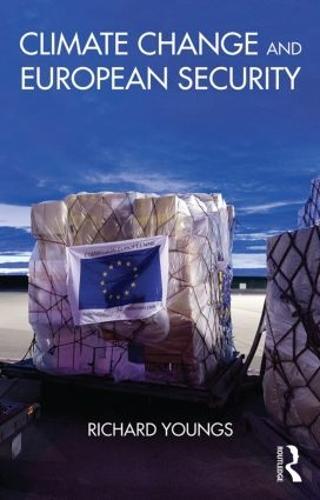
OverviewIt is now commonly asserted that climate change will fundamentally change international relations. It has been predicted that global warming will increase conflict within and between states, intensify food insecurity, menace the global trading system and unleash waves of migration. As a result governments are beginning to incorporate these warnings into their foreign policy initiatives. The appropriateness of their incipient responses needs to be examined in finer detail. This book looks at the impact of climate change on European Union (EU) security policy. It explores how governments are reconfiguring their geo-strategy and broader international relations in the wake of climate change warnings. The book demonstrates that although many aspects of EU foreign policies have begun to change, ‘climate security’ is not yet accorded unequivocal or sufficient priority. In doing so, Youngs argues that if climate change policies are to have significant effect they can no longer be treated as a separate area of policy but must be incorporated into the more mainstream debates pertinent to EU common foreign and security policy (CFSP). This book will be of key interest to students, scholars and practitioners of climate change and policy, energy and environmental policy, EU governance and foreign policy, European studies, international relations, geography, security studies/policy and environmental economics. Full Product DetailsAuthor: Richard YoungsPublisher: Taylor & Francis Ltd Imprint: Routledge Dimensions: Width: 13.80cm , Height: 1.00cm , Length: 21.60cm Weight: 0.204kg ISBN: 9781138797284ISBN 10: 1138797286 Pages: 144 Publication Date: 13 October 2014 Audience: College/higher education , Professional and scholarly , Tertiary & Higher Education , Undergraduate Format: Paperback Publisher's Status: Active Availability: In Print This item will be ordered in for you from one of our suppliers. Upon receipt, we will promptly dispatch it out to you. For in store availability, please contact us. Table of Contents1. Introduction 2. The impact of climate change on security 3. The EU’s security identity 4. The EU’s climate security response 5. EU climate and energy policies: the security link 6. Climate and European defence strategies 7. Climate and EU conflict prevention 8. The geo-economics of climate security 9. ConclusionsReviewsIn this succinct and clearly written work, Youngs (Carnegie Europe and Univ. of Warwick, UK) examines how the emerging issue of climate change has impacted European security policy, both at the national and transnational (European Union) levels. - M. F. Farrell, CHOICE, 2016, Ripon College Author InformationRichard Youngs is Senior Associate, Carnegie Europe and Professor of International Relations at the University of Warwick, UK. Tab Content 6Author Website:Countries AvailableAll regions |
||||