Overview
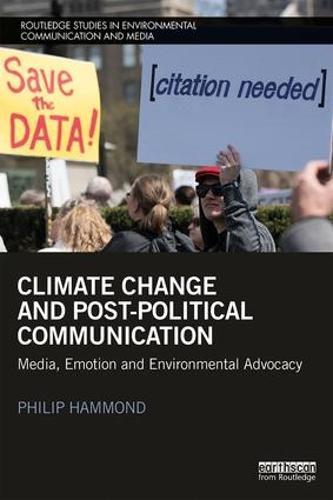
For many years, the objective of environmental campaigners was to push climate change on to the agenda of political leaders and to encourage media attention to the issue. By the first decade of the twenty-first century, it appeared that their efforts had been spectacularly successful. Yet just at the moment when the campaigners’ goals were being achieved, it seemed that the idea of getting the issue into mainstream discussion had been mistaken all along; that the consensus-building approach produced little or no meaningful action. That is the problem of climate change as a ‘post-political’ issue, which is the subject of this book. Examining how climate change is communicated in politics, news media and celebrity culture, Climate Change and Post-Political Communication explores how the issue has been taken up by elites as potentially offering a sense of purpose or mission in the absence of political visions of the future, and considers the ways in which it provides a focus for much broader anxieties about a loss of modernist political agency and meaning. Drawing on a wide range of literature and case studies, and taking a critical and contextual approach to the analysis of climate change communication, this book will be a valuable resource for students and scholars of environmental studies, communication studies, and media and film studies.
Full Product Details
Author: Philip Hammond (London South Bank University, UK) ,
Hugh Ortega Breton
Publisher: Taylor & Francis Ltd
Imprint: Routledge
Weight: 0.240kg
ISBN: 9781138777507
ISBN 10: 1138777501
Pages: 150
Publication Date: 04 December 2017
Audience:
College/higher education
,
Tertiary & Higher Education
Format: Paperback
Publisher's Status: Active
Availability: In Print

This item will be ordered in for you from one of our suppliers. Upon receipt, we will promptly dispatch it out to you. For in store availability, please contact us.
Reviews
This is a must read for anyone concerned with the workings of 21st century fear culture and the media. Hammond provides an excellent account of how climate change has been integrated into a therapeutic outlook on public life. - Frank Furedi, Emeritus Professor of Sociology, University of Kent Is climate change the ultimate global problem which must be solved through coordinated, collective action; or is this drive for consensus on climate change denying political subjectivity and obstructing the possibility of solving more pressing social injustices? Philip Hammond's new book, Climate Change and Post-Political Communication, offers an original and persuasive answer to this question by following the roles of media, news journalism and celebrity in the public framing of climate change. - Mike Hulme, Professor of Human Geography, University of Cambridge
This is a must read for anyone concerned with the workings of 21st century fear culture and the media. Hammond provides an excellent account of how climate change has been integrated into a therapeutic outlook on public life. - Frank Furedi, Emeritus Professor of Sociology, University of Kent Is climate change the ultimate global problem which must be solved through coordinated, collective action; or is this drive for consensus on climate change denying political subjectivity and obstructing the possibility of solving more pressing social injustices? Philip Hammond's new book, Climate Change and Post-Political Communication, offers an original and persuasive answer to this question by following the roles of media, news journalism and celebrity in the public framing of climate change. - Mike Hulme, Professor of Human Geography, University of Cambridge
Author Information
Philip Hammond is Professor of Media and Communications at London South Bank University, UK.