Overview
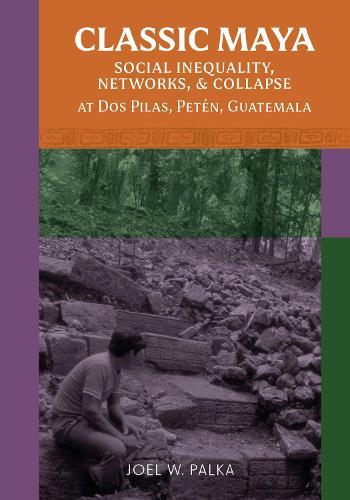
Household archaeology and the unraveling of Classic Maya power The Classic Maya collapse (ca. CE 800) in Mesoamerica has been the focus of much scholarly debate over the last century. In Classic Maya Social Inequality, Networks, and Collapse at Dos Pilas, PetÉn, Guatemala, Joel W. Palka further explores possible causes of the collapse and breaks new ground by examining its differing effects on Maya elites and commoners. Drawing on four years of extensive household excavations, Palka reveals how the unraveling of Maya society unfolded not through drought or economic decline alone, but through the disintegration of elite social networks and shifting strategies of survival among high-status commoners. Using data from monumental architecture, hieroglyphic inscriptions, and domestic archaeology, this study illuminates the lived experience of collapse from multiple social strata. By integrating political, environmental, and household perspectives, Palka provides one of the most comprehensive archaeological analyses of social change at an ancient Maya capital. This richly illustrated volume redefines our understanding of collapse, resilience, and transformation in ancient Mesoamerica, offering vital insights for archaeologists, anthropologists, and historians alike.
Full Product Details
Author: Joel W. Palka
Publisher: University of Utah Press,U.S.
Imprint: University of Utah Press,U.S.
ISBN: 9781647692674
ISBN 10: 1647692679
Pages: 290
Publication Date: 06 May 2026
Audience:
College/higher education
,
General/trade
,
Postgraduate, Research & Scholarly
,
General
Format: Hardback
Publisher's Status: Active
Availability: Not yet available

This item is yet to be released. You can pre-order this item and we will dispatch it to you upon its release.
Reviews
""Palka effectively demonstrates the utility of household archaeology for elucidating the complexity of Late Classic Maya socioeconomics, social networks, and political collapse at Dos Pilas. His abundant data presentation bolsters interpretations and allows readers to draw their own conclusions regarding the demise of this polity.""--Nancy Gonlin, Bellevue College ""Detailing extensive household excavations at the Maya city of Dos Pilas, Palka sheds new light on how different ranks encountered and felt the upheavals of the Classic Maya collapse, and how they responded to these challenges through shifting social networks. The author illuminates the intricacies and complexities of social stratification at Dos Pilas, as low-status and high-status commoners were fractured by their distinct social networks with regional and interregional elites, leading to variable trajectories through the Classic Maya collapse. By tearing apart the 'black-box' of Classic Maya stratification, Palka disengages status from social network. Following divergent social networks from low-status commoners on the regional and interregional levels, high-status commoners become the central actors of the Classic Maya collapse, and not the secondary elites of previous studies.""--Antonia E. Foias, author of Ancient Maya Political Dynamics and Ceramics, Production and Exchange in the Petexbatun Region: The Economic Parameters of the Classic Maya Collapse
“Palka effectively demonstrates the utility of household archaeology for elucidating the complexity of Late Classic Maya socioeconomics, social networks, and political collapse at Dos Pilas. His abundant data presentation bolsters interpretations and allows readers to draw their own conclusions regarding the demise of this polity.”—Nancy Gonlin, Bellevue College ""Detailing extensive household excavations at the Maya city of Dos Pilas, Palka sheds new light on how different ranks encountered and felt the upheavals of the Classic Maya collapse, and how they responded to these challenges through shifting social networks. The author illuminates the intricacies and complexities of social stratification at Dos Pilas, as low-status and high-status commoners were fractured by their distinct social networks with regional and interregional elites, leading to variable trajectories through the Classic Maya collapse. By tearing apart the 'black-box' of Classic Maya stratification, Palka disengages status from social network. Following divergent social networks from low-status commoners on the regional and interregional levels, high-status commoners become the central actors of the Classic Maya collapse, and not the secondary elites of previous studies.""—Antonia E. Foias, author of Ancient Maya Political Dynamics and Ceramics, Production and Exchange in the Petexbatun Region: The Economic Parameters of the Classic Maya Collapse
Author Information
Joel W. Palka is an associate professor in the School of Human Evolution and Social Change at Arizona State University. He is the author of Unconquered Lacandon Maya: Ethnohistory and Archaeology of Indigenous Culture Change and Maya Pilgrimage to Ritual Landscapes: Insights from Archaeology, History, and Ethnography.