Overview
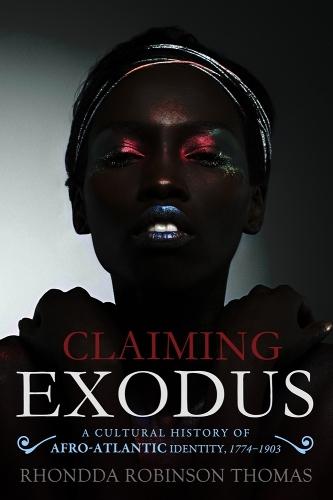
During the 18th century, American Puritans introduced migrant and enslaved Africans to the Exodus story. In contrast to the ways white Americans appropriated the texts to defend the practice of slavery, African migrants and slaves would recast the Exodus in defense of freedom and equality, creating narratives that would ultimately propel abolition and result in a wellspring of powerful writing. Drawing on a broad collection of Afro-Atlantic authors, Rhondda Robinson Thomas shows how writers such as Absalom Jones, Daniel Coker, and W.E.B. Du Bois employed the Exodus metanarrative to ask profound, difficult questions of the African experience. These writers employed it as a literary muse, warranting, Thomas contends, that they be classified and studied as a unique literary genre. Through an arresting reading of works renowned to the largely unknown, Claiming Exodus uncovers in these writings a robust foundation for enacting political change and a stimulating picture of Africans constructing a new identity in an unfamiliar homeland.
Full Product Details
Author: Rhondda Robinson Thomas
Publisher: Baylor University Press
Imprint: Baylor University Press
Dimensions:
Width: 16.30cm
, Height: 2.10cm
, Length: 23.80cm
Weight: 0.508kg
ISBN: 9781602585317
ISBN 10: 1602585318
Pages: 208
Publication Date: 28 February 2013
Audience:
College/higher education
,
Postgraduate, Research & Scholarly
Format: Hardback
Publisher's Status: Active
Availability: Out of stock

The supplier is temporarily out of stock of this item. It will be ordered for you on backorder and shipped when it becomes available.
Reviews
"""Thomas searches an impressively vast archive to discover how African-Americans wrestled with the entire Biblical saga of Israelite enslavement and emancipation as they staged their own movement towards self-determination. Importantly, she probes not only the moments when the Exodus saga uplifted and inspired but also when it failed to deliver. Claiming Exodus reminds us why religion matters profoundly to the way Americans imagine themselves out of narrow places."" --Joanna Brooks, author of American Lazarus: Religion and the Rise of African-American and Native American Literatures and editor of Transatlantic Feminisms in the Age of Revolutions ""The Exodus narrative has met with a long history of fascination and engagement in Black Christianity. Rhondda Thomas has delved into this intersection of race, slavery, and religion operating under the sign of freedom to compose an important contribution to the field of Africana religions."" --Sylvester A. Johnson, Associate Professor of African American Studies and Religious Studies, Northwestern University and co-editor, Journal of Africana Religions Thomas's work is a compact study of the Exodus trope in the African American experience that will benefit general readers as well as undregraduate teachers and their students. -- Michael O. West, Binghampton University -- The Historian"
The Exodus narrative has met with a long history of fascination and engagement in Black Christianity. Rhondda Thomas has delved into this intersection of race, slavery, and religion operating under the sign of freedom to compose an important contribution to the field of Africana religions. --Sylvester A. Johnson, Associate Professor of African American Studies and Religious Studies, Northwestern University and co-editor, Journal of Africana Religions
Thomas searches an impressively vast archive to discover how African-Americans wrestled with the entire Biblical saga of Israelite enslavement and emancipation as they staged their own movement towards self-determination. Importantly, she probes not only the moments when the Exodus saga uplifted and inspired but also when it failed to deliver. Claiming Exodus reminds us why religion matters profoundly to the way Americans imagine themselves out of narrow places. --Joanna Brooks, author of American Lazarus: Religion and the Rise of African-American and Native American Literatures and editor of Transatlantic Feminisms in the Age of Revolutions The Exodus narrative has met with a long history of fascination and engagement in Black Christianity. Rhondda Thomas has delved into this intersection of race, slavery, and religion operating under the sign of freedom to compose an important contribution to the field of Africana religions. --Sylvester A. Johnson, Associate Professor of African American Studies and Religious Studies, Northwestern University and co-editor, Journal of Africana Religions Thomas's work is a compact study of the Exodus trope in the African American experience that will benefit general readers as well as undregraduate teachers and their students. -- Michael O. West, Binghampton University -- The Historian
Author Information
Rhondda Robinson Thomas is Assistant Professor of English at Clemson University.