Overview
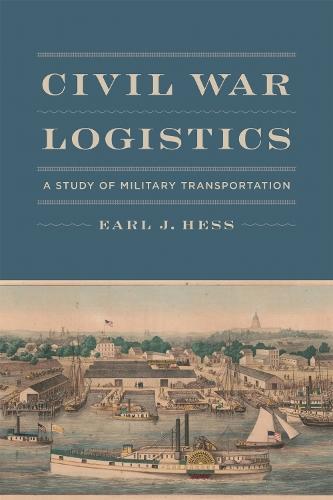
Winner of the Eugene Feit Award in Civil War Studies by the New York Military Affairs Symposium During the Civil War, neither the Union nor the Confederate army could have operated without effective transportation systems. Moving men, supplies, and equipment required coordination on a massive scale, and Earl J. Hess's Civil War Logistics offers the first comprehensive analysis of this vital process. Utilizing an enormous array of reports, dispatches, and personal accounts by quartermasters involved in transporting war materials, Hess reveals how each conveyance system operated as well as the degree to which both armies accomplished their logistical goals. In a society just realizing the benefits of modern travel technology, both sides of the conflict faced challenges in maintaining national and regional lines of transportation. Union and Confederate quartermasters used riverboats, steamers, coastal shipping, railroads, wagon trains, pack trains, cattle herds, and their soldiers in the long and complicated chain that supported the military operations of their forces. Soldiers in blue and gray alike tried to destroy the transportation facilities of their enemy, firing on river boats and dismantling rails to disrupt opposing supply lines while defending their own means of transport. According to Hess, Union logistical efforts proved far more successful than Confederate attempts to move and supply its fighting forces, due mainly to the North's superior administrative management and willingness to seize transportation resources when needed. As the war went on, the Union's protean system grew in complexity, size, and efficiency, while that of the Confederates steadily declined in size and effectiveness until it hardly met the needs of its army. Indeed, Hess concludes that in its use of all types of military transportation, the Federal government far surpassed its opponent and thus laid the foundation for Union victory in the Civil War.
Full Product Details
Author: Earl J. Hess
Publisher: Louisiana State University Press
Imprint: Louisiana State University Press
Dimensions:
Width: 22.90cm
, Height: 15.20cm
, Length: 2.10cm
ISBN: 9780807188040
ISBN 10: 0807188042
Pages: 368
Publication Date: 20 May 2026
Audience:
Professional and scholarly
,
Professional & Vocational
Format: Paperback
Publisher's Status: Forthcoming
Availability: Not yet available

This item is yet to be released. You can pre-order this item and we will dispatch it to you upon its release.
Reviews
""Earl J. Hess has written a book that has long been needed. Broadly contextualized and filled with insightful analysis, Civil War Logistics explores the vitally important but scandalously neglected topic of military transportation. In addition to railroads and steamboats, wagon trains and even pack animals were vital for keeping the armies supplied and moving. The war took a staggering toll on men and animals alike; problems ranging from transporting horses by water to soldiers carrying fifty-pound packs over poor roads all added to the demands placed on quartermasters and anyone else dealing with the always vital matter of logistics. We are greatly indebted to Hess for this highly original and unfailingly informative volume."" - George C. Rable, author of Damn Yankees!: Demonization and Defiance in the Confederate South ""Earl J. Hess continues his long and adroit exploration of thematic topics in Civil War military history with the first major assessment of operational logistics published in decades. Focusing on transportation and the attack and defense of supply lines, Hess emphasizes that Union quartermasters 'crafted the most sophisticated supply arrangements ever seen' up to that point, yet he makes it clear that logistical constraints compelled the Union to change its strategy in order to penetrate the Deep South after Sherman took Atlanta. This fascinating study further cements Hess's leadership in military studies of the Civil War, and should encourage other scholars to pursue topical analyses that connect and synthesize dynamics and trajectories in Civil War military history. Every student of Civil War and mid-nineteenth-century military operations will profit from this remarkable book."" - Samuel Watson, author of Peacekeepers and Conquerors: The Army Officer Corps on the American Frontier, 1821–1846 and editor of The West Point History of the Civil War
Author Information
Earl J. Hess, Stewart W. McClelland Chair in History at Lincoln Memorial University, is the author of more than twenty books on the Civil War, including Civil War Infantry Tactics, winner of the 2016 Tom Watson Brown Book Award from the Society of Civil War Historians.