|
|
|||
|
||||
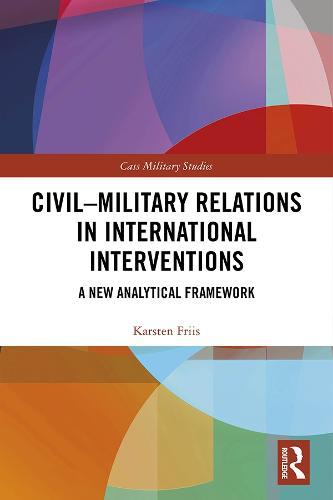
OverviewThis book examines military and civilian actors in international interventions and offers a new analytical framework to apply on such interventions. While it is frequently claimed that success in international interventions hinges largely on military–civilian coherence, cooperation has proven challenging to achieve in practice. This book examines why this is the case, by analysing various approaches employed by military and civilian actors and discussing the different relationships between the intervening actors and those upon whom they have intervened. The work analyses different military concepts, such as peacekeeping and counterinsurgency, and the often-troubled relationship between the humanitarian and military intervening actors. It presents a new analytical framework to examine these relationships based on identification theory, which illuminates how the interveners represent those they have been deployed to engage, as well as their own identity and role. As such the book offers an enhanced understanding of the challenges related to civil-military cooperation in international interventions, as well as a theoretical contribution to the study of interventions, more generally. This book will be of much interest to students of international interventions, military studies, peacekeeping, security studies and International Relations. Full Product DetailsAuthor: Karsten FriisPublisher: Taylor & Francis Ltd Imprint: Routledge Weight: 0.460kg ISBN: 9780367356613ISBN 10: 0367356619 Pages: 200 Publication Date: 19 February 2020 Audience: College/higher education , Professional and scholarly , Tertiary & Higher Education , Professional & Vocational Format: Hardback Publisher's Status: Active Availability: In Print This item will be ordered in for you from one of our suppliers. Upon receipt, we will promptly dispatch it out to you. For in store availability, please contact us. Table of Contents1. Setting the Scene: Civil-Military Relations in Interventions 2. Understanding Coherence and its Limitations 3. The Military Dimension: Peacekeeping and Counter-Insurgency 4. The Troubled Relationship between Military and Humanitarian Actors 5. Towards an Analytical Framework 6. Military, Humanitarian and State-building Identities in the Afghan Theatre 7. Conclusions – and Possible Ways AheadReviews'Recommended. Advanced undergraduates and professionals..'--Choice June 2021 Author InformationKarsten Friis is a Senior Research Fellow at the Norwegian Institute of International Affairs (NUPI), Oslo. Tab Content 6Author Website:Countries AvailableAll regions |
||||