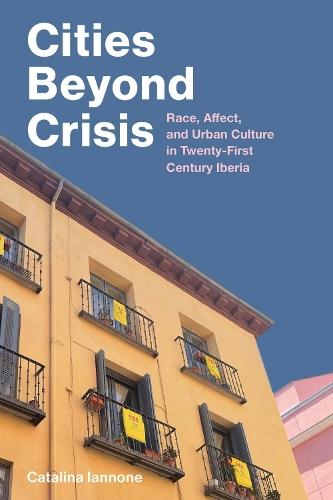
Full Product Details
Author: Catalina Iannone
Publisher: Vanderbilt University Press
Imprint: Vanderbilt University Press
ISBN: 9780826507327
ISBN 10: 0826507328
Pages: 268
Publication Date: 30 April 2025
Audience:
College/higher education
,
Postgraduate, Research & Scholarly
Format: Paperback
Publisher's Status: Active
Availability: In Print

This item will be ordered in for you from one of our suppliers. Upon receipt, we will promptly dispatch it out to you. For in store availability, please contact us.
Reviews
""An innovative, interdisciplinary contribution to scholarship on the relationships between cities, culture, and capital as they play out in iconic neighborhoods in Lisbon and Madrid after the fiscal crisis of 2008. Fundamental reading for those interested in urban transformation on the Iberian Peninsula."" --Malcolm A. Compitello, Founding and Executive Editor Emeritus of the Arizona Journal of Hispanic Cultural Studies ""This book makes an important contribution to the fields of urban and cultural studies and cultural geography as practiced within Luso-Hispanic studies by adding the crucial but often overlooked issues of race and ethnicity to ongoing debates about the role of culture in the production of social spaces in Spain and Portugal."" --Susan Larson, editor of Comfort and Domestic Space in Modern Spain ""Who has the right to the city? Iannone's exemplary contribution to cultural studies sharply illuminates the global processes and local practices that shape Lisbon's Mouraria and Madrid's Lavapiés neighborhoods--revealing the urban as a struggle between control, commodification, contestation, resistance, and resilience."" --Benjamin Fraser, author of Obsession, Aesthetics, and the Iberian City The Partial Madness of Modern Urban Culture ""This innovative study of two neighborhoods makes a significant contribution to the field of urban cultural studies. Starting with an analysis of branding and development in Spain and Portugal in the years following the 2008 financial crisis, Iannone then develops a stimulating account of cultural interventions that sought to contest or provide alternatives to the boom of capital-oriented urban development."" --Ellen W. Sapega, author of Consensus and Debate in Salazar's Portugal
""Who has the right to the city? Iannone's exemplary contribution to cultural studies sharply illuminates the global processes and local practices that shape Lisbon's Mouraria and Madrid's Lavapiés neighborhoods--revealing the urban as a struggle between control, commodification, contestation, resistance, and resilience."" --Benjamin Fraser, author of Obsession, Aesthetics, and the Iberian City The Partial Madness of Modern Urban Culture ""Who has the right to the city? Iannone's exemplary contribution to cultural studies sharply illuminates the global processes and local practices that shape Lisbon's Mouraria and Madrid's Lavapiés neighborhoods--revealing the urban as a struggle between control, commodification, contestation, resistance, and resilience."" --Benjamin Fraser, author of Obsession, Aesthetics, and the Iberian City: The Partial Madness of Modern Urban Culture ""An innovative, interdisciplinary contribution to scholarship on the relationships between cities, culture, and capital as they play out in iconic neighborhoods in Lisbon and Madrid after the fiscal crisis of 2008. Fundamental reading for those interested in urban transformation on the Iberian Peninsula."" --Malcolm A. Compitello, Founding and Executive Editor Emeritus of the Arizona Journal of Hispanic Cultural Studies ""This book makes an important contribution to the fields of urban and cultural studies and cultural geography as practiced within Luso-Hispanic studies by adding the crucial but often overlooked issues of race and ethnicity to ongoing debates about the role of culture in the production of social spaces in Spain and Portugal."" --Susan Larson, editor of Comfort and Domestic Space in Modern Spain ""This innovative study of two neighborhoods makes a significant contribution to the field of urban cultural studies. Starting with an analysis of branding and development in Spain and Portugal in the years following the 2008 financial crisis, Iannone then develops a stimulating account of cultural interventions that sought to contest or provide alternatives to the boom of capital-oriented urban development."" --Ellen W. Sapega, author of Consensus and Debate in Salazar's Portugal
Author Information
Catalina Iannone is an assistant professor in the Department of Spanish and Portuguese at Ohio State University.