Overview
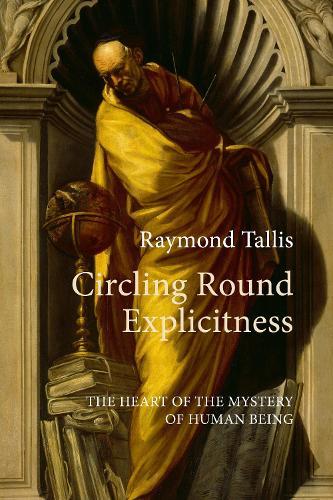
Explicitness is one of the fundamental mysteries in which our lives are wrapped. Our capacity, as conscious subjects, to make things explicit, so that what-is presents itself as “that-it-is” or “that-it-is-the-case” is at the heart of the mystery of human being. Circling Round Explicitness is an endeavour to make explicitness explicit or, at least, more explicit. Its ambition is rooted in the belief that the failure to acknowledge the centrality to our nature as human beings of our capacity to make things explicit explains many false directions in contemporary philosophy, most importantly the embrace of scientism. With characteristic erudition and acuity across a breathtaking range of subjects, Ray Tallis explores how explicitness connects with fundamental ontological, metaphysical and epistemological questions, including the gap between matter and persons, and between mind and brain, the nature of ourselves as embodied subjects and as agents, the phenomenology of thought, the realm of possibility (and probability) and the ideas of reality and truth. Although the attempt to grasp explicitness is fraught with challenges – to reach out to that which comprises one’s act of reaching – the task is a fascinating endeavour that takes us closer to understanding what it is to be, to be human, and our connection with the material world. In circling round explicitness, we are circling round Man, the Explicit Animal, around ourselves.
Full Product Details
Author: Prof. Raymond Tallis
Publisher: Edinburgh University Press
Imprint: Agenda Publishing
Dimensions:
Width: 15.60cm
, Height: 4.10cm
, Length: 23.40cm
ISBN: 9781788217903
ISBN 10: 178821790
Pages: 496
Publication Date: 11 September 2025
Audience:
Professional and scholarly
,
Professional & Vocational
Format: Hardback
Publisher's Status: Active
Availability: In Print 
This item will be ordered in for you from one of our suppliers. Upon receipt, we will promptly dispatch it out to you. For in store availability, please contact us.
Table of Contents
Overture: Making Explicitness Explicit Part I The Unholy Trinity 1. Looking in the Mirror: A Vision of the Unholy Trinity 2. From Things to Persons: ‘Emergence’ as a non-Explanation 3. The Idea of the Brain as the Brewery of Explicitness Part II Aspects of the Self 4. Ambodiment: The Marriage between (That) It Is and (That) I Am 5. First-Person Explicitness: Selfhood 6. Agency: Explicitness in Action Part III Thought and Possibility 7. Free-Floating Explicitness: Thinking about Thinking 8. Pure Explicitness: Possibility (and Probability) Part IV Circling Round What-Is 10. What-Is as How Much. Cutting Measurement Down to Size Coda: (In)Conclusion
Reviews
This book gathers together and extends the many implications of Tallis’s core insight that the waning of Western culture’s humanism derives from its science-led failure to recognize how essential the non-eliminable and non-reducible human consciousness is to any and all claims to knowledge. If read understandingly by the intelligentsia of both our hard and soft sciences, it would lay a basis for a scientific revolution of the most humane and human sort. -- Robert Doede, Professor of Philosophy, Trinity Western University
This book gathers together and extends the many implications of Tallis’s core insight that the waning of Western culture’s humanism derives from its science-led failure to recognize how essential the non-eliminable and non-reducible human consciousness is to any and all claims to knowledge. If read understandingly by the intelligentsia of both our hard and soft sciences, it would lay a basis for a scientific revolution of the most humane and human sort. -- Robert Doede, Professor of Philosophy, Trinity Western University In this invaluable contribution to the philosophical discussion of personhood, Raymond Tallis examines the nature of human perception and consciousness in a way that promotes a much more human way of being than offered by most of the present cognitive science literature. This book is a must-read for anyone interested in philosophical anthropology and human identity. -- Jens Zimmermann, J. I. Packer Chair of Theology, Regent College, Vancouver
Author Information
Raymond Tallis is Professor of Geriatric Medicine at the University of Manchester and Fellow of the Academy of Medical Sciences. Over the last 15 years he has published extensively outside the field of medicine. There have been three books which mount a critique of post-structuralist theory: Not Saussure: A Critique of Post-saussurean Literary Theory (Macmillan, 2nd edn, 1995), In Defence of Realism (Arnold & University of Nebraska Press, 2nd edn, 1998) and Theorrhoea and After (Macmillan, 1998). He has also published four books in the philosophy of mind: The Explicit Animal: A Defence of Human Consciousness (Macmillan, 1991), The Pursuit of Mind (co-edited with Howard Robinson, Carcanet, 1991), Psycho Electronics (Ferrington, 1994) and On the Edge of Certainty and Other Essays (Macmillan, 1999). Further books include Newton's Sleep: The Two Cultures and the Two Kingdoms (Macmillan, 1995), Enemies of Hope: A Critique of Contemporary Pessimism (Macmillan, 1997) and A Conversation with Martin Heidegger (Macmillan (Palgrave), 2002). An anthology of his theoretical writing - The Raymond Tallis Reader, edited by Michael Grant - was published by Macmillan (Palgrave) in 2000. He was awarded the degree of Doctor of Letters (hon causa) at the University of Hull in 1997 for his non-medical writings and the degree of Doctor of Letters (hon causa) at the University of Manchester in 2003 for 'contributions to literary theory and our understanding of human consciousness’. The Knowing Animal is the final volume in the trilogy of books for EUP which began with The Hand and continued with I Am.
Tab Content 6
Author Website:
Countries Available
All regions
|