|
|
|||
|
||||
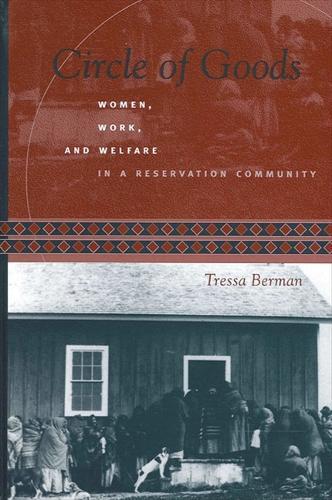
OverviewStudies how women in a reservation economy have creatively responded to federal policy. Full Product DetailsAuthor: Tressa BermanPublisher: State University of New York Press Imprint: State University of New York Press Dimensions: Width: 15.20cm , Height: 2.50cm , Length: 22.90cm Weight: 0.245kg ISBN: 9780791455364ISBN 10: 079145536 Pages: 172 Publication Date: 09 January 2003 Audience: General/trade , General Format: Paperback Publisher's Status: Active Availability: Out of stock The supplier is temporarily out of stock of this item. It will be ordered for you on backorder and shipped when it becomes available. Table of Contents"Illustrations Acknowledgments Preface 1. ""Say Commodity Cheese!"" 2. Ceremonial Relations of Production 3. Women, Work, and the State 4. Mihe, Mia, Sapat Women's Ways of Leadership 5. ""All we needed was our gardens ..."" Implications of State Welfare Reform on the Reservation Economy Afterword Notes References Index"Reviews...[Circle of Goods] makes an important contribution to our understanding of contemporary reservation economies in the Northern Plains, a subject that has received insufficient attention from anthropologists. - Great Plains Research This book makes a major contribution in showing how the ceremonial is political in American Indian communities. Professor Berman develops the concept of ceremonial relations of production to explore how people produce and distribute essential goods and services on the Fort Berthold Reservation, and she goes beyond that system of ceremonial relations to explore the political consequences of these arrangements: the effects upon gender relations and claims by Native people within the larger context of the United States. In pursuing this, the book is an important milestone in the study both of gender relations among North American Indians, and in the study of race, class and gender in America in general. - Thomas Biolsi, author of Deadliest Enemies: Law and the Making of Race Relations on and off Rosebud Reservation Anyone interested in contemporary Native American life, cultural identity, and gender studies will want to read this book. Berman shows how the structure of reservation economies shapes, and is shaped, by women in ceremonial, subsistence, and market economies. Her ability to show, through excellent case interviews, how identity is multiple and dynamic is well presented. - Jeffery Hanson, Tribal Anthropologist, Mescalero Apache Tribe Author InformationTressa Berman is a Visiting Scholar with the Women's Leadership Institute at Mills College. She is also a Research Associate in the Anthropology Department at the California Academy of Sciences and is Executive Director of BorderZone Arts, Inc. Tab Content 6Author Website:Countries AvailableAll regions |
||||