Overview
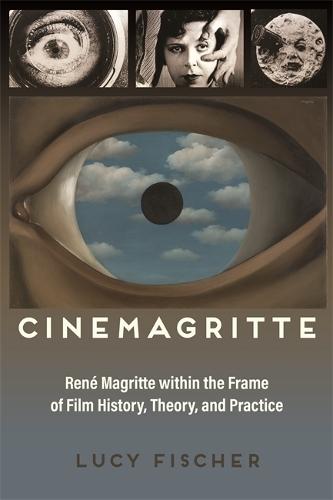
Cinemagritte: René Magritte within the Frame of Film History, Theory, and Practice investigates the dynamic relationship between the Surrealist modernist artist René Magritte (1898-1967) and the cinema-a topic largely ignored in the annals of film and art criticism. Magritte once said that he used cinema as """"a trampoline for the imagination,"""" but here author Lucy Fischer reverses that process by using Magritte's work as a stimulus for an imaginative examination of film. While Fischer considers direct influences of film on Magritte and Magritte on film, she concentrates primarily on """"resonances"""" of Magritte's work in international cinema-both fiction and documentary, mainstream and experimental. These resonances exist for several reasons. First, Magritte was a lover of cinema and created works as homages to the medium, such as Blue Cinema (1925), which immortalized his childhood movie theater. Second, Magritte's style, though dependent on bizarre juxtapositions, was characterized by surface realism-which ties it to the nature of the photographic and cinematic image. Third, Magritte shares with film a focus on certain significant concepts: the frame, voyeurism, illusionism, the relation between word and image, the face, montage, variable scale, and flexible point of view. Additionally, the volume explores art documentaries concerning Magritte as well as the artist's whimsical amateur """"home movies,"""" made with his wife, Georgette, friends, and Belgian Surrealist associates. The monograph is richly illustrated with some forty images of Magritte's oeuvre as well as fifty film stills from such diverse works as The Eternal Sunshine of the Spotless Mind, Eyes Without a Face, American Splendor, The Blood of a Poet, Zorns Lemma, The Island of Dr. Moreau, The Draughtsman's Contract, and many more. Cinemagritte brings a novel and creative approach to the work of Magritte and both film and art criticism. Students, scholars, and fans of art history and film will enjoy this thoughtful marriage of the two.
Full Product Details
Author: Lucy Fischer
Publisher: Wayne State University Press
Imprint: Wayne State University Press
Dimensions:
Width: 15.20cm
, Height: 1.70cm
, Length: 22.80cm
Weight: 0.568kg
ISBN: 9780814346365
ISBN 10: 0814346367
Pages: 312
Publication Date: 30 November 2019
Audience:
Professional and scholarly
,
Professional & Vocational
Format: Hardback
Publisher's Status: Active
Availability: Manufactured on demand

We will order this item for you from a manufactured on demand supplier.
Reviews
An excellent introduction to Magritte, featuring incisive observations and beautiful color reproductions--Thomas Puhr Film International (06/01/2020) Lucy Fischer occupies a very special space in the exploration of how cinema relates to important movements in art and design. Here she tackles the 'resonances' between Magritte's enigmatic paintings and an encyclopedic range of films, from avant-garde to mainstream. Both the artist and cinema are illuminated in rewarding and often surprising ways.-- (07/22/2019) Lucy Fischer triumphs again with her fascinating monograph on Ren? Magritte. In the course of detailing compelling 'resonances' regarding cinema and Magritte's paintings hitherto rarely addressed, Fischer revisits Surrealism, the extended French avant-garde, and the early Hollywood cinema Magritte loved. Her broad-ranging, original, and exhaustive intermedial research not only offers a new lens for looking at Magritte but introduces readers to many forgotten or little-known surrealist and silent films. Above all, Fischer has unframed Ren? Magritte's work from the 'the hermetic world of art history so as to repurpose it for the broader world of film.' A pleasurable, must-read volume.-- (07/22/2019) Lucy Fischer's Cinemagritte offers a dazzling analysis of Ren? Magritte's little-known relation to the cinema. Drawn to the beauty and wit of the painter's oeuvre, she traces the ways in which Magritte's work raises conceptual, artistic, and philosophical issues that have direct relevance to film theory and practice. The result is a brilliant argument from a gifted writer who continues to write eloquently about cinema and the arts.-- (07/22/2019) In Cinemagritte, Lucy Fischer excavates the longstanding and reciprocal interest between Ren? Magritte and the cinema. Far more than a history of this interest, Fischer creates a set of 'resonances' that emerges from a nuanced reading of the artist's career and preoccupations, at once visual and conceptual, that provides new and important analytic tools with which to understand a wide range of cinematic movements and preoccupations.-- (07/22/2019) By paying special attention to Rene Magritte's conceptual approach, Lucy Fischer has crafted a book filled with new insights on Surrealism in art and the American film-making avant-garde of the sixties. Without a doubt, Cinemagritte will appeal to both the specialist and to the general reader. Thoroughly illustrated, Fischer's book marks a step forward in the dialogue between film studies and the history of art.-- (07/22/2019) Cinemagritte is a fascinating and absorbing seminal study of the oblique influence of surrealist painter Ren? Magritte on various practice throughout film history. The scholarship is impeccable. It is an absolutely intriguing study that would be attractive in itself, but written by one of the leading film scholars in the world, it will be used as a model of inventive and creative scholarship.-- (07/22/2019)
Lucy Fischer occupies a very special space in the exploration of how cinema relates to important movements in art and design. Here she tackles the 'resonances' between Magritte's enigmatic paintings and an encyclopedic range of films, from avant-garde to mainstream. Both the artist and cinema are illuminated in rewarding and often surprising ways.-- (07/22/2019) Lucy Fischer triumphs again with her fascinating monograph on Ren? Magritte. In the course of detailing compelling 'resonances' regarding cinema and Magritte's paintings hitherto rarely addressed, Fischer revisits Surrealism, the extended French avant-garde, and the early Hollywood cinema Magritte loved. Her broad-ranging, original, and exhaustive intermedial research not only offers a new lens for looking at Magritte but introduces readers to many forgotten or little-known surrealist and silent films. Above all, Fischer has unframed Ren? Magritte's work from the 'the hermetic world of art history so as to repurpose it for the broader world of film.' A pleasurable, must-read volume.-- (07/22/2019) By paying special attention to Rene Magritte's conceptual approach, Lucy Fischer has crafted a book filled with new insights on Surrealism in art and the American film-making avant-garde of the sixties. Without a doubt, Cinemagritte will appeal to both the specialist and to the general reader. Thoroughly illustrated, Fischer's book marks a step forward in the dialogue between film studies and the history of art.-- (07/22/2019) In Cinemagritte, Lucy Fischer excavates the longstanding and reciprocal interest between Ren? Magritte and the cinema. Far more than a history of this interest, Fischer creates a set of 'resonances' that emerges from a nuanced reading of the artist's career and preoccupations, at once visual and conceptual, that provides new and important analytic tools with which to understand a wide range of cinematic movements and preoccupations.-- (07/22/2019) Cinemagritte is a fascinating and absorbing seminal study of the oblique influence of surrealist painter Ren? Magritte on various practice throughout film history. The scholarship is impeccable. It is an absolutely intriguing study that would be attractive in itself, but written by one of the leading film scholars in the world, it will be used as a model of inventive and creative scholarship.-- (07/22/2019) Lucy Fischer's Cinemagritte offers a dazzling analysis of Ren? Magritte's little-known relation to the cinema. Drawn to the beauty and wit of the painter's oeuvre, she traces the ways in which Magritte's work raises conceptual, artistic, and philosophical issues that have direct relevance to film theory and practice. The result is a brilliant argument from a gifted writer who continues to write eloquently about cinema and the arts.-- (07/22/2019)
Author Information
Lucy Fischer is Distinguished Professor Emerita of Film and Media Studies at the University of Pittsburgh. She is the author/editor of twelve scholarly books and has worked in curatorial positions at The Museum of Modern Art (NYC) and the Carnegie Museum of Art (Pittsburgh). She is the former president of the Society for Cinema and Media Studies and is the recipient of fellowships from the National Endowment for the Arts and for the Humanities.