Overview
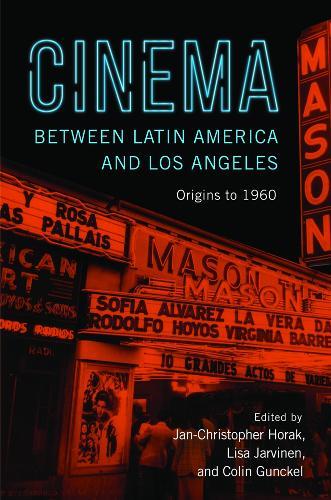
Historically, Los Angeles and its exhibition market have been central to the international success of Latin American cinema. Not only was Los Angeles a site crucial for exhibition of these films, but it became the most important hub in the western hemisphere for the distribution of Spanish language films made for Latin American audiences. Cinema between Latin America and Los Angeles builds upon this foundational insight to both examine the considerable, ongoing role that Los Angeles played in the history of Spanish-language cinema and to explore the implications of this transnational dynamic for the study and analysis of Latin American cinema before 1960. The volume editors aim to flesh out the gaps between Hollywood and Latin America, American imperialism and Latin American nationalism in order to produce a more nuanced view of transnational cultural relations in the western hemisphere.
Full Product Details
Author: Colin Gunckel ,
Jan-Christopher Horak ,
Lisa Jarvinen ,
Jacqueline Avila
Publisher: Rutgers University Press
Imprint: Rutgers University Press
Dimensions:
Width: 15.20cm
, Height: 1.30cm
, Length: 22.90cm
Weight: 0.254kg
ISBN: 9781978801240
ISBN 10: 1978801246
Pages: 188
Publication Date: 08 February 2019
Recommended Age: From 16 to 99 years
Audience:
General/trade
,
College/higher education
,
Professional and scholarly
,
General
,
Tertiary & Higher Education
Format: Paperback
Publisher's Status: Active
Availability: In Print

This item will be ordered in for you from one of our suppliers. Upon receipt, we will promptly dispatch it out to you. For in store availability, please contact us.
Reviews
Highly recommended. --Choice With essays on previously unstudied production and distribution companies, Mexican producers' attempts to appeal to U.S. audiences, Spanish-language cinema, Edwin Carewe's Ramona (1928), Mexican teatro de revista, and the Mayan Theater this volume makes a compelling case for viewing Los Angeles as a crossroads for Latin American (especially Mexican) cinema. The authors' transnational perspective allows them to trace the history of a film culture shaped by intermediality, migration, and vibrant border crossing entertainment cultures. The essays in this volume offer nothing less than a prehistory of Latino media. --Laura Isabel Serna author of Making Cinelandia: American Films and Mexican Film Culture Excavating previously marginalized histories of Spanish-language film culture in the United States and painstakingly tracing its transnational connections, the exhaustively researched anthology Cinema Between Latin America and Los Angeles embodies the most exciting directions in film and media studies today. The volume's essays offer rich, fine-grained studies of the local informed by international perspectives, considering the political economy of Spanish-language production and distribution, the forging of film publics, and the cross-pollination between cinema and entertainments like musical theater, popular song, and even contemporary fusions of lucha libre and performance art. Deftly rendering the complexities of cross-border exchanges and the role of film consumption in shaping social identities, Cinema Between Latin America and Los Angeles unearths forgotten but fascinating precursors of today's vibrant Latino and Spanish-language media. --Rielle Navitski coeditor of Cosmopolitan Film Cultures in Latin America, 1896-1960
""Excavating previously marginalized histories of Spanish-language film culture in the United States and painstakingly tracing its transnational connections, the exhaustively researched anthology Cinema Between Latin America and Los Angeles embodies the most exciting directions in film and media studies today. The volume's essays offer rich, fine-grained studies of the local informed by international perspectives, considering the political economy of Spanish-language production and distribution, the forging of film publics, and the cross-pollination between cinema and entertainments like musical theater, popular song, and even contemporary fusions of lucha libre and performance art. Deftly rendering the complexities of cross-border exchanges and the role of film consumption in shaping social identities, Cinema Between Latin America and Los Angeles unearths forgotten but fascinating precursors of today's vibrant Latino and Spanish-language media."" — Rielle Navitski, coeditor of Cosmopolitan Film Cultures in Latin America, 1896-1960 ""With essays on previously unstudied production and distribution companies, Mexican producers' attempts to appeal to U.S. audiences, Spanish-language cinema, Edwin Carewe's Ramona (1928), Mexican teatro de revista, and the Mayan Theater this volume makes a compelling case for viewing Los Angeles as a crossroads for Latin American (especially Mexican) cinema. The authors' transnational perspective allows them to trace the history of a film culture shaped by intermediality, migration, and vibrant border crossing entertainment cultures. The essays in this volume offer nothing less than a prehistory of Latino media."" — Laura Isabel Serna, author of Making Cinelandia: American Films and Mexican Film Culture ""Highly recommended.""— Choice ""Cinema between Latin America and Los Angeles: Origins to 1960 is not just 'another book about cinema', but an original, eclectic and to some extent brave contribution to the field. Instead of limiting itself to an audience of film scholars and historians, the book widens its scope to cinema aficionados interested in knowing about the presence and the essence of Spanish- language films up to 1960.""— Bulletin of Spanish Studies ""Highly recommended.""— Choice ""Excavating previously marginalized histories of Spanish-language film culture in the United States and painstakingly tracing its transnational connections, the exhaustively researched anthology Cinema Between Latin America and Los Angeles embodies the most exciting directions in film and media studies today. The volume's essays offer rich, fine-grained studies of the local informed by international perspectives, considering the political economy of Spanish-language production and distribution, the forging of film publics, and the cross-pollination between cinema and entertainments like musical theater, popular song, and even contemporary fusions of lucha libre and performance art. Deftly rendering the complexities of cross-border exchanges and the role of film consumption in shaping social identities, Cinema Between Latin America and Los Angeles unearths forgotten but fascinating precursors of today's vibrant Latino and Spanish-language media."" — Rielle Navitski, coeditor of Cosmopolitan Film Cultures in Latin America, 1896-1960 ""Cinema between Latin America and Los Angeles: Origins to 1960 is not just 'another book about cinema', but an original, eclectic and to some extent brave contribution to the field. Instead of limiting itself to an audience of film scholars and historians, the book widens its scope to cinema aficionados interested in knowing about the presence and the essence of Spanish- language films up to 1960.""— Bulletin of Spanish Studies ""With essays on previously unstudied production and distribution companies, Mexican producers' attempts to appeal to U.S. audiences, Spanish-language cinema, Edwin Carewe's Ramona (1928), Mexican teatro de revista, and the Mayan Theater this volume makes a compelling case for viewing Los Angeles as a crossroads for Latin American (especially Mexican) cinema. The authors' transnational perspective allows them to trace the history of a film culture shaped by intermediality, migration, and vibrant border crossing entertainment cultures. The essays in this volume offer nothing less than a prehistory of Latino media."" — Laura Isabel Serna, author of Making Cinelandia: American Films and Mexican Film Culture
""Excavating previously marginalized histories of Spanish-language film culture in the United States and painstakingly tracing its transnational connections, the exhaustively researched anthology Cinema Between Latin America and Los Angeles embodies the most exciting directions in film and media studies today. The volume’s essays offer rich, fine-grained studies of the local informed by international perspectives, considering the political economy of Spanish-language production and distribution, the forging of film publics, and the cross-pollination between cinema and entertainments like musical theater, popular song, and even contemporary fusions of lucha libre and performance art. Deftly rendering the complexities of cross-border exchanges and the role of film consumption in shaping social identities, Cinema Between Latin America and Los Angeles unearths forgotten but fascinating precursors of today's vibrant Latino and Spanish-language media."" — Rielle Navitski, coeditor of Cosmopolitan Film Cultures in Latin America, 1896-1960 ""With essays on previously unstudied production and distribution companies, Mexican producers’ attempts to appeal to U.S. audiences, Spanish-language cinema, Edwin Carewe’s Ramona (1928), Mexican teatro de revista, and the Mayan Theater this volume makes a compelling case for viewing Los Angeles as a crossroads for Latin American (especially Mexican) cinema. The authors’ transnational perspective allows them to trace the history of a film culture shaped by intermediality, migration, and vibrant border crossing entertainment cultures. The essays in this volume offer nothing less than a prehistory of Latino media."" — Laura Isabel Serna, author of Making Cinelandia: American Films and Mexican Film Culture ""Highly recommended.""— Choice ""Cinema between Latin America and Los Angeles: Origins to 1960 is not just ‘another book about cinema’, but an original, eclectic and to some extent brave contribution to the field. Instead of limiting itself to an audience of film scholars and historians, the book widens its scope to cinema aficionados interested in knowing about the presence and the essence of Spanish- language films up to 1960.""— Bulletin of Spanish Studies ""Highly recommended.""— Choice ""Excavating previously marginalized histories of Spanish-language film culture in the United States and painstakingly tracing its transnational connections, the exhaustively researched anthology Cinema Between Latin America and Los Angeles embodies the most exciting directions in film and media studies today. The volume’s essays offer rich, fine-grained studies of the local informed by international perspectives, considering the political economy of Spanish-language production and distribution, the forging of film publics, and the cross-pollination between cinema and entertainments like musical theater, popular song, and even contemporary fusions of lucha libre and performance art. Deftly rendering the complexities of cross-border exchanges and the role of film consumption in shaping social identities, Cinema Between Latin America and Los Angeles unearths forgotten but fascinating precursors of today's vibrant Latino and Spanish-language media."" — Rielle Navitski, coeditor of Cosmopolitan Film Cultures in Latin America, 1896-1960 ""Cinema between Latin America and Los Angeles: Origins to 1960 is not just ‘another book about cinema’, but an original, eclectic and to some extent brave contribution to the field. Instead of limiting itself to an audience of film scholars and historians, the book widens its scope to cinema aficionados interested in knowing about the presence and the essence of Spanish- language films up to 1960.""— Bulletin of Spanish Studies ""With essays on previously unstudied production and distribution companies, Mexican producers’ attempts to appeal to U.S. audiences, Spanish-language cinema, Edwin Carewe’s Ramona (1928), Mexican teatro de revista, and the Mayan Theater this volume makes a compelling case for viewing Los Angeles as a crossroads for Latin American (especially Mexican) cinema. The authors’ transnational perspective allows them to trace the history of a film culture shaped by intermediality, migration, and vibrant border crossing entertainment cultures. The essays in this volume offer nothing less than a prehistory of Latino media."" — Laura Isabel Serna, author of Making Cinelandia: American Films and Mexican Film Culture
Highly recommended. -- Choice Cinema between Latin America and Los Angeles: Origins to 1960 is not just 'another book about cinema', but an original, eclectic and to some extent brave contribution to the field. Instead of limiting itself to an audience of film scholars and historians, the book widens its scope to cinema aficionados interested in knowing about the presence and the essence of Spanish- language films up to 1960. -- Bulletin of Spanish Studies Excavating previously marginalized histories of Spanish-language film culture in the United States and painstakingly tracing its transnational connections, the exhaustively researched anthology Cinema Between Latin America and Los Angeles embodies the most exciting directions in film and media studies today. The volume's essays offer rich, fine-grained studies of the local informed by international perspectives, considering the political economy of Spanish-language production and distribution, the forging of film publics, and the cross-pollination between cinema and entertainments like musical theater, popular song, and even contemporary fusions of lucha libre and performance art. Deftly rendering the complexities of cross-border exchanges and the role of film consumption in shaping social identities, Cinema Between Latin America and Los Angeles unearths forgotten but fascinating precursors of today's vibrant Latino and Spanish-language media. --Rielle Navitski coeditor of Cosmopolitan Film Cultures in Latin America, 1896-1960 With essays on previously unstudied production and distribution companies, Mexican producers' attempts to appeal to U.S. audiences, Spanish-language cinema, Edwin Carewe's Ramona (1928), Mexican teatro de revista, and the Mayan Theater this volume makes a compelling case for viewing Los Angeles as a crossroads for Latin American (especially Mexican) cinema. The authors' transnational perspective allows them to trace the history of a film culture shaped by intermediality, migration, and vibrant border crossing entertainment cultures. The essays in this volume offer nothing less than a prehistory of Latino media. --Laura Isabel Serna author of Making Cinelandia: American Films and Mexican Film Culture
With essays on previously unstudied production and distribution companies, Mexican producers' attempts to appeal to U.S. audiences, Spanish-language cinema, Edwin Carewe's Ramona (1928), Mexican teatro de revista, and the Mayan Theater this volume makes a compelling case for viewing Los Angeles as a crossroads for Latin American (especially Mexican) cinema. The authors' transnational perspective allows them to trace the history of a film culture shaped by intermediality, migration, and vibrant border crossing entertainment cultures. The essays in this volume offer nothing less than a prehistory of Latino media.
Author Information
JAN-CHRISTOPHER HORAK is the director of the University of California, Los Angeles Film and Television Archive and a professor for critical studies at UCLA. He is the author of several books, including Making Images Move: Photographers and Avant-Garde Cinema. LISA JARVINEN is an associate professor of history at La Salle University in Philadelphia, Pennsylvania. She is the author of The Rise of Spanish-Language Film Making: Out from Hollywood's Shadow, 1929-1939 (Rutgers University Press). COLIN GUNCKEL is an associate professor of screen arts and cultures, American culture, and Latina/o Studies at the University of Michigan, Ann Arbor. He is the author of Mexico on Main Street: Transnational Film Culture in Los Angeles before World War II (Rutgers University Press).