Overview
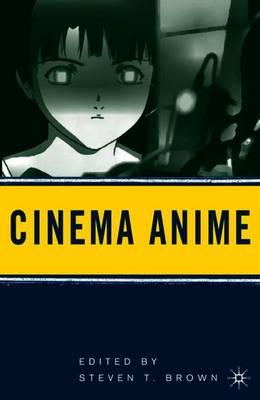
This collection charts the terrain of contemporary Japanese animation, one of the most explosive forms of visual culture to emerge at the crossroads of transnational cultural production in the last twenty-five years. The essays offer bold and insightful engagement with animé's concerns with gender identity, anxieties about body mutation and technological monstrosity, and apocalyptic fantasies of the end of history. The contributors dismantle the distinction between 'high' and 'low' culture and offer compelling arguments for the value and importance of the study of animé and popular culture as a key link in the translation from the local to the global.
Full Product Details
Author: Steven T. Brown
Publisher: Palgrave Macmillan
Imprint: Palgrave Macmillan
Dimensions:
Width: 14.00cm
, Height: 1.70cm
, Length: 21.60cm
Weight: 0.335kg
ISBN: 9780230606210
ISBN 10: 0230606210
Pages: 248
Publication Date: 16 November 2008
Audience:
College/higher education
,
Undergraduate
,
Postgraduate, Research & Scholarly
Format: Paperback
Publisher's Status: Active
Availability: In Print

This item will be ordered in for you from one of our suppliers. Upon receipt, we will promptly dispatch it out to you. For in store availability, please contact us.
Reviews
Both cinema and animation have served simultaneously as transnational cultural forms as well as national forums, formed by specific discourses on nationalism and modernization. In fact, in the 1910s-20s Japan, animation was not defined as distinct from cinema in terms of social regulations or production concerns. Animation, together with cinema, came under the scrutiny of public educators, censors and national ideologues. The point of intersection for these diverse concerns was the construction of national cinema for international dissemination. The attempt of Cinema Anime to dismantle the distinction between cinema and animation, national cinema and transnational visual culture, is genuinely challenging, but definitely necessary in the tension-ridden period of media globalization. -Daisuke Miyao, University of Oregon, USA 'Cinema Anime is an important and thought-provoking collection of essays by a number of the leading figures in the field. It includes some of the first scholarly work on several challenging and noteworthy anime that have not received enough academic attention up to now. With chapters that range from cross-cultural overviews to ambitious critical interventions, this volume will be of interest to a wide audience, from students to experienced scholars. Indeed, Cinema Anime should be required reading for anyone committed to anime criticism.' -Christopher Bolton, Senior Editorial Board, Mechademia The brain is the screen, as quoted in the introduction, is an apt expression of Cinema Anime's aim to keep thinking in new ways about anime even as it gains its mindshare, to take new positions towards it even as it finds its place. Its academics know where to look within LAIN, the one show that best learned the liberating message of EVANGELION; Satoshi Kon, the most important anime director to emerge in the past decade and without, showing how film technology itself informs the narrative of anime and how contemporary installation artists draw it forth from flatland to examine our real space. Cinema Anime rephrases the question: where anime is, rather than what it is to be defined. -Carl Gustav Horn, author of Strange Colors: The Power of Japanese Animation 'This is a worthy addition to any Anime fans' library or for those who want to study the media in more depth.' - Phil Jones, SF Crowsnest
"""Both cinema and animation have served simultaneously as transnational cultural forms as well as national forums, formed by specific discourses on nationalism and modernization. In fact, in the 1910s-20s Japan, animation was not defined as distinct from cinema in terms of social regulations or production concerns. Animation, together with cinema, came under the scrutiny of public educators, censors and national ideologues. The point of intersection for these diverse concerns was the construction of national cinema for international dissemination. The attempt of Cinema Anime to dismantle the distinction between cinema and animation, national cinema and transnational visual culture, is genuinely challenging, but definitely necessary in the tension-ridden period of media globalization."" -Daisuke Miyao, University of Oregon, USA 'Cinema Anime is an important and thought-provoking collection of essays by a number of the leading figures in the field. It includes some of the first scholarly work on several challenging and noteworthy anime that have not received enough academic attention up to now. With chapters that range from cross-cultural overviews to ambitious critical interventions, this volume will be of interest to a wide audience, from students to experienced scholars. Indeed, Cinema Anime should be required reading for anyone committed to anime criticism.' -Christopher Bolton, Senior Editorial Board, Mechademia ""The brain is the screen,"" as quoted in the introduction, is an apt expression of Cinema Anime's aim to keep thinking in new ways about anime even as it gains its mindshare, to take new positions towards it even as it finds its place. Its academics know where to look within LAIN, the one show that best learned the liberating message of EVANGELION; Satoshi Kon, the most important anime director to emerge in the past decade and without, showing how film technology itself informs the narrative of anime and how contemporary installation artists draw it forth from flatland to examine our real space. Cinema Anime rephrases the question: where anime is, rather than what it is to be defined. -Carl Gustav Horn, author of Strange Colors: The Power of Japanese Animation 'This is a worthy addition to any Anime fans' library or for those who want to study the media in more depth.' - Phil Jones, SF Crowsnest"
Both cinema and animation have served simultaneously as transnational cultural forms as well as national forums, formed by specific discourses on nationalism and modernization. In fact, in the 1910s-20s Japan, animation was not defined as distinct from cinema in terms of social regulations or production concerns. Animation, together with cinema, came under the scrutiny of public educators, censors and national ideologues. The point of intersection for these diverse concerns was the construction of national cinema for international dissemination. The attempt of Cinema Anime to dismantle the distinction between cinema and animation, national cinema and transnational visual culture, is genuinely challenging, but definitely necessary in the tension-ridden period of media globalization. -Daisuke Miyao, University of Oregon, USA 'Cinema Anime is an important and thought-provoking collection of essays by a number of the leading figures in the field. It includes some of the first scholarly work on several challenging and noteworthy anime that have not received enough academic attention up to now. With chapters that range from cross-cultural overviews to ambitious critical interventions, this volume will be of interest to a wide audience, from students to experienced scholars. Indeed, Cinema Anime should be required reading for anyone committed to anime criticism.' -Christopher Bolton, Senior Editorial Board, Mechademia The brain is the screen, as quoted in the introduction, is an apt expression of Cinema Anime's aim to keep thinking in new ways about anime even as it gains its mindshare, to take new positions towards it even as it finds its place. Its academics know where to look within LAIN, the one show that best learned the liberating message of EVANGELION; Satoshi Kon, the most important anime director to emerge in the past decade and without, showing how film technology itself informs the narrative of anime and how contemporary installation artists draw it forth from flatland to examine our real space. Cinema Anime rephrases the question: where anime is, rather than what it is to be defined. -Carl Gustav Horn, author of Strange Colors: The Power of Japanese Animation 'This is a worthy addition to any Anime fans' library or for those who want to study the media in more depth.' - Phil Jones, SF Crowsnest
Both cinema and animation have served simultaneously as transnational cultural forms as well as national forums, formed by specific discourses on nationalism and modernization. In fact, in the 1910s-20s Japan, animation was not defined as distinct from cinema in terms of social regulations or production concerns. Animation, together with cinema, came under the scrutiny of public educators, censors and national ideologues. The point of intersection for these diverse concerns was the construction of national cinema for international dissemination. The attempt of Cinema Anime to dismantle the distinction between cinema and animation, national cinema and transnational visual culture, is genuinely challenging, but definitely necessary in the tension-ridden period of media globalization. -Daisuke Miyao, University of Oregon, USA Cinema Anime is an important and thought-provoking collection of essays by a number of the leading figures in the field. It includes some of the first scholarly work on several challenging and noteworthy anime that have not received enough academic attention up to now. With chapters that range from cross-cultural overviews to ambitious critical interventions, this volume will be of interest to a wide audience, from students to experienced scholars. Indeed, Cinema Anime should be required reading for anyone committed to anime criticism. -Christopher Bolton, Senior Editorial Board, Mechademia The brain is the screen, as quoted in the introduction, is an apt expression of Cinema Anime's aim--to keep thinking in new ways about anime even as it gains its mindshare, to take new positions towards it even as it finds its place. Its academics know where to look within--LAIN, the one show that best learned the liberating message of EVANGELION; Satoshi Kon, the most important anime director to emerge in the past decade--and without, showing how film technology itself informs the narrative of anime and how contemporary installation artists draw it forth from flatland to examine our real space. Cinema Anime rephrases the question: where anime is, rather than what it is to be defined. -Carl Gustav Horn, author of Strange Colors: The Power of Japanese Animation
Author Information
STEVEN T. BROWN is Associate Professor of Japanese Literature and Popular Culture at the University of Oregon, USA.