Overview
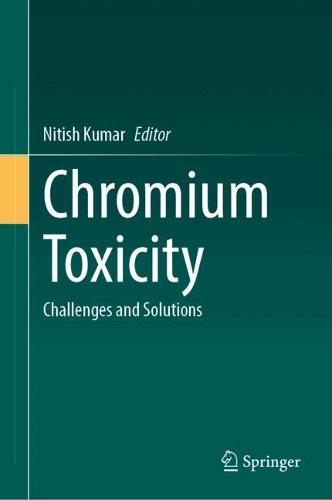
Chromium is widely used in many industrial processes, including metallurgy, printing, dyeing, tanning, and electroplating. However, effluents of these companies pollute the environment when they are not properly disposed of. This causes tissue damage and has deadly effects on humans, animals, plants, and the environment. It also has mutagenic, carcinogenic, and teratogenic effects. The two states of chromium that are most prevalent are trivalent (Cr (III)) and hexavalent (Cr (VI)). While trivalent chromium state is a valuable trace metal, and hexavalent state is non-essential and it causes dermatitis, lung cancer, stomach and kidney damage, as well as irritation of the eyes and respiratory tract. Chronic build-up of harmful chromium (VI) along food chains frequently results in biomagnification, which greatly increases the risk to human health. The amount of water needed for industrial purposes around the world has been growing exponentially. Water is an important resource, yet misuse of it and inadequate, delayed treatment frequently cause contamination and scarcity. It has been stated that a variety of water treatment techniques can remove harmful materials from bodies of water. These include enhanced oxidation techniques, membrane filtration, biological activated carbon, ion-exchange resins, biofiltration, and iminodiacetic acid-carbon nanotubes. Toxic heavy metal contaminants from wastewater have been studied using adsorption technologies such as covalent organic frameworks (COFs)-based materials, metal organic framework (MOF), porous geopolymers, biochar, chitosan-based adsorbents, 3D porous aerogels, agricultural and industrial wastes, nanomaterials, and biosorption. Bioremediation and phytoremediation, which use native microbes and plants, are an easy, affordable, and environmentally acceptable way to detoxify and remove Cr-pollutants in a variety of experimental situations. Microorganisms and plants deal with hazardous metals by enzymatic oxidation/reduction, biosorption, and bioaccumulation. The biosorption method with microbial biomass is one of the bioremediation procedures that is said to be easy, quick, affordable, efficient, and successful on an industrial scale. This volume contains three sections. The origins and dispersion of chromium in soil, water, and plant ecosystems are discussed in the first section. Health hazards associated with chromium poisoning are explained in the second section. The third section discusses methods for reducing chromium toxicity from the environment using multidisciplinary approaches in a sustainable manner. The edited volume addresses the issues raised by the widespread chromium poisoning that has affected the world by bringing together a varied range of researchers in environmental science, sustainability, and health. The book clarifies this widespread environmental problem and suggests interdisciplinary alternatives for contaminant control.
Full Product Details
Author: Nitish Kumar
Publisher: Springer Nature Switzerland AG
Imprint: Springer Nature Switzerland AG
ISBN: 9783032143228
ISBN 10: 3032143225
Pages: 322
Publication Date: 16 February 2026
Audience:
College/higher education
,
Postgraduate, Research & Scholarly
Format: Hardback
Publisher's Status: Forthcoming
Availability: Not yet available

This item is yet to be released. You can pre-order this item and we will dispatch it to you upon its release.
Author Information
Nitish Kumar is working as Associate Professor at the Department of Biotechnology, Central University of South Bihar, Gaya, Bihar, India. Dr. Kumar completed his doctoral research at the Council of Scientifc & Industrial Research–Central Salt & Marine Chemicals Research Institute, Bhavnagar, Gujarat, India. He has more than 14 years of research and teaching experience in the field of plant and microbial biotechnology, and heavy metal remediation. He has published more than 70 research articles in leading international and national journals, more than 20 book chapters and 20 books with Springer and Taylor & Francis. Dr. Kumar is a recipient of the Young Scientist Award from the Science and Engineering Research Board (SERB) in 2014. He has received many awards/fellowships/projects from various organizations, for example, the CSIR, DBT, ICAR and SERB-DST, BRNS-BARC, among others. He is an active reviewer for journals, including Biotechnology Reports, Aquatic Botany, Industrial Crops and Products, PLoS One, Plant Biochemistry and Biotechnology, and 3Biotech.