Overview
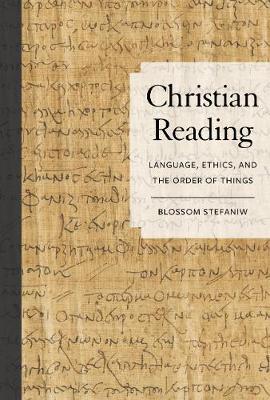
Christian Reading shifts the assumption that study of the Bible must be about the content of the Bible or aimed at confessional projects of religious instruction. Blossom Stefaniw focuses on the lesson transcripts from the Tura papyri, which reveal verbatim oral classroom discourse, to show how biblical texts were used as an exhibition space for the traditional canon of general knowledge about the world. Stefaniw demonstrates that the work of Didymus the Blind in the lessons reflected in the Tura papyri was similar to that of other grammarians in late antiquity: articulating the students’ place in time, their position in the world, and their connection to their heritage. But whereas other grammarians used revered texts like Homer and Menander, Didymus curated the cultural patrimony using biblical texts: namely, the Psalms and Ecclesiastes. By examining this routine epistemological and pedagogical work carried out through the Bible, Christian Reading generates a new model of the relationship of Christian scholarship to the pagan past.
Full Product Details
Author: Blossom Stefaniw
Publisher: University of California Press
Imprint: University of California Press
Dimensions:
Width: 15.20cm
, Height: 2.80cm
, Length: 22.90cm
Weight: 0.544kg
ISBN: 9780520300613
ISBN 10: 0520300610
Pages: 264
Publication Date: 28 May 2019
Audience:
Professional and scholarly
,
Professional & Vocational
Format: Hardback
Publisher's Status: Active
Availability: Out of stock

The supplier is temporarily out of stock of this item. It will be ordered for you on backorder and shipped when it becomes available.
Reviews
Stefaniw deserves credit for drawing attention back to the classroom setting of these texts, because they are precious evidence of how one real classroom worked in antiquity. . . . Stefaniw's vivid and lively study returns attention to the teaching of a learned Alexandrian whose texts remain understudied. * Bryn Mawr Classical Review * In sum, an orienting narrative, original translations of understudies texts, and thoughtful engagement with theory make this book required reading for anyone interested in ancient Christian reading practices. Its prose will make that requirement a joy. * Church History *
Stefaniw deserves credit for drawing attention back to the classroom setting of these texts, because they are precious evidence of how one real classroom worked in antiquity. . . . Stefaniw's vivid and lively study returns attention to the teaching of a learned Alexandrian whose texts remain understudied. * Bryn Mawr Classical Review *
""Stefaniw deserves credit for drawing attention back to the classroom setting of these texts, because they are precious evidence of how one real classroom worked in antiquity. . . . Stefaniw’s vivid and lively study returns attention to the teaching of a learned Alexandrian whose texts remain understudied."" * Bryn Mawr Classical Review * ""In sum, an orienting narrative, original translations of understudies texts, and thoughtful engagement with theory make this book required reading for anyone interested in ancient Christian reading practices. Its prose will make that requirement a joy."" * Church History *
Author Information
Blossom Stefaniw is a Heisenberg Fellow of the German Research Council. She is the author of Mind, Text, and Commentary: Noetic Exegesis in Origen of Alexandria, Didymus the Blind, and Evagrius Ponticus.