Overview
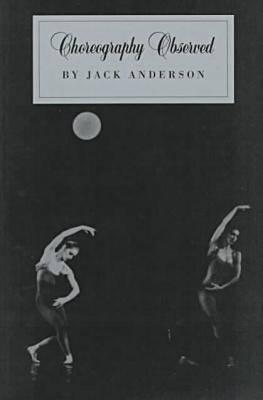
For over twenty years Jack Anderson has been writing about dance performances. His essays and reviews have appeared in daily newspapers, specialist monthlies, and critical quarterlies. For the last ten years he has been a dance critic for the New York Times. In Choreography Observed, Jack Anderson has selected writings that focus most directly on choreographers and choreography in order to illuminate the delights and problems of dance and to reveal the nature of this nonverbal but intensely expressive art form. His essays and reviews deal with individual choreographers from Bournonville, Petipa, and Fokine to Balanchine, Paul Taylor, Meredith Monk, and Pina Bausch; individual works are also discussed in detail, such as Nijinsky's Afternoon of a Faun,Antony Tudor's Pillar of Fire, Alvin Ailey's Flowers, and Kei Takei's Light. Other pieces focus on the Baroque dance revival, contemporary multimedia dance theatre, choreography for men, the complex relationship between ballet and modern dance, and how—and how not—to revive the classics. No other book—especially no other selection from the work of a single critic—has dealt with choreography in such an original and focused way. Anderson brings his trained eye and wide experience in the arts to bear on dance while stressing the primacy of the choreographer as auteur. By refusing to get bogged down in highly technical terminology, he makes his insights available to a wide range of readers interested in expanding their understanding of this ever more popular art form.
Full Product Details
Author: Jack Anderson
Publisher: University of Iowa Press
Imprint: University of Iowa Press
Dimensions:
Width: 14.60cm
, Height: 1.80cm
, Length: 22.20cm
Weight: 0.376kg
ISBN: 9780877455936
ISBN 10: 0877455937
Pages: 304
Publication Date: 01 March 1997
Audience:
College/higher education
,
Professional and scholarly
,
Undergraduate
,
Postgraduate, Research & Scholarly
Format: Paperback
Publisher's Status: Active
Availability: Out of stock

The supplier is temporarily out of stock of this item. It will be ordered for you on backorder and shipped when it becomes available.
Reviews
"""...Anderson here reveals the beating heart of dance: well done.""--Kirkus Reviews ""In a series of sharply perceived essays that served originally as dance reviews, Anderson comments astutely on the art of choreography. This is not only a useful way to organize a book of dance criticism, it is also fascinating. Here a critic obviously passionate about the creation of dance as well as the execution of the art form arranges his dance criticism over the years by types of choreography....Anderson is clearly interested in the psychological and historical aspects of successful choreography but, beyond that, is sometimes mesmerized by the beauty of the dance. These essays, like good dancing, do not date and should be read by anyone interested in the performing arts.""--Choice"
...Anderson here reveals the beating heart of dance: well done.""—Kirkus Reviews ""In a series of sharply perceived essays that served originally as dance reviews, Anderson comments astutely on the art of choreography. This is not only a useful way to organize a book of dance criticism, it is also fascinating. Here a critic obviously passionate about the creation of dance as well as the execution of the art form arranges his dance criticism over the years by types of choreography....Anderson is clearly interested in the psychological and historical aspects of successful choreography but, beyond that, is sometimes mesmerized by the beauty of the dance. These essays, like good dancing, do not date and should be read by anyone interested in the performing arts.""—Choice
The primacy of choreographer as auteur threads together this two-decades bundle of reviews and essays from N. K Times dance critic Anderson. Four general pieces about choreography proper (one, Confessions of a Choreography Watcher, written for this book) precede pieces clustered around six areas of concern: revivals of classic ballets; contemporary masters of choreography (Balanchine, Robbins, Cunningham, etc.); the balletic heritage; modern dance; imagistic dance; and problems and prospects of dance - with each area ushered in by a brief, pointed introduction ( . . .it is possible to worry about American dance. No unmistakably important new ballet choreographer has developed in recent years. . . ). Eschewing technical language, Anderson here reveals the beating heart of dance: well done. (Kirkus Reviews)
"...Anderson here reveals the beating heart of dance: well done.""—Kirkus Reviews ""In a series of sharply perceived essays that served originally as dance reviews, Anderson comments astutely on the art of choreography. This is not only a useful way to organize a book of dance criticism, it is also fascinating. Here a critic obviously passionate about the creation of dance as well as the execution of the art form arranges his dance criticism over the years by types of choreography....Anderson is clearly interested in the psychological and historical aspects of successful choreography but, beyond that, is sometimes mesmerized by the beauty of the dance. These essays, like good dancing, do not date and should be read by anyone interested in the performing arts.""—Choice"
Author Information
Renowned for his dance criticism, Jack Anderson has written for such leading dance publications s the New York Times, Dancing Times, and Dance Magazine. He is author of Art Without Boundaries (IOWA), Ballet and Modern Dance: A Concise History, and The American Dance Festival, among others.