|
|
|||
|
||||
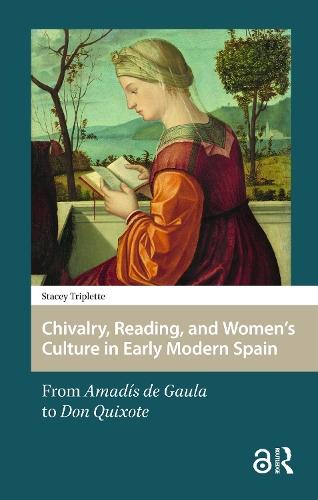
OverviewThe Iberian chivalric romance has long been thought of as an archaic, masculine genre and its popularity as an aberration in European literary history. Chivalry, Reading, and Women's Culture in Early Modern Spain contests this view, arguing that the surprisingly egalitarian gender politics of Spain's most famous romance of chivalry has guaranteed it a long afterlife. Amadís de Gaula had a notorious appeal for female audiences, and the early modern authors who borrowed from it varied in their reactions to its large cast of literate female characters. Don Quixote and other works that situate women as readers carry the influence of Amadís forward into the modern novel. When early modern authors read chivalric romance, they also read gender, harnessing the female characters of the source text to a variety of political and aesthetic purposes. This book analyses many versions of the romance from Spain, Portugal, France, Italy, and England and tells a new story of the life, death, and influences of Amadís. Full Product DetailsAuthor: Stacey TriplettePublisher: Taylor & Francis Ltd Imprint: Routledge ISBN: 9781041176909ISBN 10: 1041176902 Pages: 214 Publication Date: 01 December 2025 Audience: Professional and scholarly , Professional & Vocational Format: Paperback Publisher's Status: Active Availability: In Print This item will be ordered in for you from one of our suppliers. Upon receipt, we will promptly dispatch it out to you. For in store availability, please contact us. Table of ContentsIntroduction Chapter 1: Women’s Lives and Women’s Literacy in Amadís de Gaula Chapter 2: Women’s Literacy in Beatriz Bernal’s Cristalián de España Chapter 3: The Triumph of Women Readers of Chivalry in Don Quixote Part I Chapter 4: The Defeat of Women Readers of Chivalry in Don Quixote Part II Conclusion, Bibliograph, Notes.ReviewsTriplette's focused critique of women's literacy, both of the medieval texts' fictional characters and of women themselves as their readers, not only serves as a means of investigating gender equality and as a corrective to our increasingly partial reading practices, but also proposes a vitally effective method of approaching women's culture.- Anne J. Cruz, Early Modern Women, Fall 2020, Chivalry, Reading, and Women's Culture in Early Modern Spain succeeds not only in examining the female characters in 'Amad's' and 'Don Quijote' but also in cogently and brilliantly bringing Beatriz Bernal and her Cristalián de España to the fore in Spanish Golden Age studies.- J. A. Garrido Ardila, Renaissance Quarterly, Volume LXXIII, No. 1 Author InformationStacey Triplette is an Assistant Professor of Spanish and French at the University of Pittsburgh at Greensburg. Her essays have appeared in Cervantes: Bulletin of the Cervantes Society of America, Bulletin of Spanish Studies, and La corónica. Tab Content 6Author Website:Countries AvailableAll regions |
||||