Overview
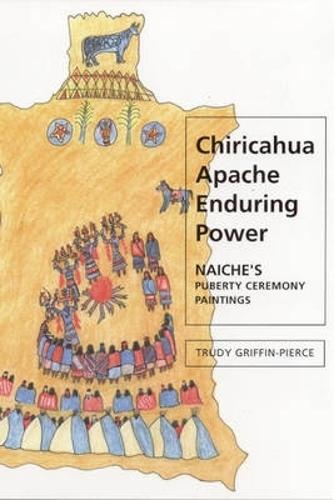
This book reveals the conflicting meanings of power held by the federal government and the Chiricahua Apaches throughout their history of interaction. When Geronimo and Naiche, son of Cochise, surrendered in 1886, their wartime exploits came to an end, but their real battle for survival was only beginning. Throughout their captivity in Florida, Alabama, and Oklahoma, Naiche kept alive Chiricahua spiritual power by embodying it in his beautiful hide paintings of the Girl's Puberty Ceremony - a ritual at the very heart of tribal cultural life and spiritual strength. This narrative is a tribute to the Chiricahua people, who survive today, despite military efforts to annihilate them, government efforts to subjugate them, and social efforts to destroy their language and culture. Although federal policy makers brought to bear all the power at their command, they failed to eradicate Chiricahua spirit and identity nor to convince them that their lower status was just part of the natural social order. Naiche, along with many other Chiricahuas, believed in another kind of power. Although not known to have Power of his own in the Apache sense, Naiche's paintings show that he believed in a vital source of spiritual strength. In a very real sense, his paintings were visual prayers for the continuation of the Chiricahua people. Accessible to individuals for many purposes, Power helped the Chiricahuas survive throughout their history. In this book, Griffin-Pierce explores Naiche's artwork through the lens of current anthropological theory on power, hegemony, resistance, and subordination. As she retraces the Chiricahua odyssey during 27 years of incarceration and exile by visiting their internment sites, she reveals how the Power was with them throughout their dark period. As it was when the Chiricahua warriors and their families struggled to stay alive, Power remains the centering focus for contemporary Chiricahua Apaches. Although never allowed to return to their beloved homeland, not only are the Chiricahua Apaches surviving today, they are keeping their traditions alive and their culture strong and vital.
Full Product Details
Author: Trudy Griffin-Pierce ,
J. Reid ,
Stephani Whittlese
Publisher: The University of Alabama Press
Imprint: The University of Alabama Press
Dimensions:
Width: 15.60cm
, Height: 1.30cm
, Length: 23.40cm
Weight: 0.371kg
ISBN: 9780817353674
ISBN 10: 0817353674
Pages: 240
Publication Date: 30 December 2006
Audience:
College/higher education
,
Professional and scholarly
,
Undergraduate
,
Postgraduate, Research & Scholarly
Format: Paperback
Publisher's Status: Active
Availability: Out of stock

The supplier is temporarily out of stock of this item. It will be ordered for you on backorder and shipped when it becomes available.
Reviews
It was with great pleasure that I read Chiricahua Apache Enduring Power and endorse the publication of this book with the highest praise. The scholarship is impeccable and it will provide a much needed addition to the growing literature on Indian hide paintings --JoAllyn Archambault, Director, American Indian Program, Smithsonian Institution
It was with great pleasure that I read Chiricahua Apache Enduring Power and endorse the publication of this book with the highest praise. The scholarship is impeccable and it will provide a much needed addition to the growing literature on Indian hide paintings JoAllyn Archambault, Director, American Indian Program, Smithsonian Institution
Author Information
Trudy Griffin-Pierce is Assistant Professor of Anthropology at the University of Arizona and author of four books about American Indians, including Native Peoples of the Southwest. She is of Catawba Indian descent and was born in South Carolina, although Arizona has been her home since 1971.