Overview
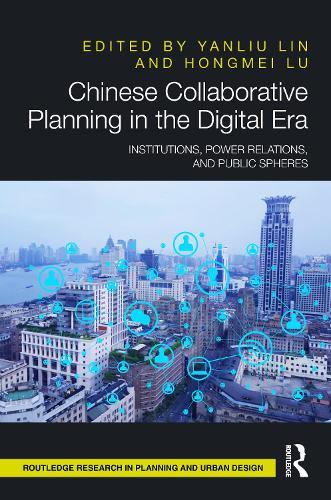
Chinese Collaborative Planning in the Digital Era: Institutions, Power Relations, and Public Spheres is the first accessible text on theoretical underpinnings and extensive case material on China’s collaborative planning. It questions the validity of agonistic and communicative approaches and lays out a new theoretical framework for collaborative planning in China. The book also elaborates the changing governance contexts for collaborative planning in China, including the participative and deliberative turn, and the impact of social media and digital transition on power relations and public spheres. Collaborative planning has become a practical solution to solve increasingly complex problems and the challenges of sustainability under rapid economic development. The authors present several in-depth case studies of collaborative practices in the fields of urban regeneration, environmental protection, and green initiatives in Beijing, Shanghai, Guangzhou, Xiamen, and other cities. The materials of the case studies are collected from in-depth fieldwork in China, practical experience, and online social networking sites. The book not only gives an overview of collaborative practices and policies in China but also reflects the universal collaborative planning theory and presents new research methodologies. The interdisciplinary nature of the book makes it interesting for students, educators, scholars, and practitioners in spatial planning, environmental planning, public policy, and new media fields.
Full Product Details
Author: Yanliu Lin ,
Hongmei Lu
Publisher: Taylor & Francis Ltd
Imprint: Routledge
ISBN: 9781032562421
ISBN 10: 1032562420
Pages: 216
Publication Date: 11 May 2026
Audience:
College/higher education
,
Tertiary & Higher Education
Format: Hardback
Publisher's Status: Forthcoming
Availability: Not yet available

This item is yet to be released. You can pre-order this item and we will dispatch it to you upon its release.
Reviews
""Funded by the European Research Council (ERC) project, Yanliu Lin and her team are pioneers in capturing an emerging trend towards more collaborative planning in China. In urban regeneration, heritage protection, and environmental governance, their rigorous and grounded observations are profound. Together, they generate important insights into the nature of governance in China and related changes in institutions and power relations. This is an important and insightful book on planning, geography, and China’s development."" Fulong Wu, Bartlett Professor of Planning, University College London (UCL), United Kingdom ""The book offers a highly interesting compendium of contributions on the practice of collaborative planning in China. It critically examines this practice from three perspectives: institutions, power relations, and the public sphere. What makes this compendium particularly valuable is that, although the theory of collaborative planning originates in a democratic institutional context (Western planning practice), its application within China's authoritarian institutional environment offers valuable opportunities to challenge, adapt, and reconceptualize its universal claims, thus contributing to the reconceptualization of collaborative planning theory."" Stan Geertman, emeritus Professor of Planning Support Science, Utrecht University, The Netherlands
""Funded by the European Research Council (ERC) project, Yanliu Lin and her team are pioneers in capturing an emerging trend towards more collaborative planning in China. In urban regeneration, heritage protection, and environmental governance, their rigorous and grounded observations are profound. Together, they generate important insights into the nature of governance in China and related changes in institutions and power relations. This is an important and insightful book on planning, geography, and China’s development."" Fulong Wu, Bartlett Professor of Planning, University College London (UCL), United Kingdom. ""The book offers a highly interesting compendium of contributions on the practice of collaborative planning in China. It critically examines this practice from three perspectives: institutions, power relations, and the public sphere. What makes this compendium particularly valuable is that, although the theory of collaborative planning originates in a democratic institutional context (Western planning practice), its application within China's authoritarian institutional environment offers valuable opportunities to challenge, adapt, and reconceptualize its universal claims, thus contributing to the reconceptualization of collaborative planning theory. Stan Geertman, emeritus Professor of Planning Support Science, Utrecht University, The Netherlands.
Author Information
Yanliu Lin is an associate professor of Spatial Planning and Digitalization in the Department of Human Geography and Spatial Planning at Utrecht University. Her research focuses on collaborative planning, digital planning, and planning support science for sustainable urban futures. She examines how digital technologies (e.g., planning support systems, social media, artificial intelligence, and digital twins) interact with urban governance and planning processes across diverse institutional and local contexts. She is the principal investigator of the European Research Council (ERC) Starting Grant project on collaborative planning in China (CoChina). She has served as a lead guest editor for two special issues: Digital Planning for Sustainable Urban Future in Computers, Environment and Urban Systems, and Collaborative Planning in the Digital Era in Planning Practice & Research. She has also co-edited two books: Smart Governance and New Forms of Collaborative Planning (The Commercial Press, 2022) and Village in the City: Asian Variations of Urbanisms of Inclusion (Park Books, 2014). Hongmei Lu is currently a researcher at the Institute for Environmental Studies (IVM) at Vrije Universiteit Amsterdam. She holds a PhD in Environmental Policy from Michigan Technological University, and her dissertation was nominated for the 2021 CGS/ProQuest Distinguished Dissertation Award. Her research focuses on digitally enabled environmental policy and planning, as well as collaborative governance, with a thematic emphasis on nature-based sustainability. She contributes to the European Research Council (ERC) Starting Grant project on collaborative planning in China (CoChina), where she studies digital participation in shaping public spheres and collaborative governance. In addition to her academic work, she is also active in community-engaged research. Her research examines the practice of nature-based solutions through a comparative lens, including cases such as the implementation of green roof policies in metropolitan Shanghai, China’s Sponge City program, local food systems in Michigan, and urban green spaces in the Netherlands.