Overview
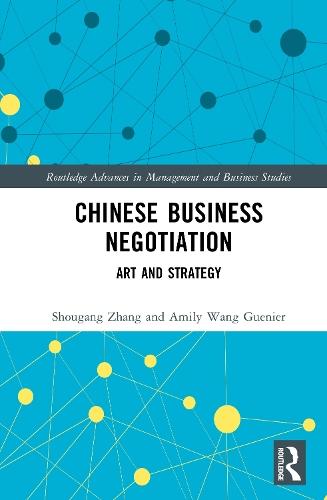
Chinese Business Negotiation offers readers a comprehensive insight into Chinese negotiation principles, shaped by centuries of cultural tradition and contemporary global business dynamics. Unlike competitive or zero-sum approaches, Chinese negotiation emphasizes harmony, trust, and long-term partnerships. This book introduces key concepts such as Shi (strategic advantage through interdependence), ethical wealth-seeking, and human-centered, empathy-driven communication. Structured across nine chapters, the book blends historical wisdom with modern business applications, providing practical frameworks for navigating cross-cultural negotiations. Readers will gain an understanding of strategic planning, flexible adaptation, and balanced communication in high-stakes deal-making. Case studies—including Lenovo’s acquisition of IBM’s PC division, SANY’s acquisition of Germany’s Putzmeister, Midea’s acquisition of KUKA Robotics, and Tesla’s negotiations in China—illustrate how these principles drive success in real-world scenarios. This book serves as a valuable resource for business professionals, scholars, and policymakers seeking to deepen their understanding of Chinese negotiation culture. By bridging Eastern and Western approaches, it equips readers with the tools to foster cooperative, mutually beneficial agreements in an increasingly interconnected world.
Full Product Details
Author: Shougang Zhang ,
Amily Wang Guenier
Publisher: Taylor & Francis Ltd
Imprint: Routledge
Weight: 0.430kg
ISBN: 9781041047605
ISBN 10: 1041047606
Pages: 136
Publication Date: 11 September 2025
Audience:
College/higher education
,
Tertiary & Higher Education
Format: Hardback
Publisher's Status: Active
Availability: Not yet available

This item is yet to be released. You can pre-order this item and we will dispatch it to you upon its release.
Reviews
""A masterful blend of philosophy and pragmatism, Chinese Business Negotiation: Art and Strategy offers valuable insights into the cultural foundations of negotiation. This book is a vital resource for scholars and practitioners seeking to understand and engage with China’s distinctive approach to building lasting, strategic partnerships."" Professor Frieder Lempp, Head of Department, International Negotiation & Conflict Management, IÉSEG School of Management, France ""Zhang and Guenier explain to modern negotiators that Chinese business people may follow or blend modes of traditional teachings and practices. They may agree with balance and nuance or seek advantages like relentless soldiers depending on context and relationship. A deep look into the motivations of business people in China."" Professor William Baber, The Graduate School of Management, Kyoto University, Japan
Author Information
Shougang Zhang is an associate professor at the Jiangxi University of Finance and Economics, specializing in business communication and negotiation. With visiting scholar experience at Food and Agriculture Organization of the United Nations (FAO) (Rome) and Lancaster University (UK) under national scholarships, he serves as the secretary-general of a national communication and negotiation committee. Dr. Zhang has authored key textbooks and published extensively on negotiation studies. Amily Wang Guenier is Director of Internationalization at the School of Global Affairs, Lancaster University, UK, and Deputy Director of the Confucius Institute. Dr. Amily Guenier’s research interests include business communication, health communication, and interpersonal communication. Amily has been the student supervisor of the Study China Programme for seven years, which was funded by the British government with £2.2 million.