Overview
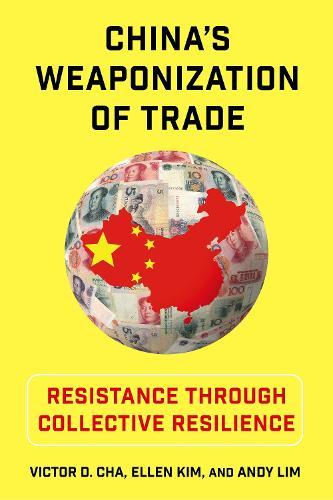
In recent years, China and the United States have each turned economic interdependence into an instrument of coercion, using their dominant positions in international trade to push states and firms to comply with their political goals. What is distinctive about this form of economic pressure, and how can other countries fight back? This groundbreaking book explores the weaponization of economic interdependence and its implications for the international order through a wealth of new and original data on China's economic statecraft. Victor D. Cha, Ellen Kim, and Andy Lim examine how and in what ways the United States and China have deployed economic coercion, focusing on China's extensive use of this tactic over the past three decades. They analyze a vast data set that includes more than 600 cases of China's economic bullying of states, companies, and individuals in North America, Asia, and Europe. Cha, Kim, and Lim propose a multilateral strategy of ""collective resilience"" to counter intimidation, showing how targeted states can band together, leverage trading relationships, and threaten retaliation. Synthesizing new insights from unique trade data with international security expertise, this timely book sheds new light on how China exercises economic power-and it provides a playbook to deter bullies and rebalance the global order.
Full Product Details
Author: Victor Cha (Georgetown University) ,
Ellen Kim ,
Andy Lim
Publisher: Columbia University Press
Imprint: Columbia University Press
ISBN: 9780231222396
ISBN 10: 0231222394
Pages: 408
Publication Date: 20 January 2026
Audience:
Professional and scholarly
,
Professional & Vocational
Format: Hardback
Publisher's Status: Active
Availability: Awaiting stock

The supplier is currently out of stock of this item. It will be ordered for you and placed on backorder. Once it does come back in stock, we will ship it out for you.
Reviews
This remarkable book documents every known incident of Chinese economic coercion since 1997—by the authors’ count, more than 500 cases affecting 475 companies and 18 governments in 44 countries. Cha and his coauthors also present in-depth strategies to counter this coercion. It’s an invaluable resource for policy makers and researchers around the world who are seeking to counter Beijing’s economic coercion while also preserving the liberal world order. -- Bethany Allen, author of <i>Beijing Rules: How China Weaponized Its Economy to Confront the World</i> The authors have provided a fascinating account of how China has used its vast and intertwined trade networks to advance its own interests—and use these same commercial ties to undermine the industries and businesses of its global rivals. Cha, Kim, and Lim also provide essential recommendations about how like-minded nations can band together to create collective resilience in the face of China’s sustained challenge. -- Kurt M. Campbell, former deputy secretary of state and Indo-Pacific coordinator at the National Security Council (2021–25)
Author Information
Victor D. Cha is Distinguished University Professor and D. S. Song-KF Endowed Chair in Government and International Affairs at Georgetown University as well as president of the Geopolitics and Foreign Policy Department and Korea Chair at the Center for Strategic and International Studies. A former director for Asian affairs on the White House National Security Council, he is the author of nine books on Asia and international relations. Ellen Kim is director of academic affairs at the Korea Economic Institute of America. Andy Lim is deputy director and fellow with the Korea Chair at the Center for Strategic and International Studies.