Overview
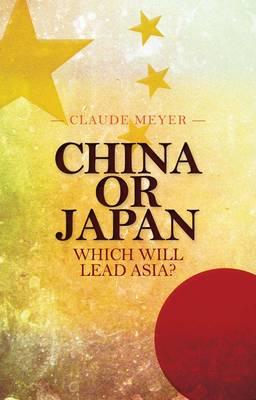
By 2030, Asia will be home to three of the world's leading economies: Japan, China, and India. In the contest over who will lead this pack, Japan and China seem to be the likely winners. Claude Meyer assesses the strengths and weaknesses of each country----notorious rivals harboring a long history of tension and conflict----and the major challenges they will face in the battle for supremacy. Meyer lays out the most probable scenario for ascendancy, following the dialectical relationship between Japan and China's relative economic and strategic abilities. While he acknowledges China's strategic advantages, Meyer nevertheless prioritizes economic considerations, for he believes economics is the primary arena in which Asian integration will take place. This tends to put Japan in the more favorable position, as the surprisingly resilient nation is sure to maintain stable leadership through its positive tradition of productivity, competitiveness, and technological innovation.
Full Product Details
Author: Claude Meyer
Publisher: Columbia University Press
Imprint: Columbia University Press
Dimensions:
Width: 14.00cm
, Height: 2.00cm
, Length: 22.20cm
Weight: 0.454kg
ISBN: 9780231702867
ISBN 10: 0231702868
Pages: 176
Publication Date: 17 January 2012
Audience:
Professional and scholarly
,
College/higher education
,
Professional & Vocational
,
Postgraduate, Research & Scholarly
Format: Hardback
Publisher's Status: Unknown
Availability: Awaiting stock

Reviews
<p>This is a really good book. It is sensible, direct and very readable. The author addresses the rise of Japan and now China to become the world's third and second largest economies and major rivals for leadership in East Asia. Theirs is an economically friendly and mutually beneficial relationship which masks inevitable political tensions, exacerbated by the history of their relationship. The author nicely speculates on how they will probably share regional leadership for the next twenty years. Thereafter it will be either a regional cooperative arrangement led by China, Japan and India, or China will be the East Asia hegemony.--Hugh Patrick, Director, Center on Japanese Economy and Business, and Professor Emeritus, Columbia University
'In his provocative and important book Claude Meyer argues against the conventional wisdom that Japan's future is past and that China will necessarily dominate the region. Drawing on his long years of experience with China and Japan as a businessman and scholar, Meyer explains why the next decades in East Asia are going to be dominated by competition between China and Japan for political and economic power. In contrast to so many observers who have written Japan off as a declining power, Meyer puts his focus on Japan's strengths as well as its weaknesses and the likelihood that it will play a central role in shaping the Asia of the future. It is welcome news indeed that this book, already published in French, Chinese and Japanese, is now available in English. It should be required reading for anyone interested in the future of the world economy's most important region. -- Professor Gerald Curtis, Columbia University This is a really good book. It is sensible, direct and very readable. The author addresses the rise of Japan and now China to become the world's third and second largest economies and major rivals for leadership in East Asia. Theirs is an economically friendly and mutually beneficial relationship which masks inevitable political tensions, exacerbated by the history of their relationship. The author nicely speculates on how they will probably share regional leadership for the next twenty years. Thereafter it will be either a regional cooperative arrangement led by China, Japan and India, or China will be the East Asia hegemony. -- Hugh Patrick, Director, Center on Japanese Economy and Business, and Professor Emeritus, Columbia University A fascinating mixture of authoritative economic and political analysis on an extremely important topic that has not received the attention it deserves. As the author so clearly puts it, everything divides the two countries, be it interpretations of the past, perceptions of the present, or visions of the future. In any, almost inevitable, future confrontation China would seem to have the upper hand, yet Japan cannot be easily dismissed. The country retains considerable strengths, notably financial and technological, but also cultural. What it seemingly lacks nowadays is confidence in itself, a confidence that China, on the other hand, has in abundance. -- Andrea Boltho, Emeritus Fellow, Magdalen College, Oxford University Busy readers who want to quickly get up to speed on East Asia will learn much from this slim volume, one brimming with a veteran observer's insights and knowledge. Japan Times 4/29/2012
'In his provocative and important book Claude Meyer argues against the conventional wisdom that Japan's future is past and that China will necessarily dominate the region. Drawing on his long years of experience with China and Japan as a businessman and scholar, Meyer explains why the next decades in East Asia are going to be dominated by competition between China and Japan for political and economic power. In contrast to so many observers who have written Japan off as a declining power, Meyer puts his focus on Japan's strengths as well as its weaknesses and the likelihood that it will play a central role in shaping the Asia of the future. It is welcome news indeed that this book, already published in French, Chinese and Japanese, is now available in English. It should be required reading for anyone interested in the future of the world economy's most important region. -- Professor Gerald Curtis, Columbia University This is a really good book. It is sensible, direct and very readable. The author addresses the rise of Japan and now China to become the world's third and second largest economies and major rivals for leadership in East Asia. Theirs is an economically friendly and mutually beneficial relationship which masks inevitable political tensions, exacerbated by the history of their relationship. The author nicely speculates on how they will probably share regional leadership for the next twenty years. Thereafter it will be either a regional cooperative arrangement led by China, Japan and India, or China will be the East Asia hegemony. -- Hugh Patrick, Director, Center on Japanese Economy and Business, and Professor Emeritus, Columbia University A fascinating mixture of authoritative economic and political analysis on an extremely important topic that has not received the attention it deserves. As the author so clearly puts it, everything divides the two countries, be it interpretations of the past, perceptions of the present, or visions of the future. In any, almost inevitable, future confrontation China would seem to have the upper hand, yet Japan cannot be easily dismissed. The country retains considerable strengths, notably financial and technological, but also cultural. What it seemingly lacks nowadays is confidence in itself, a confidence that China, on the other hand, has in abundance. -- Andrea Boltho, Emeritus Fellow, Magdalen College, Oxford University Busy readers who want to quickly get up to speed on East Asia will learn much from this slim volume, one brimming with a veteran observer's insights and knowledge. Japan Times 4/29/2012 An enjoyable and thought-provoking read. -- Andrew Oros H-Diplo 8/1/12
Author Information
Claude Meyer is a senior fellow at GEM-Sciences Po and teaches international economics at Sciences Po (Paris) and abroad. He has pursued a dual career as an academic and as an executive in a Japanese bank. He holds a Ph.D. in economics and degrees in philosophy, sociology, and Japanese studies.