Overview
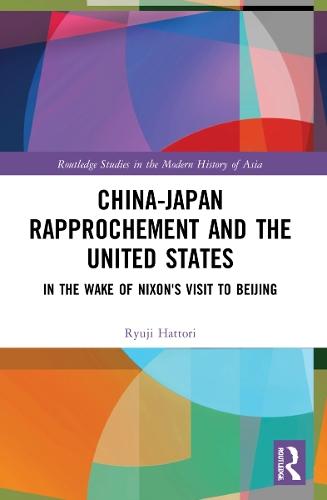
Based on extensive original research including interviews with key participants, this book examines how, following Richard Nixon’s famous visit to China in 1972, Japan established formal diplomatic relations with China, doing so before the United States and other Western countries. It considers the key personalities – Prime Minister Tanaka and Foreign Minister Ōhira on the Japanese side, and Zhou Enlai on the Chinese side, outlines how the discussions unfolded, and discusses the key issues which divided the two sides and how these issues were resolved: Japanese war reparations to China, how the two countries perceived their past, how Taiwan should be treated, and possession of the Senkaku Islands. The book also shows how Tanaka and Ōhira sought to reconcile China–Japan relations with the US–Japan Security Treaty and to continue non-governmental exchanges with Taiwan following the severing of relations. Overall, the book emphasises that the nature of the relationship established in 1972 continues to be very important for understanding present day China–Japan relations.
Full Product Details
Author: Ryuji Hattori ,
Graham B. Leonard
Publisher: Taylor & Francis Ltd
Imprint: Routledge
Weight: 0.453kg
ISBN: 9781032201948
ISBN 10: 1032201940
Pages: 154
Publication Date: 25 September 2023
Audience:
General/trade
,
General
Format: Paperback
Publisher's Status: Active
Availability: In Print

This item will be ordered in for you from one of our suppliers. Upon receipt, we will promptly dispatch it out to you. For in store availability, please contact us.
Reviews
"""a timely and important history... a well-documented examination of the politics and diplomacy of Japan's path to recognizing China."" - Robert D. Eldridge in Japan Forward"
"""a timely and important history... a well-documented examination of the politics and diplomacy of Japan's path to recognizing China."" - Robert D. Eldridge in Japan Forward 'Hattori’s book contributes greatly to the existing scholarship with his vivid picture of the interactions between Tanaka and Ōhira. This is interesting, even for scholars of modern China, by revealing the inner workings of in an important country for China. Different cultures and patterns of behavior partly explain the different logic and dynamics in China’s relations with Japan versus countries like the United States. ... Hattori’s scholarship debunks some misunderstandings. Japan did not embark on diplomatic rapprochement to transform China, and its foreign aid and economic cooperation commenced only when Deng Xiaoping started reform and opening at the end of the 1970s. The liberalizing potential of economic cooperation with China surfaced after the 1990s and was never as prominent in Japan as in the West. Hattori ends his book with the following remarks: “The process that led to Sino-Japanese normalization provides extremely modern lessons to those living today. It is a history that deserves to be repeatedly turned to and referenced” (137). Indeed.' - Ming Wan in The China Journal"
Author Information
Ryuji Hattori is Professor in the Faculty of Policy Studies at Chuo University, Japan and has an MA from the School of Advanced International Studies (SAIS) at Johns Hopkins University. Graham B. Leonard is an independent translator and researcher based in Seattle, Washington, USA.