Overview
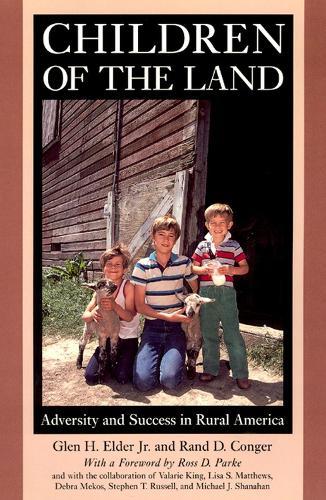
A century ago, most Americans had ties to the land. Now only one in fifty is engaged in farming and little more than a fourth live in rural communities. Though not new, this exodus from the land represents one of the great social movements of our age and is also symptomatic of an unparalleled transformation of our society. In Children of the Land, the authors ask whether traditional observations about farm families-strong intergenerational ties, productive roles for youth in work and social leadership, dedicated parents and a network of positive engagement in church, school, and community life-apply to three hundred Iowa children who have grown up with some tie to the land. The answer, as this study shows, is a resounding yes. In spite of the hardships they faced during the agricultural crisis of the 1980s, these children, whose lives we follow from the seventh grade to after high school graduation, proved to be remarkably successful, both academically and socially. A moving testament to the distinctly positive lifestyle of Iowa families with connections to the land, this uplifting book also suggests important routes to success for youths in other high risk settings.
Full Product Details
Author: Glen H. Elder Jr. ,
Rand D. Conger ,
Glen H. Elder Jr
Publisher: The University of Chicago Press
Imprint: University of Chicago Press
Dimensions:
Width: 1.60cm
, Height: 0.30cm
, Length: 2.40cm
Weight: 0.680kg
ISBN: 9780226202662
ISBN 10: 0226202666
Pages: 394
Publication Date: 15 May 2000
Audience:
Professional and scholarly
,
College/higher education
,
Professional & Vocational
,
Postgraduate, Research & Scholarly
Format: Hardback
Publisher's Status: Out of Stock Indefinitely
Availability: Out of stock

Reviews
Excellent example of applied social science research. --Library Journal By forcefully demonstrating how a 'rural ecology' contributes to a healthy life for children, Elder and Conger provide a welcome corrective to the literature on development, which has focused almost exclusively on metropolitan areas. Extended family ties, productive work, and active parental involvement in their children's activities provide the social capital necessary for adolescents to make positive decisions and overcome adversity. More broadly, through their careful connection of life choices to life chances in historical context, the authors offer a model of sociological inquiry worthy of emulation. --Social Forces What is it about 'ties to the land' that influences the development of young people? The answers the authors provide are not only analytically compelling, but they reveal invaluable insights for solving many of the problems facing our urban and suburban school communities as they struggle to provide meaningful environments for socializing and educating our adolescents into productive adults. --American Journal of Sociology
By forcefully demonstrating how a 'rural ecology' contributes to a healthy life for children, Elder and Conger provide a welcome corrective to the literature on development, which has focused almost exclusively on metropolitan areas. Extended family ties, productive work, and active parental involvement in their children's activities provide the social capital necessary for adolescents to make positive decisions and overcome adversity. More broadly, through their careful connection of life choices to life chances in historical context, the authors offer a model of sociological inquiry worthy of emulation. --Social Forces Excellent example of applied social science research. --Library Journal What is it about 'ties to the land' that influences the development of young people? The answers the authors provide are not only analytically compelling, but they reveal invaluable insights for solving many of the problems facing our urban and suburban school communities as they struggle to provide meaningful environments for socializing and educating our adolescents into productive adults. --American Journal of Sociology
Author Information
Glen H. Elder Jr. is the Howard W. Odum Distinguished Research Professor of Sociology and research professor of psychology at the University of North Carolina at Chapel Hill. Rand D. Conger is distinguished professor of psychology, human development, and family studies in the Family Research Group at the University of California, Davis.