Overview
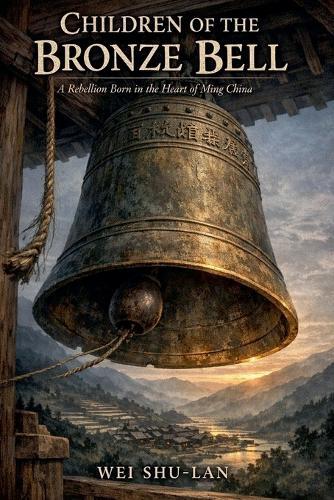
Fujian Province, Ming China. 1447. A seventeen-year-old girl does the same arithmetic every morning. The answer never changes. This year, it will kill her family. Chen Ruomei has been managing her household's accounts since her father died in a mine shaft collapse, leaving his silver quota obligation intact and his family without the means to pay it. The Ming dynasty's extraction system does not adjust for death. Forty-two liang of silver, assessed annually against each household in the Yanchong mining district, calibrated to what a healthy adult male laborer can produce in a good year applied without revision to a widow, a fourteen-year-old boy, and a girl who has been carrying ore baskets up a mine shaft since February because there is no other arithmetic that works. She is not the only one doing this arithmetic. In the northern mountains, Deng Mao, a former soldier turned mine gang leader, has been counting men and garrison soldiers and mountain passes for two years. In the valley communities, Ye Zongliu, a labor contractor who is something else entirely to the people who know him, has been connecting the mining villages through the temple networks that run through the mountains like a second set of roads. In the mountain temple above Yanchong, a bronze bell cast in 1294 by the people of the valley has been hanging in its wooden frame, rung only for ceremony, for a hundred and fifty years. When the summer collection agent arrives and takes the Chen family's iron hoe, the one tool their survival depends on, Ruomei makes a decision. She walks up the mountain. She does not wait for Ye Zongliu's signal. She does not wait for Deng Mao's coordination. She rings the bell. What follows is the Deng Mao Rebellion of 1448 one of the largest popular uprisings of the Zhengtong Emperor's reign, involving between 50,000 and 100,000 participants across the Fujian mining districts, suppressed by a provincial military force in 1449, acknowledged in the Ming court's Bureau of Revenue accounts as a routine administrative adjustment of three percent in the following year's silver quota. Three percent. The official record does not name a single person who rang a bell, carried a basket, organized a grain distribution, or held a mountain pass for three days so that families could reach the coast road. This novel names them. Children of the Bronze Bell is a literary historical novel of extraordinary precision and emotional weight, set in the documented world of mid-fifteenth century Ming China and told through the people the official record chose not to see. It is a story about the arithmetic of survival, the specific courage of an unauthorized act, and what it means when the most powerful thing a community owns is a bell that has been ringing for two hundred years and has one more use left in it. For readers of Lisa See's Snow Flower and the Secret Fan, Hilary Mantel's Wolf Hall, and Anchee Min's Empress Orchid.
Full Product Details
Author: Wei Shu-Lan
Publisher: Abdul Ahad Ansari
Imprint: Abdul Ahad Ansari
Dimensions:
Width: 15.20cm
, Height: 0.50cm
, Length: 22.90cm
Weight: 0.122kg
ISBN: 9798233501609
Pages: 82
Publication Date: 08 April 2026
Audience:
General/trade
,
General
Format: Paperback
Publisher's Status: Active
Availability: Available To Order

We have confirmation that this item is in stock with the supplier. It will be ordered in for you and dispatched immediately.