Overview
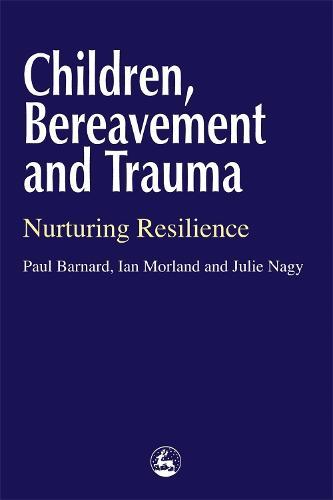
The recognition of children's natural resilience as fundamental to their ability to cope with trauma is central to this book. Deriving from the authors' experience of working with bereaved children after the Hillsborough disaster, the book advocates a model of practice which is based on their findings: the primacy of listening to children, and listening uncritically; the importance of peer-group and family support; and the value of paying attention to children's needs, not those of adults. It promotes the idea of healthy coping, and explores ways in which children and their families can be enabled to do this. Children explain ""what helped me"", and recommendations for practice guidelines are supplemented by extensive lists of resources and support networks. The model can be applied to children who have experienced varying degrees of trauma: bereavement, bullying or terminal illness for example. It also includes material which will be useful to those working with traumatised children with learning disabilities. Reflecting the views of children in conjunction with the professional expertise of the authors, this book will enable carers to reassess existing methods and forms a major contribution to the literature.
Full Product Details
Author: Ian Morland ,
Julie Nagy ,
Paul Barnard ,
Julie Nagy
Publisher: Jessica Kingsley Publishers
Imprint: Jessica Kingsley Publishers
Dimensions:
Width: 15.50cm
, Height: 0.70cm
, Length: 23.30cm
Weight: 0.194kg
ISBN: 9781853027857
ISBN 10: 1853027855
Pages: 160
Publication Date: 01 August 1999
Audience:
College/higher education
,
Professional and scholarly
,
Postgraduate, Research & Scholarly
,
Professional & Vocational
Format: Paperback
Publisher's Status: Active
Availability: Out of stock

The supplier is temporarily out of stock of this item. It will be ordered for you on backorder and shipped when it becomes available.
Reviews
Children, Bereavement and Trauma: Nurturing Resilience by Paul Barnard, Ian Morland and Julie Nagy argues that children's natural resilience is fundamental to their ability to cope with trauma. Derived from the author's experience of working with bereaved children after the Hillsborough disaster, the book advocates a model of practice which is based on their findings: the importance of listening to children and listening uncritically; the importance of peer group and family support; and the value of paying attention to children's needs, rather than those of adults. The book promotes the idea of healthy coping and explores ways in which children and their families can be helped to do this. Children explain what helped me and recommendations for practice guidelines are supplemented by extensive lists of resources and support networks. The model can be applied to children who have experienced varying degrees of trauma, from bereavement to bullying or terminal illness. -- Victim Support Magazine Theory and research are balanced with practical, child-friendly advice for working with bereaved children. The problems of evaluating this sort of work are discussed. The appendices list useful organisations, web-sites and reading lists. This is an easy-to-read, useful book showing much evidence of meaningful work with bereaved children. Well worth reading. -- Community Practitioner There are few available resources for child survivors of trauma and bereavement. However, this book counts among the best of them, picking up as it does on the importance of several critical elements that might often be overlooked by traditional, medical-model interventions. Overall, this book is written in a very accessible style, with solid theoretical and experiential underpinnings for its rationale. Its major strength, however, is the way in which it gives clear suggestions for how these lessons may be applied in the practice of working with bereaved and traumatised children -- Psych-Talk Children, Bereavement and Trauma: Nurturing Resilience constitutes a valuable resource, particularly for practitioners, which may be applied toward understanding and alleviating children's grief. Its focus on resilience reflects an important trend in positive psychology, characterised by a de-emphasis on pathology in favour of the scientific pursuit of optimum human functioning. Barnard, Morland, and Nagy's work suggests the need for more effective evaluative methods for intervention programs, as well as further research into the roles of culture and resilience in children's bereavement care. Overall, the book represents an impressive effort, offering readers welcome insight into the complex issues surrounding childhood grief and mourning'. -- Death Studies
'Children, Bereavement and Trauma: Nurturing Resilience constitutes a valuable resource, particularly for practitioners, which may be applied toward understanding and alleviating children's grief. Its focus on resilience reflects an important trend in positive psychology, characterised by a de-emphasis on pathology in favour of the scientific pursuit of optimum human functioning. Barnard, Morland, and Nagy's work suggests the need for more effective evaluative methods for intervention programs, as well as further research into the roles of culture and resilience in children's bereavement care. Overall, the book represents an impressive effort, offering readers welcome insight into the complex issues surrounding childhood grief and mourning'. -- Death Studies There are few available resources for child survivors of trauma and bereavement. However, this book counts among the best of them, picking up as it does on the importance of several critical elements that might often be overlooked by traditional, medical-model interventions. Overall, this book is written in a very accessible style, with solid theoretical and experiential underpinnings for its rationale. Its major strength, however, is the way in which it gives clear suggestions for how these lessons may be applied in the practice of working with bereaved and traumatised children -- Psych-Talk Theory and research are balanced with practical, child-friendly advice for working with bereaved children. The problems of evaluating this sort of work are discussed. The appendices list useful organisations, web-sites and reading lists. This is an easy-to-read, useful book showing much evidence of meaningful work with bereaved children. Well worth reading. -- Community Practitioner Children, Bereavement and Trauma: Nurturing Resilience by Paul Barnard, Ian Morland and Julie Nagy argues that children's natural resilience is fundamental to their ability to cope with trauma. Derived from the author's experience of working with bereaved children after the Hillsborough disaster, the book advocates a model of practice which is based on their findings: the importance of listening to children and listening uncritically; the importance of peer group and family support; and the value of paying attention to children's needs, rather than those of adults. The book promotes the idea of healthy coping and explores ways in which children and their families can be helped to do this. Children explain what helped me and recommendations for practice guidelines are supplemented by extensive lists of resources and support networks. The model can be applied to children who have experienced varying degrees of trauma, from bereavement to bullying or terminal illness. -- Victim Support Magazine
Author Information
Paul Barnard is now an independent consultant in the field of children's and young people's responses to trauma and disaster. He is also working in association with the Centre for Crisis Management and Education. Ian Morland is a writer and researcher. Julie Nagy is a drama teacher and community worker. All three authors have been involved in bereavement work for the Liverpool Children's Project over the last nine years.