Overview
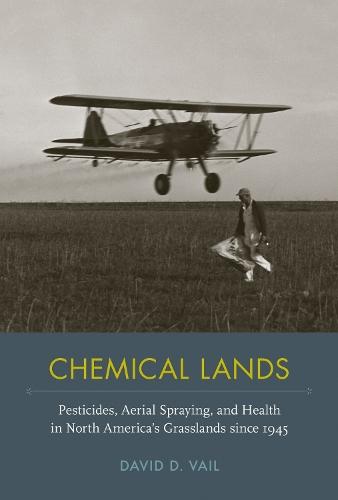
An exploration of the elaborate relationship between farmers, aerial sprayers, agriculturalists, crop pests, chemicals, and the environment. The controversies in the 1960s and 1970s that swirled around indiscriminate use of agricultural chemicals–their long-term ecological harm versus food production benefits–were sparked and clarified by biologist Rachel Carson's Silent Spring (1962). This seminal publication challenged long-held assumptions concerning the industrial might of American agriculture while sounding an alarm for the damaging persistence of pesticides, especially chlorinated hydrocarbons such as DDT, in the larger environment. In Chemical Lands: Pesticides, Aerial Spraying, and Health in North America's Grasslands since 1945 David D. Vail shows, however, that a distinctly regional view of agricultural health evolved. His analysis reveals a particularly strong ethic in the North American grasslands where practitioners sought to understand and deploy insecticides and herbicides by designing local scientific experiments, engineering more precise aircraft sprayers, developing more narrowly specific chemicals, and planting targeted test crops. Their efforts to link the science of toxicology with environmental health reveal how the practitioners of pesticides evaluated potential hazards in the agricultural landscape while recognizing the production benefits of controlled spraying. Chemical Lands adds to a growing list of books on toxins in the American landscape. This study provides a unique Grasslands perspective of the Ag pilots, weed scientists, and farmers who struggled to navigate novel technologies for spray planes and in the development of new herbicides/insecticides while striving to manage and mitigate threats to human health and the environment.
Full Product Details
Author: David D. Vail
Publisher: The University of Alabama Press
Imprint: The University of Alabama Press
Dimensions:
Width: 15.40cm
, Height: 2.20cm
, Length: 23.10cm
Weight: 0.480kg
ISBN: 9780817319731
ISBN 10: 0817319735
Pages: 168
Publication Date: 30 December 2017
Audience:
Professional and scholarly
,
Professional & Vocational
Format: Hardback
Publisher's Status: Active
Availability: Temporarily unavailable

The supplier advises that this item is temporarily unavailable. It will be ordered for you and placed on backorder. Once it does come back in stock, we will ship it out to you.
Reviews
In Chemical Lands, David Vail incisively documents the complex relationship between sprayers, pesticides, herbicides, and grassland landscapes in America and Canada. For the first time, we can appreciate what was happening on the ground and in the sky through this thoughtful analysis of the sprayer's perspective on the toxic chemicals that became intrinsic to American agriculture. --Frederick Rowe Davis, author of Banned: A History of Pesticides and the Science of Toxicology
The story Vail tells is fascinating and important. Chemical Lands makes a valuable contribution to a growing field of pesticide history, which is a a body of literature that examines the complicated relationship between chemicals, humans, and nature. Vail's history of spray pilots cuts across multiple strands of this literature, while effectively building on it. --American Historical Review Chemical Lands adds an important perspective to recently published work critically reexamining the history of pesticides, toxicology, contamination, and Silent Spring. This well-written and expertly researched book joins a growing chorus of scholars across history, science technology and society, anthropology, and geography who are asking that we rethink the forces that produced, and continue to produce, our contaminated world. --Environmental History Vail's regional synthesis of themes agricultural, technological, social, and environmental makes [Chemical Lands] a welcome addition to histories of the Great Plains and environmental toxicity. --Western Historical Quarterly The 20th century has seen several shifts in agricultural practices, but none have had a more profound effect than the use of pesticides. The agriculture industry in the American Great Plains forms the core of its economy; as pressures to moderate insect and weed threats increased, this region was acutely impacted by the need to develop pesticides and improve methods for their efficient application over large swaths of land. In Chemical Lands, Vail traces the philosophy of pesticide use and the efforts by universities, applicators, and chemical companies to improve pesticide safety. This text focuses chiefly on the evolution of aerial pesticide application technology. Vail takes a pragmatic approach, contending that agricultural and grassland systems ultimately benefit from pesticides so long as they are employed safely. Overall, readers gain a nuanced perspective on the utility of pesticides alongside the vital importance of developing methods to ensure the health of the environment. Recommended. --CHOICE In Chemical Lands, David Vail incisively documents the complex relationship between sprayers, pesticides, herbicides, and grassland landscapes in America and Canada. For the first time, we can appreciate what was happening on the ground and in the sky through this thoughtful analysis of the sprayer's perspective on the toxic chemicals that became intrinsic to American agriculture. --Frederick Rowe Davis, author of Banned: A History of Pesticides and the Science of Toxicology Overall, David Vail has written a smart, polished, and valuable book of interest to environmental historians and historians of technology as well as agricultural historians. Vail tells the story of aerial spraying as the complex tale that it is, with careful attention to regional distinctiveness, the creation of ex-pertise, the assessment of risk, and the role of technology. But he tells it with clarity and energy, showing how much we can learn with careful attention to the practices and protocols of pesticide use. --Agricultural History
In Chemical Lands, David Vail incisively documents the complex relationship between sprayers, pesticides, herbicides, and grassland landscapes in America and Canada. For the first time, we can appreciate what was happening on the ground and in the sky through this thoughtful analysis of the sprayer's perspective on the toxic chemicals that became intrinsic to American agriculture. --Frederick Rowe Davis, author of Banned: A History of Pesticides and the Science of Toxicology
The 20th century has seen several shifts in agricultural practices, but none have had a more profound effect than the use of pesticides. The agriculture industry in the American Great Plains forms the core of its economy; as pressures to moderate insect and weed threats increased, this region was acutely impacted by the need to develop pesticides and improve methods for their efficient application over large swaths of land. In Chemical Lands, Vail traces the philosophy of pesticide use and the efforts by universities, applicators, and chemical companies to improve pesticide safety. This text focuses chiefly on the evolution of aerial pesticide application technology. Vail takes a pragmatic approach, contending that agricultural and grassland systems ultimately benefit from pesticides so long as they are employed safely. Overall, readers gain a nuanced perspective on the utility of pesticides alongside the vital importance of developing methods to ensure the health of the environment. Recommended. --CHOICE
Author Information
David D. Vail is an assistant professor of environmental and agricultural history at the University of Nebraska at Kearney.