Awards
- Commended for Axiom Business Book Awards (Operations Management) 2011
Overview
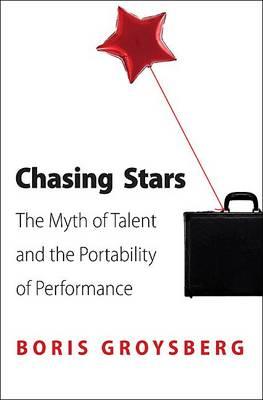
It is taken for granted in the knowledge economy that companies must employ the most talented performers to compete and succeed. Many firms try to buy stars by luring them away from competitors. But Boris Groysberg shows what an uncertain and disastrous practice this can be. After examining the careers of more than a thousand star analysts at Wall Street investment banks, and conducting more than two hundred frank interviews, Groysberg comes to a striking conclusion: star analysts who change firms suffer an immediate and lasting decline in performance. Their earlier excellence appears to have depended heavily on their former firms' general and proprietary resources, organizational cultures, networks, and colleagues. There are a few exceptions, such as stars who move with their teams and stars who switch to better firms. Female stars also perform better after changing jobs than their male counterparts do. But most stars who switch firms turn out to be meteors, quickly losing luster in their new settings. Groysberg also explores how some Wall Street research departments are successfully growing, retaining, and deploying their own stars. Finally, the book examines how its findings apply to many other occupations, from general managers to football players. ""Chasing Stars"" offers profound insights into the fundamental nature of outstanding performance. It also offers practical guidance to individuals on how to manage their careers strategically, and to companies on how to identify, develop, and keep talent.
Full Product Details
Author: Boris Groysberg
Publisher: Princeton University Press
Imprint: Princeton University Press
Dimensions:
Width: 15.20cm
, Height: 3.40cm
, Length: 23.50cm
Weight: 0.822kg
ISBN: 9780691127200
ISBN 10: 0691127204
Pages: 504
Publication Date: 09 May 2010
Audience:
College/higher education
,
Professional and scholarly
,
Professional and scholarly
,
Tertiary & Higher Education
,
Professional & Vocational
Replaced By: 9781400834389
Format: Hardback
Publisher's Status: Out of Print
Availability: In Print

Limited stock is available. It will be ordered for you and shipped pending supplier's limited stock.
Language: English
Reviews
Chasing Stars highlights the key factors that improve the odds of successful job transitions. Build a network that extends beyond the confines of your research group and department. Evaluate the cultural and intellectual attributes and resources of a potential employer. Value those things above the monetary compensation in any offer package. -- Peter S. Fiske Nature [Boris Groysberg's] new book, a meticulous study of the performance of Wall Street analysts, asks the key question: is the success of individual 'star' employees transferable to other businesses? In other words, is it the team/institution that is key to the high performance or is it mainly down to the individual concerned? -- Stefan Stern Financial Times Chasing Stars is an important work challenging the myth that talented workers can succeed anywhere. It proves that the best employer-employee relationships are mutually beneficial and that both can gain much from each other if they try. ForeWord What if talent is more like an orchid, thriving in certain environments and dying in others? It's an interesting question, full of nature-versus-nurture overtones; we could debate it endlessly. But Boris Groysberg, a professor at Harvard Business School, has spoiled the debate with an unsporting move. He's gathered some data. And what he discovered forces us to rethink the argument. Fast Company Over 10 years, Groysberg--who is associated professor in the organisational behaviour unit at HBS--and his colleagues collected data on what happened to star analysts from Wall Street firms and their professional ranking when they moved to a rival firm... The exhaustive study, examined in detail in Groysberg's new book Chasing Stars, came to an unexpected conclusion: stars who switched jobs generally did poorly, often for at least several years. Australian Financial Review The book is fascinating reading, as Prof. Groysberg digs deeper into the implications for knowledge workers and portability of jobs... [T]here are lessons in here for executives and knowledge workers in general and, more particularly, human resources officials concerned about the talent war for knowledge workers. -- Harvey Schachter Globe & Mail
Author Information
Boris Groysberg is professor of business administration at Harvard Business School.