Overview
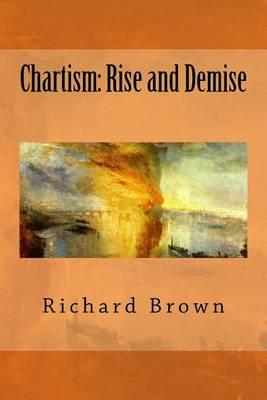
Chartism was the largest working-class political movement in modern British history. Its branches ranged from the Scottish Highlands to northern France and from Dublin to Colchester. Its meetings drew massive crowds: 300,000 at Kersal Moor and perhaps as many as half a million at Hartshead Moor in 1839. The National Petition in 1842 claimed 3.3 million signatures, a third of the adult population of Britain. At its peak, the Northern Star sold around 50,000 copies a week, more than The Times. This was a national mass movement of unprecedented scale and intensity that was more than simply a political campaign but the expression of a new and dynamic form of working-class culture. Across Britain, there were Chartist concerts, amateur dramatics and dances, Chartist schools and cooperatives and Chartist churches that assaulted the political hegemony of the wealthy, the conservative and the liberal. For over a decade, Chartists led a campaign for the franchise with a mass enthusiasm that has never been imitated. Chartism: Rise and Demise provides the analytical narrative for the series. The causes of Chartism and how they have been interpreted is the focus of the opening chapter. The remainder of the book explores the development of Chartism chronologically from its beginnings in the mid-1830s to its demise in the 1850s and divides this into four phases. The first phase covers the years between 1838 and 1841 and revolves round the critical events of 1839, the first Convention, the First Petition and the Newport Rising. The second phase lasts from 1841 to 1843 and focuses on the emergence of the so-called Chartist 'new move', the creation of the National Charter Association, the relationship between Chartists and the middle-classes and the strikes of 1842. The third phase covers the years between 1843 and 1850 during which there were attempts to reposition the movement, the Land Plan and the seminal events of 1848. The final phase considers the ways in which the movement developed during the 1850s when leadership moved away from Feargus O'Connor to Ernest Jones.
Full Product Details
Author: Prof Richard Brown, PhD (Durham University UK)
Publisher: Createspace Independent Publishing Platform
Imprint: Createspace Independent Publishing Platform
Volume: 2
Dimensions:
Width: 15.20cm
, Height: 2.80cm
, Length: 22.90cm
Weight: 0.712kg
ISBN: 9781495390340
ISBN 10: 1495390349
Pages: 540
Publication Date: 22 May 2014
Audience:
General/trade
,
General
Format: Paperback
Publisher's Status: Active
Availability: Available To Order

We have confirmation that this item is in stock with the supplier. It will be ordered in for you and dispatched immediately.
Author Information
Richard Brown was, until he retired, Head of History and Citizenship at Manshead School in Dunstable, and has published thirty-four print and Kindle books and 50 articles and papers on nineteenth century history. He is the author of a successful blog, The History Zone, which has a wide audience among pupils, students and researchers. He is a Fellow of both the Royal Historical Society and the Historical Association.