Overview
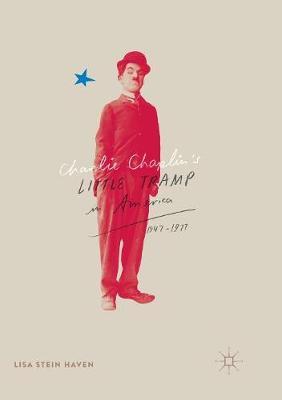
This book focuses on the re-invigoration of Charlie Chaplin’s Little Tramp persona in America from the point at which Chaplin reached the acme of his disfavor in the States, promoted by the media, through his departure from America forever in 1952, and ending with his death in Switzerland in 1977. By considering factions of America as diverse as 8mm film collectors, Beat poets and writers and readers of Chaplin biographies, this cultural study determines conclusively that Chaplin’s Little Tramp never died, but in fact experienced a resurgence, which began slowly even before 1950 and was wholly in effect by 1965 and then confirmed by 1972, the year in which Chaplin returned to the United States for the final time, to receive accolades in both New York and Los Angeles, where he received an Oscar for a lifetime of achievement in film.
Full Product Details
Author: Lisa Stein Haven
Publisher: Springer International Publishing AG
Imprint: Springer International Publishing AG
Edition: Softcover reprint of the original 1st ed. 2016
Dimensions:
Width: 14.80cm
, Height: 1.70cm
, Length: 21.00cm
Weight: 4.099kg
ISBN: 9783319821139
ISBN 10: 331982113
Pages: 300
Publication Date: 27 June 2018
Audience:
Professional and scholarly
,
Professional & Vocational
Format: Paperback
Publisher's Status: Active
Availability: Manufactured on demand

We will order this item for you from a manufactured on demand supplier.
Reviews
This volume is a historiographic examination of how the Little Tramp was perceived during this period. The ways in which Chaplin was identified between 1947 and 1977-a time of living memory for some-underpin how the artist and his Tramp are interpreted today and will be in the future. A thoughtful and engaging study, Haven's book fills a major gap in our understanding of Charlie Chaplin and his art. (Frank Milo Scheide, Modern Language Review, Vol. 113 (2), April, 2018) Lisa Stein Haven has worked to build community among Chaplin descendants, researchers, and enthusiasts in the twenty-first century as she tries to understand the rise and fall of celebrity and what the process reveals about American culture. Her book is thorough, impeccably researched, and accessibly written. It picks up where many studies of Chaplin leave off, shedding light on one of America's best-known movie personalities and the iconic, much-loved character that he portrayed. (Kathy Merlock Jackson, The Journal of American Culture, Vol. 40 (4), December, 2017)
Lisa Stein Haven has worked to build community among Chaplin descendants, researchers, and enthusiasts in the twenty-first century as she tries to understand the rise and fall of celebrity and what the process reveals about American culture. Her book is thorough, impeccably researched, and accessibly written. It picks up where many studies of Chaplin leave off, shedding light on one of America's best-known movie personalities and the iconic, much-loved character that he portrayed. (Kathy Merlock Jackson, The Journal of American Culture, Vol. 40 (4), December, 2017)
Author Information
Lisa Stein Haven is Associate Professor of English at Ohio University Zanesville, USA. She specializes in 20th Century British and American literature and silent film comedy. Her last book A Comedian Sees the World, an edition of Charlie Chaplin’s 1934 travelogue, has been translated into five languages.