Overview
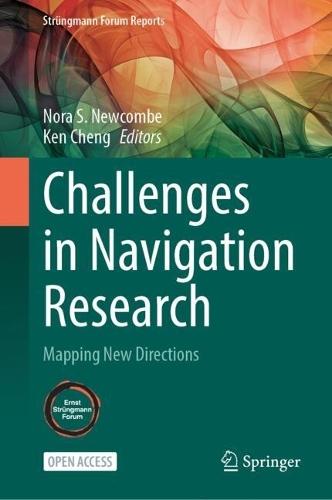
This open access book presents a multidisciplinary synthesis of research on animal navigation, integrating perspectives from behavior, neuroscience, and ecology to advance understanding of how animals orient and move within their environments. Successful navigation is essential for survival. How animals move through complex landscapes, cross vast oceans, or traverse barren deserts has long intrigued scientists. For over a century, research has sought to uncover the mechanisms that enable such remarkable feats. The knowledge gained has far-reaching implications—from enhancing mobility and independence in aging populations to shaping the design of advanced navigational technologies. In the past decade, rapid advances in computational methods have fueled a surge in behavioral and neural data, placing the study of navigation at the forefront of scientific progress. Yet, significant challenges persist. Fragmentation across disciplines and levels of analysis has hindered integration, and the sheer volume of findings makes synthesis difficult. To confront these challenges, the Ernst Strüngmann Forum brought together experts from diverse fields to integrate research on biological navigation. This volume presents the outcomes of that multidisciplinary exchange, integrating perspectives across behavioral, cellular, circuit, and systems levels, and spanning species, environments, and individual differences. It delineates unifying principles and frameworks to guide future research on navigation across taxa, developmental stages, and descriptive levels, and outlines agendas to advance the field.
Full Product Details
Author: Nora S. Newcombe ,
Ken Cheng
Publisher: Springer Nature Switzerland AG
Imprint: Springer Nature Switzerland AG
ISBN: 9783032205629
ISBN 10: 303220562
Pages: 481
Publication Date: 02 April 2026
Audience:
Professional and scholarly
,
College/higher education
,
Professional & Vocational
,
Postgraduate, Research & Scholarly
Format: Hardback
Publisher's Status: Active
Availability: Not yet available

This item is yet to be released. You can pre-order this item and we will dispatch it to you upon its release.
Author Information
Nora S. Newcombe received a PhD from the Department of Psychology at Harvard University. She was a faculty member at Pennsylvania State University before moving to Temple University, where she is now Laura H. Carnell Professor. Her research in cognition and cognitive development centers on spatial cognition and episodic memory, along with translational work on STEM education. She is a member of the National Academy of Sciences, the American Academy of Arts and Sciences, and the Society of Experimental Psychologists. Honors include the Rumelhart Prize from the Cognitive Science Society, the Distinguished Scientific Contributions Award from the Society for Research in Child Development, the William James Fellow Award from the Association for Psychological Science, and the Howard Crosby Warren Medal from the Society of Experimental Psychologists. Ken Cheng received a PhD from the Department of Psychology and Social Relations at the University of Pennsylvania. He did postdoctoral work at the University of Sussex and at Western University of Canada (previously called the University of Western Ontario in London, Ontario), before accepting a University Research Fellowship at the University of Toronto. In 1995, he joined Macquarie University, Sydney, Australia, where he is currently Professor in the School of Natural Sciences. Cheng’s research has focused on functional as well as mechanistic questions in animal navigation across diverse species. Over 40 years, study animals have featured rats, pigeons, black-capped chickadees, humans, honey bees, and a number of species of ants, including desert ants in Australia and Tunisia. A key topic has been how animals use visual information in their surroundings to navigate. Cheng has served a long stint as an editor of the journal Animal Cognition, receiving both an Author Service Award and an Editorial Contribution Award from Springer Nature in 2025. Cheng has published a reference book on animal cognition for a general audience, How Animals Think and Feel (ABC-CLIO, 2016) and two short books on academic writing. In 2023, Cheng was given the career Research Award by the Comparative Cognition Society “in Honor of Outstanding Contributions to the Study of Cognitive Processes in Animals.”